Mark Lau Branson
Forming Communities of Hope in the Great Unraveling
Church Leadership & Ministry
“After a seventy-five-year story of a (somewhat) cohesive social and church life in the West, current disruptions cascade into every facet of life. We major in the habits that are consistently failing. Roxburgh and Searle explore our circumstances, name the roots, and draw us into hopeful stories and practices. With significant attention to Jeremiah, Luke, Benedict, and the Celts, they envision communities that dwell, discern, and explore, with the conviction that God initiates among and around us.”
“Research on immigrant churches tends to focus on the role of providing services for those arriving, and varied approaches to the English-speaking youth. Jinna Sil Lo Jin engages a group that gets missed—Korean-speaking young adults. Jin . . . imagines a contextual, intergenerational ecclesiology that emphasizes listening, belonging, mutual learning, and collaborative participation in God’s continuing mission. Provocative and promising.”
Joining God in the Great Unraveling
Church Leadership & Ministry
“Alan Roxburgh takes us on a ‘how I’ve changed my mind’ autobiographical journey—rich with intelligent conversation partners, incisive theo-cultural analysis, and hopeful on-the-ground opportunities for walking a gospel path. Along the way, Mary Jo Leddy guides us in resistance and reweaving, Lauren Oakes warns us about the canary tree, Leanne Betasamosake Simpson connects place to intelligence, and Simone Weil lures us away from technocratic rationalism. Instead of remaining in a house of language that hides the gospel inside abstractions, Roxburgh pursues ways of knowing (Polanyi), the importance of bodies and locations (Jennings), and the skills we need to discern where and how God is in our midst (Newbigin), among our neighbors and in our geographies—and we are invited to join.”
Church Leadership & Ministry
“These engaging and thoughtful chapters . . . feature some critical convictions for the churches of North America. How might our expectations and actions change if we believe God is the primary agent and is ahead of us among our neighbors and in our communities? . . . In addition to thoughtful and imaginative reading of these chapters, I’d recommend new prayerful and attentive experiments, with the hope you will find Spirit-inspired mission.”
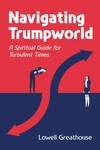
Ethics, Culture & Social Issues
“Curiosity, attentiveness, gratefulness—what affect do such practices have in our context of political and social upheavals? Greathouse clearly names the hostility and destructiveness of Trumpworld. Then he names practices that can connect our inner lives with our social contexts so we can counter tendencies of avoidance, rage, hopelessness, and isolation. Greathouse brings years of pastoring, activism, praying, reading, listening, and collaborating into the challenges we are facing. The practices that he names can bring life and hope into our lives, churches, and society.”
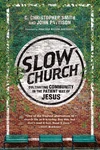
Christian Living
“All of our churches are shaped by our cultural environments, and Smith and Pattison note how forces such as fragmentation, impatience, commodification, branding, hypermobility, individualism and efficiency too often dominate our practices and priorities. So we strive for control in the midst of fears and self-protection. Slow Church provides theology and imagination that connect gospel embodiment with place and neighbors, calling us to slower lives around tables and conversations that nourish and interweave gratefulness, listening, work, hospitality, justice and the biblical trajectory toward the reconciliation of all things. Less of McDonalds; more of sabbath feasts.”
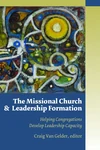
The Missional Church and Leadership Formation
Church Leadership & Ministry
“If local churches are to be engaged in the missio Dei, what kinds of leaders are needed? The varied authors here provide historical, theological, and practical insights into why the answer may be different than it was a few decades ago. Can seminaries form those leaders? Possibly. Van Gelder takes us through historical models, from 'resident theologian' through 'pastoral director' to the more recent 'entrepreneurial leaders,' and ably frames why and how a missional ecclesiology needs to reshape how we form competencies that move beyond the early splits between theology and practice or between Wissenschaft and paideia. He even thinks the Holy Spirit has a role. Small, expanding on that later dyad, pushes on theology for theological schools. Other authors here provide case studies or other research regarding churches, leadership, and seminaries. Some emphasize that 'all God's people' need to be in view, several explore specific leadership typologies, and all keep us on the question of how we can best discern and participate in God's initiatives. There are historical and current reasons why this is so difficult — why churches and seminaries need new imaginaries for our work of leadership formation. I am grateful that these colleagues have engaged us, the church and the seminary, in these challenges.”
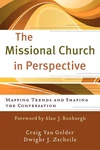
The Missional Church in Perspective
Church Leadership & Ministry
“The missional church conversation offers the most important and generative perspectives on theological praxis in a generation. Or the missional church conversation only repackages old habits and missteps in new language. Or the missional church conversation may engage some interesting theological matters, but it is not translated into praxis. With dozens of books claiming roles in this venture, how might we make sense of it all? Van Gelder and Zscheile walk us through these resources, provide historical and contextual perspectives, clarify the center and the fringes, offer connections and critiques, point toward the work ahead, and leave us all in their debt.”
Christian Living
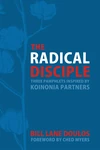
“In writing about faith, culture, justice, and power, Bill Doulos draws us to see ourselves and our neighbors differently. Jesus is among us, and he is in the midst of the silenced and often messy neighborhoods that are frequently marginalized by society's habits and the fears and addictions that too often accompany despair. Doulos believes we are invited to follow Jesus, and even though these essays were written in the 1970s they are clear and compelling today.”
Prayer & Spiritual Formation
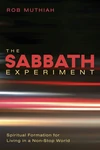
“In a culture that honors busyness, the accumulation of stuff, and homage to personal preferences, Sabbath is not just anachronistic, it is a threat. So maybe it's God's gift, aimed at converting us toward lives that are relationally, ethically, and spiritually graced. Muthiah lures us into experiments, Bible narratives, personal reflections, and church conversations so that we can be disciplined into freedom and freed into new capacities for contentment, generosity, and love.”
NOTE: Only includes books currently in our catalog; not necessarily a complete list.
See something wrong on this page? Report a problem