Mark S. Burrows
Biography
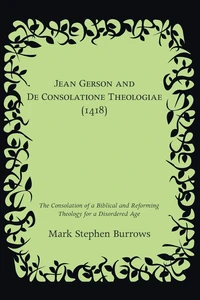
Mark S. Burrows wrote Jean Gerson and De Consolatione Theologiae.
Bios generated by automated processes. · Report a problem
Arts & Literature
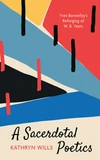
“Sacerdotal Poetics invites readers on a luminous journey into what occurs when one poet discovers another, and, in the process of translating their work, finds themselves ‘discovered’ in the act of translation, as it were. We are in Wills’s debt for the ways she lures us into the complex labyrinth where poetics, theological reflection, and translation mingle and even on occasion sing.”
Arts & Literature
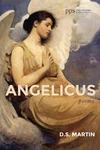
“This is not a book about angels; it is a book of angels, one that promises to bend your imagination open to a wider frame of angelic—and human—experience than you’d previously dared to know. . . . Through the eyes of Martin’s angels, quirky and unpredictable as these messengers are wont to be, we come to glimpse familiar things in the dappled light of paradox. . . . In poem after poem we find ourselves called to upend a merely critical reason and enter, through the poet’s wit, a realm of vision where we begin to recognize how it is that ‘[s]o often you look at something / without really seeing it.’ This is a book that calls us to look again, expecting to see in ways that widen our apprehension of the truth . . . and might well remake us for the better.”
Arts & Literature
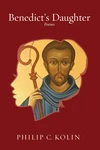
“This is a story of extraordinary devotion, told in poems of great feeling and deep conviction which usher us into that sacred precinct of spiritual friendship. It reads as both biography and encomium, as spiritual guide and as a lyric witness . . . Who could resist such poignant allurement, and who, caught by this holy spell, would not gladly follow the hearkening call, come what may of darkness or of light?”
Arts & Literature
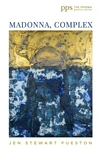
“This is a collection of poems that has the pull of flowing waters finding their way toward the sea, . . . Throughout the collection, the poet reminds us that ‘love is not a fullness, it’s an ache,’ and in probing the endurances of that ache, helps us come to know ourselves as instances of a fragile but resilient beauty.”
Arts & Literature
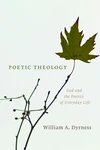
“William Dyrness's bold invitation to a poetic theology shaped by Scripture, tradition, and imagination — one luring us toward a fuller participation in beauty than argument or concept alone allow — reminds us that truth itself is beautiful to behold and poetic to the core. . . If poetry is in its deepest reflex an intensification of life, then Dyrness's call for a poetic theology is one we ignore at our peril, reminding us that faithful living is not only about proper thinking but also — and, perhaps, more properly — about the texture of our living and the quality of our loving.”

Fiction
“The Candleberry Tales has something of Chaucer’s wit and satire, poking fun at the eccentricities of those who presume to represent Christianity in our day. As with Chaucer, Lehman invites us to consider the varieties of religious experience in the church—or, rather, the churches—with their manifest foibles and eccentricities on full display. In these updated tales we meet the twelve ‘Early County O’Postles’ on the road in a dilapidated old church bus, bound not for glory but for Camp Candleberry. As they share their tales, we discover their pieties and proclivities with their often delightful—if not also absurd—consequences. Along the way Lehman leaves no one unscathed, rendering every member of this ecumenical troupe with a suitable levity. These Tales serve as a reminder—if we needed one—that those who take up the mantle of ministry are no different than those who endure their sermons week by week, all of us—depending on your point of view—as delightful as we are ridiculous. Together, they exemplify the truth that the ongoing existence of the church and its ministers, on fulsome display here, is reason enough to believe in God’s patience or humor—and probably both.”
NOTE: Only includes books currently in our catalog; not necessarily a complete list.
See something wrong on this page? Report a problem