Michael McClymond
Biography
Michael McClymond wrote Familiar Stranger and The Devil's Redemption, and co-edited The Rivers of Paradise with David Noel Freedman.
Bios generated by automated processes. · Report a problem
History & Biography
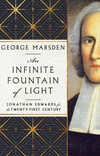
“At a time when evangelicals—and Christians generally—seem unsure of themselves, George Marsden offers us Jonathan Edwards as a fixed star in the firmament and encourages us to navigate our twenty-first-century voyage with sextants set on Northampton. Here Marsden distills the essence of his earlier Bancroft award–winning biography of Edwards and reflects on issues such as worldview, discernment, rightly ordered love, and a faithful yet winsome approach to Christian social engagement. What Marsden brings to light is just what Edwards did, namely everything. Nothing looks quite the same when it is viewed in the light of God's reality. This culminating work by an outstanding historian of American religion deserves a wide readership.”
History & Biography
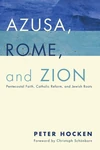
“Numerous scholars have written on Protestant Pentecostalism, Catholic Charismatic Renewal, and Messianic Judaism. Yet Peter Hocken--and seemingly only Hocken--has meditated deeply on the historical and theological connections 'From Azusa via Rome to Zion.' Hocken's uncompartmentalized and unconventional thinking is a challenge to the entire global Christian community to rethink its Jewish roots and heritage in relation to Jesus' prayer 'that they may all be one.'”
Theology
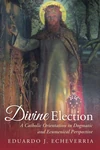
“Imagine that a Jesuit, a Dominican, a Barthian, and an Evangelical were locked in the Vatican Library and fed sparingly until they came to a consensus on predestination. What conclusion might they reach? Clear, clean, and cogent in argumentation, Echeverria's superb study juxtaposes and synthesizes diverse perspectives, offering a viewpoint that is Catholic in the preeminent sense, congruent with the church's magisterial teaching, yet open to insights from such Protestant thinkers as John Calvin, Karl Barth, Herman Bavinck, G. C. Berkouwer, William Lane Craig, and Oliver Crisp. One concludes the book with a sense that the long-controverted doctrine of predestination is not an impossible riddle or logical muddle, but a core Catholic teaching that reconciles the priority of God's grace with the reality of a human response in faith and obedience. This work will appeal to Catholic, Orthodox, Protestant, and Pentecostal scholars, and to others intrigued by this notoriously challenging doctrine.”
History & Biography
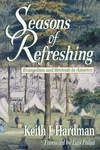
“Surprisingly few authors have ever attempted to tell the story of American revivals in a single, interconnected narrative. Keith Hardman's 'Season of Refreshing'--now in an updated version--is the only recent work on American revivals that covers the entire development from the eighteenth century to the twenty-first century. This readable and well-researched volume shows why revivals have been both influential and controversial in the Christian churches for the last three centuries. It serves as an excellent first book on revivals and revivalism.”
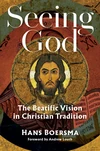
Theology
“Seeing God is a subtle yet sustained polemic against the notion that the Christian eschaton is simply an improved version of the universe as we know it, and that Christian Platonists—Nyssen, Augustine, Dante, Jonathan Edwards, C. S. Lewis—were all wrongheadedly otherworldly. Boersma’s breviary for sacramental ontology, advocating a more ‘vertical’ kind of theology and spirituality, deserves consideration among so-called Christian materialists and contemporary proponents of the ‘renewed cosmos’ approach to eschatology.”
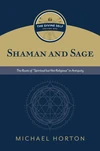
Shaman and Sage (The Divine Self, vol. 1)
World Religions
“Professor Horton might not be a shaman but he is certainly a sage. His is a book of immense learning and vaulting ambition, ranging from Bronze Age civilizations to Greek philosophers. While Charles Taylor and Carl Trueman recounted the rise of modern selfhood, Horton engages antiquity. In this copiously documented first volume, Horton offers a Plato and a Platonism that our college professors never told us about (and perhaps didn’t know about)—not luminously rational but darkly mysterious. He links ancient humanism less to logical arguments than to incommunicable ecstatic experiences. Horton’s readers will grow in understanding of the archaic roots of today’s esoteric and New Age religions—centered not on faith, nor on reason, but on individual and private gnosis. Impatiently I await the forthcoming volumes to learn how ideas of selfhood continued to evolve, and what that might mean for us today.”
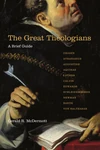
Theology
“For many the 'great theologians' seem intimidating. Yet McDermott offers reliable guidance to the uninitiated, making their thought accessible to readers who have never cracked open Thomas Aquinas's Summa Theologica or John Calvin's Institutes. His presentation of eleven theologians' lives, loves, careers, books, insights, quirks and bloopers is engaging and--dare one say it?--entertaining. This slender volume offers a draft of pure water for the theological soul, and will leave its readers thirsting for more.”
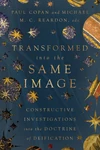
Transformed into the Same Image
Theology
“In recent decades, the doctrine of theosis ceased to be an exclusive preserve of Orthodox thinkers and gained traction among thinkers of all Christian traditions. Yet its position remained tenuous, like that of an unexpected houseguest who arrives and then intends to stay on indefinitely. Theosis was admitted but not welcomed. Theosis, so to speak, had to sleep in the woodshed. Copan's and Reardon's volume shows though that theosis is capable of encompassing and integrating such classical Western soteriological themes as conversion, justification, sanctification, etc., without effacing their distinctness or violating their integrity. Perhaps a 'theotic' turn in soteriology will facilitate the sort of ecumenical renewal that has already occurred in trinitarian and christological reflection. This volume will be of great interest for those who feel stymied by the seemingly unbridgeable chasms between East and West, Catholic and Protestant, Evangelical and Charismatic, on the crucial questions regarding Christian salvation.”
Ethics, Culture & Social Issues
“Others have written on the crisis of the West, but Dik’s book is unique in making worship—not whether but what people worship—its focal point. Eschewing any simplistic call to Sunday services, Dik lambasts a modern church that failed through its own successful alignment with worldly powers, thus disembodying the virtues God intended it to exhibit. Take heed: Dik’s analysis shows why the recovery of God-centered worship is a life-or-death issue for the church.”
NOTE: Only includes books currently in our catalog; not necessarily a complete list.
Biblical Studies & Commentaries
Theology
See something wrong on this page? Report a problem