Nicholas Wolterstorff
Philosophy
“Nobody acquainted with philosophical epistemology would associate it with eloquence or passion. So Loving to Know is extraordinary, because this is epistemology presented with both eloquence and passion, addressed to the person 'on the street' but at the same time raising issues that professional philosophers should take account of. In a most creative way, Professor Meek takes Michael Polanyi's epistemology, which she perceptively and lucidly summarizes, into new terrain. She argues that to come to know as we ought to come to know is to keep covenant. It is to be faithful both to the known and to oneself, the knower. So take and read. And when you do, you will learn that how the book came about is itself an example of the theory, as is the innovative structure of the discussion. The formation and presentation of the theory display the theory.”
Modern Art and the Life of a Culture
Arts & Literature
“This is a book we have needed for a long time. The standard story of modern art, told by religious and non-religious people alike, is that it is the art of secularism and pervaded by nihilism. That was the story told by Hans Rookmaaker more than forty years ago in the book that became enormously influential among evangelicals, Modern Art and the Death of a Culture. Anderson and Dyrness tell a very different story. They show that modern art has been pervaded by religious concerns and theological issues. What they have dug up is truly amazing; the book is an eye-opener. They frame their story as a response to Rookmaaker. But the story they tell and the interpretations they offer are for everyone. Only those who refuse to read can ever again think of modern art in the old way.”
Ethics, Culture & Social Issues
“This book by Timothy Jackson has the paramount virtue of inviting and provoking the reader to think deeply about issues of fundamental importance — in particular, about the proper role of agapic love in our lives as citizens. . . . Also invites and provokes us to think deeply about some of the major figures in our intellectual and political tradition, Abraham Lincoln and Martin Luther King Jr. among them. Altogether an important defense of the thesis that prophetic Christianity is of fundamental importance for liberal democracies.”
Rehabilitating Inerrancy in a Culture of Fear
Theology
“Bovell argues compellingly that commitment to the authority of Scripture does not require that one affirm the doctrine of biblical inerrancy . . . I was particularly impressed with his argument that the employment of speech act theory, to understand the relation between what the human writers of Scripture say and what God says by way of those writers, undermines rather than supports inerrancy as a way of understanding the Bible as God's word.”
Theology
“Mats Wahlberg's Revelation as Testimony is extraordinary — extraordinary in its bold challenge to the widespread assumption by theologians that 'propositional revelation' is an untenable idea, extraordinary in the skill with which it employs recent discussions by philosophers to develop the idea of revelation as testimony, extraordinary in the cogency and lucidity of its argumentation. No responsible discussion of revelation henceforth — whether by theological liberals or by theological conservatives — can fail to take account of Wahlberg's penetrating discussion. I predict that it will be a 'game changer.'”
Shalom and the Ethics of Belief
Philosophy
Foreword
“In Shalom and the Ethics of Belief, Nathan Shannon skillfully brings to light connections between two areas of my thought that I myself have never explicitly connected in my published writings, namely, the theory of entitled belief that I developed in my writings on epistemology, and the account of justice and shalom that I developed in my writings on social justice. Shannon identifies some connections that I have not only not written about but that I had not previously noticed. Reading the essay was a learning experience! It's a fine contribution.”
Ethics, Culture & Social Issues
“Shalom Ethics: Loving Your Neighbor as Yourself is a magisterial exploration of the implications for life today of the biblical injunction "Love your neighbor as yourself." The author anticipates that readers will regard a good many of the conclusions at which he arrives with an "incredulous stare." For this reader, quite right he is. Can the love command really imply the abolition of prisons? Can it really imply not voting and paying as little tax as possible? On and on. Crisp's bracing conclusions are so compellingly argued, however, that over and over, the incredulous stare morphs into the eye of enlightenment.”
Counseling, Grief & Mental Health
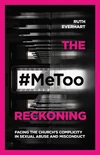
“In The #MeToo Reckoning, Ruth Everhart creatively interweaves real-life stories of how Protestant churches have been complicit in the sexual abuse of women with counterpart stories from Scripture. In telling the stories—both the real-life stories and the biblical ones—Everhart does not flinch from pointing out how those who held the reins of power used silence, evasion, threats, and denial to protect abusers. In each case, she goes beyond denunciation, however, to point out how they could and should have acted differently. The result is a gripping, prophetic call to churches to halt the cover-ups of sexual abuse of women and secure justice for the victims. An eloquent, spiritually deep wake-up call. This book had to be written!”
The Best of The Reformed Journal
Ethics, Culture & Social Issues
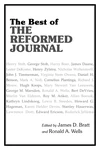
“The contributors to The Reformed Journal were astoundingly omnivorous in what they selected for comment and opinion from a Reformed perspective. And their writing was superb -- always perceptive, often surprising, now and then whimsical, often sharply critical but never mean-spirited, breathing a generous spirit and a relaxed orthodoxy -- the progressive, theologically serious Reformed tradition at its finest. This collection is a sparkling jewel, worth coming back to again and again.”
Theology
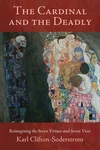
“After almost two millennia of discussion, is there anything that remains to be said about the seven cardinal virtues and the seven deadly vices? It turns out that there is, as the reader of The Cardinal and the Deadly will discover. Usually the virtues are discussed by themselves and the vices are discussed by themselves. Karl Clifton-Soderstrom adopts the innovative strategy of discussing them in pairs, each virtue paired off with a vice. The pairs are surprising, nothing at all like Aristotle's pairs: greed is paired off with hope, for example, envy with courage. These surprising pairings yield unexpected insight into both the virtue and the vice. A remarkably fresh contribution to an age-old topic.”
Ethics, Culture & Social Issues
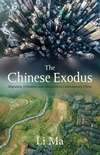
“The Chinese Exodus is a moving description, based on social science research and extensive personal interviews, of the poverty, prejudice, and destruction of social bonds experienced by those who have migrated from the rural areas of China to the cities. But it's more than that, and it's the ‘more’ that makes Li Ma's discussion unusual and important. She interweaves her descriptions of urban poverty and social disorientation in China with a rich and passionate Christian theological interpretation of those phenomena.”
Theology
“The word that came to my mind as I read Fleming Rutledge's book The Crucifixion was 'bracing': the book is bracing in its vigorous affirmation of the centrality of Christ's crucifixion in the Christian proclamation, bracing in its description of the unspeakable horror and shame of the crucifixion, bracing in its affirmation that we are one and all sinners, bracing in its identification and rejection of the many forms of theological silliness now inhabiting the church. Though meant for pastors and laypeople, this book will also benefit scholars. It carries its deep learning with eloquence and grace. I will be returning to it.”
Ethics, Culture & Social Issues
“The End of Memory is a book that had to be written. From many quarters in present-day society comes the cry, ‘Remember the wrongs done to you.’ Miroslav Volf agrees with that cry but cogently argues that remembering wrongs can be done wrongly. With great learning and deep humane wisdom he reflects on how we can rightly remember the wrongs done to us. In all of Volf’s writing, theology illuminates life and life illuminates theology. Here this two-way illumination is at its very brightest.”
Arts & Literature
“Cam Anderson's The Faithful Artist is the most probing analysis ever written on the roots of the negative attitude of twentieth-century evangelicals toward the visual arts. Anderson knows evangelicalism from the inside. What greatly enhances his analysis is that it is set within the context of a broad, deep and sympathetic understanding of developments in the world of the visual arts in the twentieth century. The book reaches its climax with an eloquent, biblically based appeal to evangelicals to engage the visual arts, both as creators and as viewers. We have needed this very book for a long time.”
Christian Living
“Many books on justice have appeared in recent years. Three things make this one stand out from the crowd. First, instead of quoting only a few golden nuggets from Scripture, the authors trace the theme of justice throughout Scripture. Second, they give concreteness to their discussion with harrowing true-life stories of present-day sex trafficking and slavery. And third, they explicitly address the need of those who struggle for justice, patience, lament, and hope. An important contribution.”
Theology
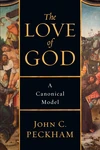
“What strikes me about The Love of God: A Canonical Model is four things: its learning, sophistication, originality and comprehensiveness. Concerning its learning: the author is impressively conversant with almost all of the relevant literature, so far as I can see. Regarding its sophistication: the author displays a subtle and sophisticated grasp of the issues; he is sure-footed in theology, biblical interpretation and philosophical theology. That combination is hard to come by. Concerning its originality: rather than running with the crowd, the author questions common assumptions on a lot of points, on almost all of which, in my view, he is correct. And concerning its comprehensiveness: the author looks at God's love from a large number of different angles; every other treatment that I know of is 'pinched' by comparison. My judgment is that this promises to be a very influential book.”
The Mirage Shall Become a Pool
Biblical Studies & Commentaries
“This is easily the best discussion of the relation between social justice and mercy in the New Testament. With judiciousness and insight it considers all the relevant passages. It is theoretically and hermeneutically sophisticated, and thoroughly informed in the secondary literature. Altogether, a splendid contribution to an important and charged issue.”
Ethics, Culture & Social Issues
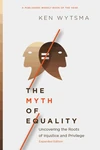
“The Myth of Equality is written so skillfully that it's easy to miss how much it accomplishes. The first part brings to light, with unflinching honesty, how deeply racism and white privilege are embedded within the founding documents and practices of the United States. The second part masterfully shows that this inequality violates the call of the gospel to justice and unity. And the third part offers some wise suggestions to those of us who are white Christians about how we can 'lay down' our white privilege. I have no doubt that some readers will be angered by the claim that they participate in and benefit from structures of racism and white privilege, well supported though that claim is. I predict that there will be more who are convinced and inspired by the patient, passionate, and nondefensive way in which Wytsma makes his case. It's a book that someone had to write.”
Theology
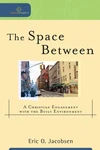
“William A. Dyrness and Robert K. Johnston, series editors The Cultural Exegesis series is designed to complement the Engaging Culture series by providing methodological and foundational studies that address the way to engage culture theologically. Each volume works within a specific cultural discipline, illustrating and embodying the theory behind cultural engagement. By providing the appropriate tools, these books equip the reader to engage and interpret the surrounding culture responsibly. “In The Space Between, Eric O. Jacobsen sets himself two goals: to get us to attend to urban space—the space between the buildings in a city or village—and to explain why Christians in particular should care about the quality of urban space. He succeeds admirably on both counts; cities will look different to you once you have read this book. Along the way he also introduces us to some of the most recent writings on urban space, and he offers a compelling explanation of why the urban space of our present-day American cities came to be as it is and why we should be dissatisfied with it. It’s a fine contribution to an extremely important topic that has been neglected for too long by too many.”
NOTE: Only includes books currently in our catalog; not necessarily a complete list.
Arts & Literature
Church Leadership & Ministry
History & Biography
Theology
Philosophy
Counseling, Grief & Mental Health
Counseling, Grief & Mental Health
Reason within the Bounds of Religion
Philosophy
Preaching & Worship
Philosophy
Until Justice and Peace Embrace
Ethics, Culture & Social Issues
See something wrong on this page? Report a problem