Paul D. Molnar
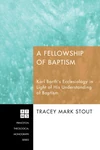
Theology
“Considering Barth's view of Baptism, Tracey Stout helpfully demonstrates how and why Baptism, Ecclesiology, Christology, Pneumatology, and Ethics are all intimately connected. Stout judiciously maintains that, despite Barth's later tendency to separate the church's sacramental actions from the action of the Holy Spirit, we can still learn from Barth how and why it is important to understand that divine action enables free human action and thus encourages Christians to develop an appropriate Ecclesiology, Ethics, and Political Theology. This book serves its subject well and deserves to be widely read.”
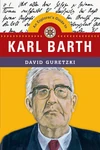
An Explorer's Guide to Karl Barth
Theology
“In this introductory guide to Karl Barth's life and thought, David Guretzki reliably acquaints readers in a welcoming fashion with many important themes in the theology of Karl Barth. Most notably, he helpfully points readers to Barth's own spiritually captivating analysis as one of the leading biblical and truly Christocentric theologians to appear since Augustine, Athanasius, or Thomas Aquinas. Anyone reading this book will see, with Guretzki, why so many serious Christian theologians today believe that 'one cannot claim to be engaged in the study of Christian theology without in some way engaging or becoming at least familiar with Karl Barth.'”
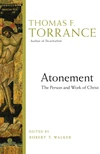
Theology
“In this indispensable volume of rare insight and erudition, Thomas F. Torrance demonstrates once again why he is esteemed as one of the leading theologians of the twentieth century. Weaving together Old and New Testament conceptions, Torrance here lucidly, profoundly, thoroughly and compellingly explains how and why Christ's atoning death can be understood only soteriologically (not logically) on the ground of the incarnation, resurrection and ascension of Jesus himself. Throughout this book, Torrance powerfully conveys the meaning and significance of the deep mystery of Christ's death on the cross as an act of God, fulfilling the covenant both from the side of God for us and from the human side toward God in the person of his incarnate Son, Jesus Christ, by carefully connecting Christ's own self-understanding and activity with the activity of the Spirit sent by the Father and Son to guide the church in Word and sacrament until he returns. All who are interested in serious theology today should read this book.”
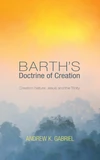
Theology
“Instructively dealing with various critiques of Barth's doctrine, Gabriel judiciously responds by stressing the need for a more developed pneumatological emphasis that upholds both the distinction of God from creation and the relation of God to creation in and through Jesus Christ, in whom we know the covenant really was and is the internal basis of creation itself. This is a book very much worth reading and discussing.”
Ethics, Culture & Social Issues
“At a time when one might be tempted more than ever to offer an ethics of self-help, David Haddorff presents us with a truly theological ethics of 'witness' based on the truth of the Gospel that is at once hopeful and realistic because its hope is found in the God who empowers us to do the good and not in our attempts to live any sort of self-chosen good. Relying on the theology of Karl Barth, Haddorff skillfully holds together theology and ethics as well as theory and practice. This is a compelling book that will be of great interest to theologians, ethicists, and to students of the theology of Karl Barth.”
Theology
“It is not too much to say that without a proper hermeneutics shaped by the unique nature of its object, theology would be lost. This impressive collection of essays from Thomas F. Torrance helpfully gathers together many of his most important writings on the subject displaying an amazing grasp of history and theology. Familiar themes emerge: the important connection between the incarnation and atonement, the nature of scientific knowledge of God as knowledge grounded in God and personally conveyed through his Word and Spirit by grace through faith, and more. But the really important impression that this book will convey to its readers is the way Torrance’s own thinking is not only shaped by Scripture but by the early church Fathers, and especially by Calvin and Barth. There are contextual discussions of just how Calvin related experience and knowledge of God that will illuminate Torrance’s own important discussions of the Trinity and Christology. This is a book that Torrance scholars and theologians interested in Reformation history, as it relates to Augustine and Mediaeval theology generally, will want to read.”
Theology
“In this magnificent volume, written with unparalleled learning and gripping power by the preeminent theologian of the twentieth century, readers will glimpse something of the overriding joy, happiness, and freedom of theological science that come from God the Father, Son, and Holy Spirit. This eternally rich and living God can be neither 'hired' nor 'possessed' and cannot be carried about in some 'intellectual or spiritual briefcase.' Karl Barth's Evangelical Theology is a must-read for anyone who desires to study theology today.”
Exploring Christology and Atonement
Theology
“In this groundbreaking book Andrew Purves offers a powerful, engaging and carefully constructed theology of atonement in its connection with Christology, the doctrine of justification and the doctrine of the Trinity that shows exactly how and why pastoral or practical theology is intrinsically connected with systematic theology. Purves expertly traces the positive teaching embedded in the thinking of three influential Scottish theologians, with particular emphasis on the theology of T. F. Torrance. He demonstrates how important it was and continues to be for theologians and pastors to allow the strength and power of their presentation of the truth of the Christian faith to be shaped by the living Christ in his true humanity and true divinity as the crucified, risen, ascended and advent Lord who mediates between sinful humanity and God the Father in the Spirit. This is a mediation of God's love that is best understood in filial rather than legal terms since it involves our union with Christ and thus union with the Father in and through the incarnate Son in his unique eternal relation with the Father into which we are drawn by the Holy Spirit. This book will be indispensable for theologians interested in the thinking of John McLeod Campbell, Hugh Ross Mackintosh and Thomas Forsyth Torrance. Torrance scholars in particular will benefit greatly from the insightful connections made among these three important figures.”
Theology
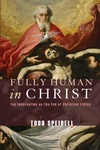
“Relying on the thinking of Karl Barth, Thomas F. Torrance, James B. Torrance, Dietrich Bonhoeffer, Ray S. Anderson, and others, Todd Speidell thoughtfully and skillfully challenges readers to focus on who Jesus was and is as the incarnate revealer and reconciler to understand the true meaning of Christian ethics and liberation in a way that upholds rather than negates a properly functioning social ethic. Along the way he offers helpful analysis and critique of various views that tend toward a Pelagian vision of grace or some version of conditional salvation and thus obscure what it means to participate in Christ's vicarious humanity and therefore in the new creation. His discussion of Torrance's theological ethics offers a particularly convincing and compelling defense of Torrance against allegations that his emphasis on Christ supplants rather than establishes true human freedom and action. This is a book that is refreshingly Christological, Trinitarian, and soteriological in the best sense. Readers will find here a serious and informative discussion of exactly how dogmatics informs ethics when the living Christ, rather than dogmatics, is, and remains, the criterion.”
Theology
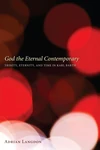
“Skillfully utilizing Karl Barth's Trinitarian theology and Christology, Adrian Langdon presents an enlightening and engaging view of time and eternity that helpfully explains how and why a Trinitarian understanding overcomes traditional difficulties that arise from opposing time, change, and motion to eternity, and thus undercutting the fact that the triune God is first and foremost a living, moving, and acting God. Readers will find here a valuable guide to this enduringly difficult topic.”
God, Freedom, and the Body of Christ
Theology
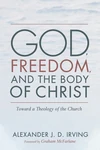
“In this valuable book Alexander Irving offers a thoroughly theological ecclesiology with ecumenical promise. He explains in detail and with care and insight just how and why the Church, in all its human activities, including prayer and sacraments, can and should be properly understood not from itself precisely because it takes its formative movements from God as it participates in the vicarious humanity of Christ through faith and by grace. Irving illustrates exactly how and why the living Christ in power of his Holy Spirit is and must be at the center from start to finish. This book is must-reading for all who want to understand the proper meaning of the Church as the body of Christ.”
Karl Barth's Church Dogmatics for Everyone, Volume 1—The Doctrine of the Word of God
Theology
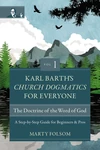
“Pope Paul VI said that Karl Barth was the greatest theologian since Thomas Aquinas. That is praise enough to support serious study of Barth’s theology. Marty Folsom encourages just that in this new introduction. Karl Barth’s Church Dogmatics for Everyone provides an accessible and commendable initiation into the theology of Karl Barth.”
Karl Barth's Church Dogmatics for Everyone, Volume 2—The Doctrine of God
Theology
“Pope Paul VI said that Karl Barth was the greatest theologian since Thomas Aquinas. That is praise enough to support serious study of Barth’s theology. Marty Folsom encourages just that in this new introduction. Karl Barth’s Church Dogmatics for Everyone provides an accessible and commendable initiation into the theology of Karl Barth.”
Karl Barth's Church Dogmatics for Everyone, Volume 3—The Doctrine of Creation
Theology
“Pope Paul VI said that Karl Barth was the greatest theologian since Thomas Aquinas. That is praise enough to support serious study of Barth’s theology. Marty Folsom encourages just that in this new introduction. Karl Barth’s Church Dogmatics for Everyone provides an accessible and commendable initiation into the theology of Karl Barth.”
Karl Barth's Infralapsarian Theology
Theology
“Was God's original will to enter into covenant relations with his creatures an act that took place because of the fall or irrespective of the fall? The answer that this significant study provides is that it is both, with more weight attached to the latter view. Ordinarily one might wonder what the relevance of a study of Barth's supralapsarian and infralapsarian emphases might be both for Barth scholars and the church. In this carefully argued, well-researched and well-documented exploration of the development and implications of Barth's doctrines of election and Christology, Shao Kai Tseng demonstrates exactly why such a study is important. We learn exactly how Barth could forcefully present the power of God's grace by focusing on Jesus Christ as 'electing God and elected human,' rather than on a decretum absolutum, while at the same time taking account of God's good creation as it is menaced by sin and death. Since God is really free as the one who loves within the immanent Trinity, we know that God's love of the world in election and incarnation is effective for all, just because God's self-determination to be for us is irrevocable as an action of love that corresponds perfectly with God's self-sufficient act of love in the freedom of the immanent Trinity. This is certainly a book that Barth scholars will want to read and discuss. But it is a book that will engage and inform all theologians who are concerned about how to understand God's love and freedom for us today in a way that does justice to both God's love and God's freedom.”
Person, Personhood, and the Humanity of Christ
Theology
“This book will be of interest to anyone concerned to see how a properly functioning doctrine of the Trinity must take seriously the fact that our knowledge of God and relations with others are grounded in our reconciliation with God in Christ. The author helpfully argues that Torrance’s Christology does not neglect ethics, as has been sometimes claimed, but upholds ethics in a theologically appropriate way. Kim believes Torrance can provide a useful corrective to the weaknesses he identifies in social trinitarianism.”
The Breadth and Depth of the Atonement
Theology
“. . . Kettler leads readers to see the difference a proper understanding of Christ's vicarious humanity makes both for systematic and pastoral theology today. Emphasizing that the risen, ascended, and advent Lord continues to mediate between us and the Father, Kettler impressively and convincingly explains how and why our joy and hope are real only because God in Christ is in solidarity with us. . . . Anyone interested in these subjects will want to read this book.”
The Claim of Humanity in Christ
Theology
“Alexandra Radcliff's impressive study of the theology of Thomas F. Torrance and James B. Torrance explores what the experience of salvation might look like for Christians when it is not viewed from within a legalistic or contractual view of divine and human relations. This is one of those rare studies that consistently demonstrates why any view of conditional salvation obscures the true force of the gospel. Such a view puts an undue burden (the burden of the law) on people who should recognize that they have been made free to live joyously as those whose humanity has been transformed in the life, death, resurrection, and ascension of Jesus Christ himself. This is an important work that helpfully opens new vistas for readers who will see the implications of a proper understanding of justification and sanctification for the Christian life.”
The Eternal Generation of the Son
Theology
“Kevin Giles, who has established a reputation as an important voice in support of the Nicene faith and of the traditional doctrine of the Trinity, enhances that reputation in this book by trenchantly illustrating why those who today oppose the doctrine that the Son is eternally begotten of the Father end up in opposition both to the biblical witness and to the Nicene faith. Giles meticulously argues that those evangelicals today who reject this doctrine have unwittingly embraced the very Arian views they themselves oppose. This is a book that will challenge readers to understand Scripture and the historical development of trinitarian doctrine once again before embracing views that unwittingly undermine the Son?s true deity. For anyone interested in seeing the practical implications of sound trinitarian theology and Christology, this book is must reading.”
The Rise and Fall of the Complementarian Doctrine of the Trinity
Theology
“Kevin Giles tells the compelling story of the rise and fall of the complementarian doctrine of the Trinity, which espoused a hierarchical view of the Father/Son relationship to argue that women are subordinate to men as the Son was supposedly subordinate to the Father in eternity. He explains why the Nicene homoousion must be defended against all forms of Arian subordination, and persuasively argues that if complementarians and egalitarians can and do now agree about this, then the ground will be cleared for suitable discussion of the ministry of women in the Church. Those interested in these matters will want to read this book.”
NOTE: Only includes books currently in our catalog; not necessarily a complete list.
Theology
See something wrong on this page? Report a problem