Paul E. Capetz
Biography
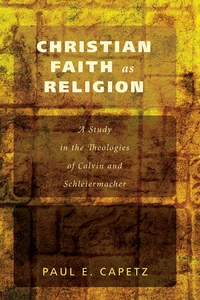
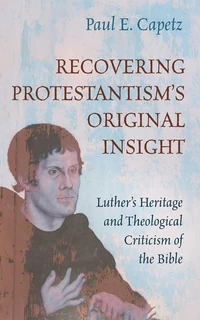
Paul E. Capetz wrote Christian Faith as Religion, Recovering Protestantism’s Original Insight, and God.
Bios generated by automated processes. · Report a problem
Theology
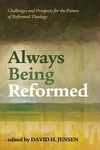
“No one who reads and ponders this collection of probing and engaging essays will be able to doubt the continuing vitality and real importance of Reformed theology in our time. Jensen is to be commended for bringing together some daring and cutting-edge theological minds whose creative work embodies the spirit of a classical tradition that requires of its adherents the willingness to be reformed ever anew.”
Theology
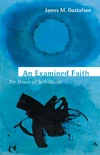
“"Gustafson illustrates what is involved in a self-critical use of religious and moral language given the manifold ways persons and events are also interpreted by scientists, sociologists, anthropologists, and economists.... Whatever one's theological persuasion, anyone who cares about the integrity of religious and moral discourse in our time has much to learn through a careful study of this latest gem from James Gustafson."<”
Theology
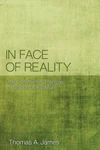
“In this fine book James gives a sympathetic albeit critical analysis of Kaufman's constructive theology. James has thereby paid Kaufman the highest compliment any theologian can hope to receive, namely, to have his work taken with utter seriousness by a first-rate mind. This study is a model of intellectual clarity and incisive argument.”
Theology
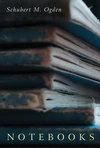
“Like Anselm, Aquinas, Schleiermacher, and Tillich before him, Ogden unflinchingly tackles the most difficult issues in both theology and philosophy. With razor-fine precision he makes conceptual distinctions that allow previous confusions to be cleared away and new pathways for theological and philosophical thought to be opened up. The publication of his Notebooks offers us the rare opportunity to think along with a truly first-rate mind about the most important questions that human beings can pose.”
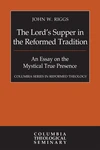
The Lord’s Supper in the Reformed Tradition
“In this thoroughly researched and carefully argued study, Riggs identifies and traces the careers of two distinct trajectories in the eucharistic theology of the Latin West, both of which affirm a ‘real presence’ of Christ in the Supper albeit in divergent ways (metabolic and nonmetabolic, represented by Ambrose and Augustine respectively). Looking anew at the Reformation-era debates through this lens, he is able to bring classic figures and texts into clearer focus as well as to expose certain standard interpretations of Luther, Zwingli, Calvin, and Bullinger as untenable. Helpfully carrying his discussion forward into the modern period, Riggs lets such prominent Reformed theologians as Schleiermacher, Nevin, Hodge, and Barth weigh in on these debates. Presiding magisterially across all the various subdisciplines of the theological curriculum as few today can, Riggs applies the mind of a systematic theologian to a dense question of historical theology that is of enduring importan ce for both practical theology and ecumenical relations.”
NOTE: Only includes books currently in our catalog; not necessarily a complete list.
Theology
Theology
See something wrong on this page? Report a problem