Paul Helm
Theology
“Oliver Crisp convincingly shows that William G. T. Shedd was a reformed theologian whose dogmatics has a philosophical dimension which merits serious attention. In doing so he reveals the same intellectual qualities in evidence in his books on Jonathan Edwards and on Christology: philosophical clarity and rigour, theological sensitivity, and excellent judgement.”
Depression, Anxiety, and the Christian Life
Christian Living
“Richard Baxter was a skilled psychologist as well as a theologian. In this book are some of his writings on depression. J. I. Packer is a modern theologian and lifelong student of Baxter. Michael Lundy is a clinical psychiatrist who has modernized the texts of Baxter. The result is an unusually instructive book of practical wisdom that will be a great help to pastors and others who are called to give counsel to the downcast.”
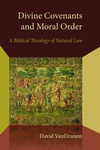
Divine Covenants and Moral Order
Theology
“David VanDrunen here continues his sterling work of recovering and re-presenting the Reformed doctrine of the two kingdoms. That there is a biblical-theological account of natural law may be a surprise to those who have habitually thought of natural law in secularized terms. But such law is a divine gift, playing its part in every era. VanDrunen shows that it is a revealed truth, confirmed in experience, and that it undergirds 'the kingdoms of this world.'”
Apologetics
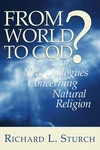
“'From World to God' is a remarkably clear, fluent and engaging set of dialogues on the relationships between natural science and religion. It is up to date and informative, and covers a wide range of issues. Both fair-minded Christians and those who are not Christians feel the different forces of arguments from science, both those which seem to support their outlook and those which tend to subvert it. These dialogues capture that tension through the exchanges of the three dialogue partners. Richard Sturch has succeeded in giving each of them, Geoffrey, Leslie, and Myra, distinct intellectual and religious characters and in developing a real engagement among them. Each of the parties is well-informed and courteous, promoting not only fair-minded debate, but conveying a model of what such intellectual exchanges ought to be like. There is a complete absence of posturing or name-calling. The dialogues do not aim to 'settle' anything, but each of them takes the reader far enough into an issue both to offer a taste of its complexities and to raise in his or her mind much food for thought. In view of this the dialogues would be an ideal book for giving a sixth former who is interested in these issues, or for using in Religious Studies teaching, or in discussion groups of Christians. The text is enhanced by suggestions for further reading. I warmly recommend the book.”
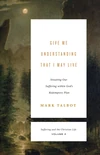
Give Me Understanding That I May Live
Christian Living
“Mark Talbot operates like a calm, rational medic checking his patients. His careful, clear accounts of the Bible’s teaching of suffering, his case that human suffering arises from the race’s fallenness—its rebellion—looks forward to the redemption and consummation that await those who repent and put their faith in Christ. Mark shows himself sensitive to the Bible’s details, its modes and idioms, and to how we humans bear our suffering, cataloging the perplexity, frustration, and futility of human life, the litany of human sin and woe, that comes from our sin. The book forms an armory for the Christian and for his family and friends, outfitting us to endure our suffering through childbearing and motherhood, through the duty and drudgery of daily work, through lives cut short and old age, and through wealth and its loss. The careful reader will want more and more of Mark’s unique books.”
Theology
Foreword
“Dr. James Dolezal's treatment of divine simplicity, which provides a defense of this doctrine in perhaps its strongest form, is a first-rate piece of work . . . [It] is the best full-length philosophical treatment of divine simplicity that I know.”
Theology
“Melvin Tinker has the gift of making difficult doctrines accessible. Here he does it with the 'mystery' of the Bible's teaching on providence. There is no dumbing down, nor going further than the Bible itself takes us, in order to make matters simpler than they are. . . . Intended for Good deserves a big welcome!”
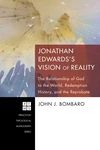
Jonathan Edwards’s Vision of Reality
Theology
“John Bombaro's book on Edwards is most welcome. It shows in clear, well-argued prose with considerable learning that Edwards's theology is definite and clear and not a nose of wax, a plaything for the theologians. Indeed, as he shows, Edwards's Calvinism has some extreme elements to it. The publication of this book should curb excessive and speculative interpretations of his theology.”
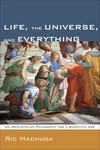
Life, the Universe, and Everything
Philosophy
“Modestly but engagingly written, and yet ambitious in scope, this 'Aristotelian' tour of the great loci of philosophy is a tour de force. It is the fruit, not of quickly-written 'research', but of many years' teaching of primary, classic texts, and it shows. A careful reading will provide a philosophical education, in the old-fashioned sense of that word. The reader will put the book down both better informed, and wiser.”
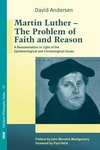
Martin Luther: The Problem with Faith and Reason
Theology
Foreword
“The result of this many-sided approach to the Reformer is a refreshingly positive re-evaluation of Luther's estimate of reason and of the often-reproduced portrait of Luther as fideistic and pessimistic. This new orientation also succeeds in revealing the complexity of Luther's thought, its nuances as well as its tensions, and the fact that he thinks of reason and faith on various levels. Reason is majestic, but it is to be subordinate to the will of God. It is majestic, but it is also fragmented and distorted by the Fall.”
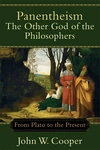
Panentheism--The Other God of the Philosophers
Theology
“This is a groundbreaking attempt to demonstrate the philosophical background of much modern Christian theology, to identify its 'natural religion.' Written with the utmost clarity and with quiet passion, it greatly helps to sharpen the differences between classical Christian theism and other views. Though dissenting from panentheism and from the theologies it fosters, John Cooper nevertheless writes with courtesy and good sense, letting the record speak for itself. The book is a model of lucidity and fairmindedness.”
“Dr. Jennings tackles the difficult and challenging topic of human life and death freshly and sure-footedly. He effectively engages with the 'difficult questions' of humanity in relation to the contours of the saving purposes of God.”
Theology
“With the publication of The Justification of God in 1983, John Piper showed that he was a man unflinching in his adherence to the sovereignty of God’s grace. Now, nearly four decades later, that adherence remains. This massive book affords food for thought in a way that will stretch the minds and hearts of its readers.”
Theology
“A living Christian theological tradition feeds on itself, revisiting and foraging in the writings of the doctors of the church, some great, some less so. Oliver Crisp once again proves himself to be an admirably informative guide to the Reformed tradition, and generous, firm and fair in his judgments. Retrieving Doctrine will further enhance his reputation as a historically sensitive dogmatic theologian who puts the tools of analytic philosophy to good use.”
Richard of Saint Victor, On the Trinity
Theology
“This first English translation of Richard of St. Victor's De Trinitate is a notable publishing event. Ruben Angelici's helpful introduction is both lively and learned. It is to be hoped that this project will renew the interest of theologians and philosophers in the stimulating theology of Richard of St. Victor.”
NOTE: Only includes books currently in our catalog; not necessarily a complete list.
Theology
Theology
Editor
See something wrong on this page? Report a problem