Paul Valliere
Biography
Paul Valliere wrote the foreword to God as Love.
Bios generated by automated processes. · Report a problem
Theology
“Inspired by the Orthodox understanding of the Incarnation, Bulgakov's comprehensive vision of the Word made flesh is on full display here, thanks not only to the great theologian himself but also to his gifted and tireless translator, Boris Jakim.”
Arts & Literature
“The indefatigable Boris Jakim, who has put thousands of pages of Russian theology into English, now gives us a hundred pages of Russia's most theological novelist in a bold new translation. Dostoevsky's Notes from Underground is a chilling parable for modern times — the story of a man who talks himself out of his own salvation. The tale has lost none of its relevance since it appeared a century and a half ago. As Robert Bird observes in his fine introduction, Notes challenges us to consider something our materialistic civilization discourages at every turn — the possibility of spiritual causation. As Dostoevsky knew, the real world includes a mystical element. That spark can be denied, derided, even blasphemed, but it cannot be eradicated. With some help from Jakim, Dostoevsky gives us a vigorous contemporary language for talking about such a thing.”
Philosophy
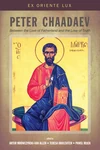
“Modern Russian religious thought begins with Chaadaev. While his output was small, its impact was far-reaching. Khomiakov, Kireevsky, Herzen, Soloviev, Berdiaev and many others were indebted to Chaadaev in one way or another. He merits the careful attention the authors of this volume devote to him.”
Practices of the Self and Spiritual Practices
Philosophy
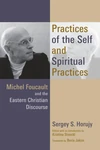
“The leading expositor of Russian religious philosophy in his generation, Sergey Horujy is also a powerful speculative philosopher in his own right. His highly original synthesis -- synergic anthropology -- is on clear and full display here. By presenting his vision in dialogue with the thought of Michel Foucault, one of the icons of postmodernism, Horujy demonstrates the continuing vitality of the Russian Orthodox intellectual tradition in our time.”
Theology
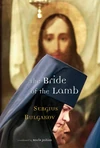
“Already the most distinguished translator of Russian religious philosophy and theology in the English-speaking world, Boris Jakim has outdone himself with his translation of Bulgakov's Bride of the Lamb. Drawing on his deep understanding of modern Russian Orthodoxy and masterfully balancing the competing demands of literal and idiomatic translation, Jakim gives us a comprehensible Bulgakov without blunting the visionary enthusiasm and prophetic challenges that make Bulgakov's theology the wondrous thing that it is. Jakim has made an exceptional contribution to contemporary theological scholarship and ecumenical understanding.”
Theology
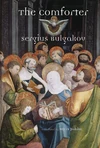
“The doctrine of the Holy Spirit has traditionally been the weak link in trinitarian theology. Of the attempts by modern theologians to remedy this deficiency, Sergius Bulgakov's The Comforter is the most magisterial and, arguably, the most interesting. The book exemplifies the dazzling synthesis of patristic theology, ecclesiastical piety, and modern intellectuality that is Bulgakov's signature. The Comforter is the most satisfying of the three volumes of Bulgakov's dogmatic trilogy On Divine Humanity — smoother than The Lamb of God, more integrated than The Bride of the Lamb. It is Bulgakov at his best. In this translation the indefatigable Boris Jakim has also given us his best. It will be a long time before Russian theology finds an English-speaking interpreter as faithful and skilled as Jakim.”

“There is no better introduction to Sergius Bulgakov's dogmatic theology than The Friend of the Bridegroom. This little book written in 1927 clearly displays the great Russian theologian's virtues: his love for concrete Orthodox tradition, his theological modernism and passionate moral activism, his biblical humanism and broad philosophical outlook, his glimpse of the Divine Glory and grasp of the humanization of that Glory in the Incarnation, and his powerful eschatological sense, which he shared with John the Forerunner. As John went out to meet the Kingdom of God and its Christ, so Bulgakov went out in joy to meet John the Forerunner, Mary the Mother of God, and the other men and women of historic Israel who ushered in the New Covenant. And Boris Jakim has gone out to meet Bulgakov, giving us yet another gem of modern Russian theology in graceful, lucid English. In our day, when New Testament scholarship favors a radical, leveling historicism, Bulgakov's powerful elucidation of the dogmatic substance of the gospel is more relevant than ever.”
Theology
“The Lamb of God is the first volume of Bulgakov's trilogy On Divine-Humanity, the most ambitious and intellectually generous work of Orthodox dogmatic theology in modern times. The theme of this volume is the incarnation and kenosis (self-emptying) of the Word, which Bulgakov explicates from a vast ecclesial and cosmic perspective. But the pleasures of reading Bulgakov are more than intellectual. On page after page the reader can sense the passion and piety of a Christian who is awestruck at the miracle of the Gospel. . . Something else to marvel at here is the achievement of the translator, Boris Jakim, who with this book completes his gift of Bulgakov's dogmatic theology to the English-speaking world. Jakim's devotion to his craft and the degree of difficulty of the works he has dispatched are unsurpassed in the annals of scholarly translation in any discipline.”
Theology
“In Unfading Light Bulgakov masterfully expounds human religious consciousness using an astonishingly varied tool kit, including Bible and Church fathers, Kabbalah and other mystical texts, ancient and modern philosophy, and modern economic thought. Despite Bulgakov's eclecticism, however, his book is remarkably lucid, and thanks to Thomas Allan Smith's impressive translation, the work loses none of its clarity in English. This volume belongs in the library of anyone interested in Russian religious thought.”
No books by this person in our catalog yet.
See something wrong on this page? Report a problem