Peter Adam
Biography
Peter Adam previously served as principal of Ridley College in Melbourne, Australia, and is Emeritus Vicar of St. Jude's, Carlton. Adam wrote The Message of Malachi (2024) and Hearing God's Words (2004).
Bios generated by automated processes. · Report a problem
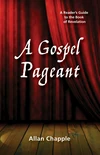
Biblical Studies & Commentaries
“This rich and simple outline of significant passages in the book of Revelation serves as an excellent introduction to a complex book. Chapple expounds and explains key passages in a way that enables believers to read the whole book and receive the blessing that God has promised. This book does not get caught up in details, but shows us how to read, teach, and preach this book with faith, understanding, and anticipation.”
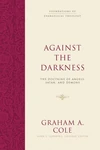
Theology
“We commit heresy by contradicting or distorting Biblical revelation. We also commit heresy by politely ignoring the bits we find difficult or unacceptable! So even in orthodox circles, we commit heresy by ignoring what the Bible reveals about angels, Satan, and demons. We are syncretists, captive to the rationalistic Enlightenment. What we ignore in the Biblical revelation distorts our gospel preaching and teaching. Graham Cole’s excellent book is a timely and judicious study of what the Bible teaches on these topics, in the context of historical theology, contemporary thinking, and the practice of Christian life and ministry. He shows us that we must not misunderstand these topics, but that we also cannot ignore them. We need this book!”
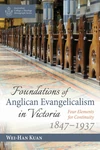
Foundations of Anglican Evangelicalism in Victoria
History & Biography
“There is a resurgence of interest in the history of evangelicalism in Australia since European settlement in 1788. One strong element of this history is the significant role of Anglican [Episcopalian] Reformed evangelicalism. While this is often associated with the Diocese of Sydney, it was also present elsewhere. This groundbreaking book tracks the history of this distinctive strand in the history the Diocese of Melbourne. It is well-written, and a valuable, instructive, and perceptive contribution.”
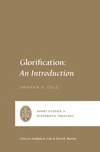
Theology
“This valuable series aims to be simple but not simplistic. Graham Cole’s volume Glorification certainly achieves this. The relevant issues are convincingly discussed within a perceptive outline of the traditional doctrine, and the glorification of believers is viewed in the wider contexts of God’s glory, creation glory, and future cosmic glory. Highly recommended.”
Bible Studies & Devotionals
“Books on Bible characters are not as popular as they were in the past. This life of David is a fine example of such a book. Steven Daly is carefully attentive to the Bible text in its historical and theological context, does not make up what the Bible does not tell us, is reflective, thoughtful, and sensitive in his application, and helps us see how the text points forward to the Lord Jesus. Wonderful!”
Biblical Studies & Commentaries
“This commentary is invaluable for personal or group Bible study, and also for preachers. It includes careful study of the text of Job, and the fruits of deep theological and pastoral reflection. It avoids the sadly common question, ‘What is the minimum I need to know to understand the book of Job?’ and instead asks the godly and productive question, ‘What are the full riches that God has provided for us in the book of Job?’ Furthermore, Christopher answers this question in the light of Christ and the gospel. And of course, there is much to learn here about suffering, the pastoral Achilles heel of the Church both in the West and in the two-thirds world. It is a persuasive and powerful tool to help us edify God’s people by expounding the Scriptures.”
Biblical Studies & Commentaries
“Here is another excellent commentary, which combines great insights of exegesis, theology, relevance, and pastoral application. Every page is enriched by David’s extensive experience and wisdom in understanding and preaching the Bible. This commentary is ideal for those preparing to teach or preach the book of Joshua, as it is also invaluable for Christians who want to understand the book of Joshua and read it for personal encouragement. I praise God for David’s ministry.”
Biblical Studies & Commentaries
“Tyndale commentaries are always useful, not least because they focus so clearly on the text of Scripture, and do not fall into the trap of paying too much attention to other commentaries and not enough to the scriptural text they are intended to expound and explain. So they retain their usefulness for preachers, Bible study leaders and for all readers of the Bible.”
Church Leadership & Ministry
“As individuals, we are positively influenced by our favorite Bible passages. We return to them to form our lives, and we use them to teach and encourage others. Of course we are negatively influenced by the Bible passages we do not know, do not read, and do not use. This limits our growth and maturity, and also limits our usefulness to others. In the same way, churches are positively influenced by their favorite Bible passages and negatively influenced by the Bible passages they do not know! While our evangelical theology may be that the whole Bible is the word of God, our evangelical culture may lead us to neglect most of it. Here is a robust challenge to preachers to ensure that we preach every part of the Bible—a big call for preachers and for churches! How good to be reminded to look for the maximum God has revealed rather than the minimum we can get away with!”
Christian Living
“We are all theologians, and we all practice theology, good or bad. Ministers and lay people need to learn how to do theology, to think theologically, to increase our theological awareness and theological ability, and to think God’s thoughts after him. We need to do this not only to understand our past but also to work through new issues of today and tomorrow. Graham Cole writes with his usual clarity and has provided a resource that is short, deep, vivid, and thoughtful! He shows us a method of doing faithful theology. This method requires honoring and using the Bible and the insights of the past, as well as clarity of thought, an understanding of sin and frustration, humility, patience, faith, prayer, and worship. We see these features reflected in this book.”
NOTE: Only includes books currently in our catalog; not necessarily a complete list.
Biblical Studies & Commentaries
Biblical Studies & Commentaries
See something wrong on this page? Report a problem