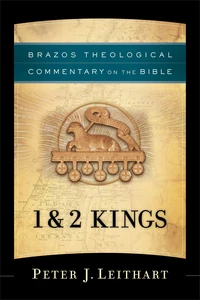
Peter J. Leithart
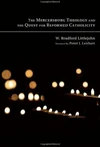
The Mercersburg Theology and the Quest for Reformed Catholicity
Theology
Foreword
“For an increasing number of Protestants, the dismemberment of Protestantism is a scandal, an oozing wound in the body of Christ, leaving behind a twisted Christ as painful to behold as the Isenheim altarpiece. But what is a Protestant to do? The Reformation was itself a rent in the vesture of Christ, so how can Protestants object to the tin-pot Luthers and Machens who faithfully keep up the Reformation tradition of fissure and fragmentation? . . . We need an American Reformation that recovers the original catholic vision of Protestantism, and in pursuing this, American Protestants do well to take a page from early twentieth-century Catholics and embark on a program of ressourcement, and to this program Littlejohn's book is a valuable contribution . . . Here he explains the Mercersburg Theology fairly and thoroughly, and shows how Mercersburg interacts not only with nineteenth-century Reformed theology but with the developments in Catholic, Orthodox, and Anglican churches over the past two centuries. Above all, Littlejohn is deeply conscious that historical theology is never an end in itself, never an exercise in mere antiquarianism. We remember so that we can know how to go forward, and we seek to recover lost resources so that we can pave a fresh future. [Littlejohn] demonstrates how Mercersburg, and especially Nevin, can assist in forming an American Protestant churchliness.”
Theology
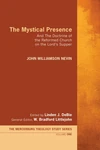
“"Over a century ago, John Williamson Nevin planted an exotic seed in the ground of American Protestantism . . . [He] cultivated a high-church, liturgical and sacramental Protestantism that starkly contrasted with and sharply challenged the populist revivalism around him . . . By launching this excellent new edition of Nevin's works, Brad Littlejohn and his colleagues give us hope that it is finally time for the dead seed to grow into a tree. May it bear much fruit.”
Church Leadership & Ministry
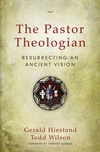
“Wilson summon the church to return to a time when pastors were theologians and theologians pastors, when pastors served as intellectual shepherds of the church. The renewal of what they call ecclesial theology will provide a needed transfusion into theologically anemic pastoral ministry and pastorally anemic theology.”
Theology
Foreword
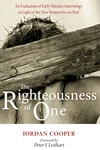
“Cooper does not claim to pass final judgment on the New Perspective. What he offers is the opportunity to renew the debate in a more historically informed fashion. Having cleared the clutter, Cooper leaves us still with the task of grasping what St. Paul really said.”
Theology
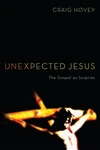
“Craig Hovey has written a surprising book about the surprise of the gospel. He ranges easily and widely from the gospels to Plato to Nietzsche, always keeping his focus on how Christian convictions and practices shape daily life. Hovey's refreshing study will encourage believers to walk with a God who defies our expectations in his unswerving faithfulness.”
Theology
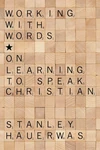
“The essays and sermons in Working with Words reveal that the vibrancy of Stanley Hauerwas arises from his single-minded, manic determination to learn from Jesus and the Scriptures to see and speak as a Christian, and to teach other Chris.tians to do the same.”
Preaching & Worship
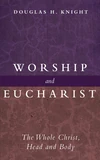
“Reading Douglas Knight’s Worship and Eucharist is like reading a collection of proverbs. Lapidary, taut, declarative, each sentence demands patient attention so its surface simplicity may open to its unexpected theological depths. As Knight cycles through the acts of worship—gathering, hearing, singing, praying, Eucharist—he shows how the liturgy encompasses the city and the future. Worship and Eucharist is a book of unsurpassed liturgical-political wisdom.”
NOTE: Only includes books currently in our catalog; not necessarily a complete list.
Biblical Studies & Commentaries
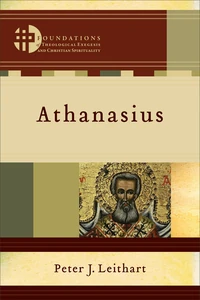
Theology
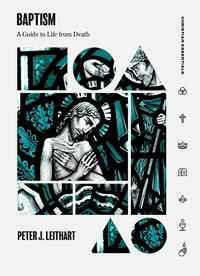
Church Leadership & Ministry
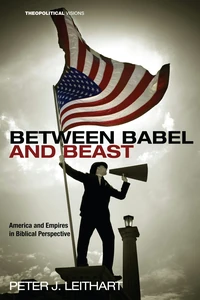
Ethics, Culture & Social Issues
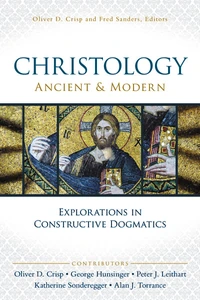
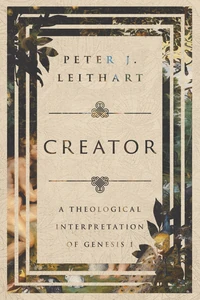
Theology
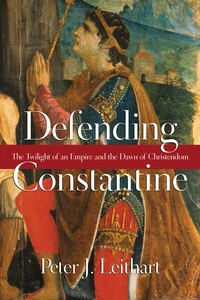
History & Biography
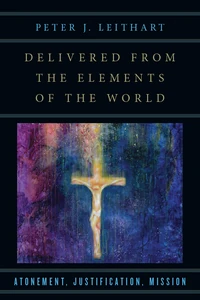
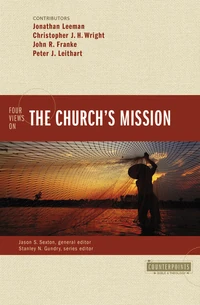
Arts & Literature
History & Biography

History & Biography
Christian Living
Arts & Literature
Theology
Theology
Christian Living
Theology
See something wrong on this page? Report a problem