Philip Clayton
Biography
Philip Clayton wrote Transforming Christian Theology.
Bios generated by automated processes. · Report a problem
Theology
“Providence has become theology's most controversial claim. How do we, children of a skeptical age, still find faith in a living and active God? With a profound sense for both the challenges and the need, Zbaraschuk leads readers toward a compelling resolution: 'a primal, incarnate, active Spirit, living in people and communities, taking the form of love-in-praxis and issuing in hope.' It's a journey worth taking.”
Science & Faith
“Amos Yong's preeminent role among Pentecostal-charismatic theologians has long been acknowledged. His Spirit of Creation now reveals him as one of the most exciting constructive theologians at work in the contemporary religion-science dialogue. Some will resist his openness to science, others his openness to the real activity of the Spirit. But Yong's beautifully argued proposal may just be the closest that one can come to reconciling science, orthodox Christianity, and a Spirit-centered theology. Indispensable reading for anyone interested in the relationship of theology and science today.”
Theology
“Emergence comes of age! Here Moltmann’s theological depth (‘Who are we to be?’) meets the fresh expressions of faith in emerging Christian communities across America (‘How are we to become?’). Missional, emergent, and neo-monastic movements are the cutting edge of ecclesial innovation. It’s high time to see what they can learn from theology . . . and what they have to teach it.”
Theology
“Can I believe in the providence of God without making God responsible for evil? Open and relational theology answers yes, combining biblical and philosophical resources. Here Thomas Oord, the leading open and relational theologian, makes a powerful case for miracles and the providential care of the self-emptying God. His remarkably clear book offers readers a compelling theodicy and a welcome gift to personal faith.”
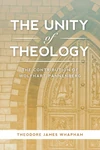
Theology
“Clear and concise, Theodore Whapham’s book reconstructs the development of one of the great theologians of the 20th century. Famously, Pannenberg views history as 'God’s self-demonstration of his divinity to humanity.' These pages retrace the trajectory from Pannenberg’s early essays to his crowning achievement. Step by step, Whapham helps readers understand the central building blocks of what may be the most breath-taking theological vision of the 20th century.”
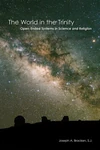
Science & Faith
“In this bold volume, Joseph Bracken seeks to do in our day what St. Thomas did in his: to interpret classical Christian doctrine using the best of contemporary scientific and philosophical resources. The escalating warfare between naturalists and supernaturalists will end, he suggests, only if science and theology both embrace a shared metaphysic built on integrated systems or processes of activity. In chapter after chapter, Bracken effectively demonstrates the fruitfulness of these new concepts for overcoming traditional challenges to the theology of the Incarnation, the Trinity, the church, miracles, resurrection, and life after death. A cutting-edge contribution to today’s theology-science dialogue…”
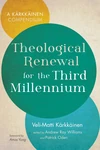
Theological Renewal for the Third Millennium
Theology
“Countless students and church people have been skillfully guided into the adventure of theology by Kärkkäinen. With this book in hand they, and more advanced scholars, will be able to do theology along with one of the most exciting systematic theologians writing today. . . . The quest for compelling theological answers runs through every page, yet always with Kärkkäinen’s characteristically warm spirit of listening and appreciating.”
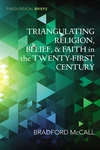
Triangulating Religion, Belief, and Faith in the Twenty-First Century
Theology
“Readers are greeting the appearance of this new Theological Briefs series with enthusiasm for useful introductions to key topics in religion and theology. This opening volume is a strong example. We are led through a no-nonsense exploration of how faith, belief, and religion are similar and how they are different. In the end, whatever your beliefs and your religion, McCall concludes that ‘Faith can destroy us or heal us, but . . . we can never be without it.’”
NOTE: Only includes books currently in our catalog; not necessarily a complete list.
Theology
Science & Faith
The Problem of God in Modern Thought
Philosophy
Transforming Christian Theology
Theology
See something wrong on this page? Report a problem