Philip L. Wickeri
Biography
Philip L. Wickeri has served as Advisor to the Archbishop on Theological and Historical Studies in the Anglican Province of Hong Kong (Sheng Kung Hui), and previously taught at Nanjing University. Wickeri wrote Seeking the Common Ground (2011) and wrote the foreword to No Strangers Here (2017).
Bios generated by automated processes. · Report a problem
Theology
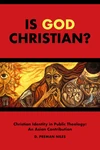
“This book is essential reading for anyone concerned with public theology in the Asian context. In a series of short, readable and incisive chapters on cross-textual and postcolonial hermeneutics, D. Preman Niles asks how Christians can better understand and engage other religious communities through a more careful reading of their own Biblical texts. In an age of increasing religious polarization, this book will help Christians reassess their positions in the public realm and move towards reconciliation with others.”
Theology
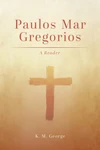
“Paulos Mar Gregorios was one of the great theologians of the 20th century. Orthodox and progressive, traditional and modern, Indian and ‘Western,’ Mar Gregorios defies simple categorization. His work spans many different disciplines, because no single discipline could contain his creative mind. Until now, most of his books and essays were published in India and were not easy to get hold of. This new collection of his writings will help to make his thought more widely available. I believe he would hope that it would stimulate further reflection on the subjects he so deeply cared about.”
History & Biography
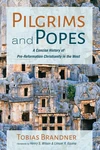
“Pilgrims and Popes is an engaging book on the first fifteen centuries of the history of Christianity. . . . Brandner offers a creative approach to a subject which is essential for theological education today. This book will also be of interest to general readers.”
Theology
“Using the critical work of American Episcopal theologian Mark McIntosh, [Dongsheng] Wu offers a creative approach to Nee's view of spiritual knowing and spiritual life, one that shows the depth and insight of Nee's thought on such subjects as divine illumination and union with God . . . Wu puts Nee in a Christian spiritual tradition that has deep roots in Protestant mysticism and creative possibilities for today.”
NOTE: Only includes books currently in our catalog; not necessarily a complete list.
History & Biography
See something wrong on this page? Report a problem