R. Scott Clark
Biography
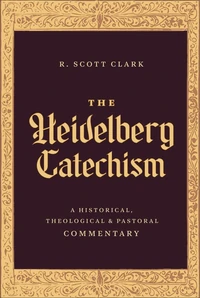
R. Scott Clark earned a DPhil at Oxford University and has served as professor of church history and historical theology at Westminster Seminary California. Clark wrote The Heidelberg Catechism (2025).
Bios generated by automated processes. · Report a problem
Books Endorsed by R. Scott Clark
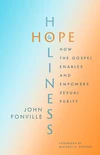
Christian Living
“In this lively, engaging, and thoughtful meditation on 1 Corinthians 6, John Fonville charts a map of the gospel-driven sexual life, a life moved by the gospel, shaped by God's moral law, and lived in union with Christ to whom we belong both body and soul.”
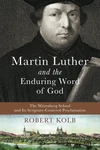
Martin Luther and the Enduring Word of God
Theology
“The five hundredth anniversary of the Ninety-Five Theses is a season of many books about Luther, but few of them are likely to be as carefully researched, as grounded in original sources and Luther's original context, and therefore as valuable as Professor Kolb's study of Luther and the Wittenberg Circle. Any reader who would meet Luther--and particularly Luther as scholar and preacher of the Scriptures--on his own terms and as he was received by his earliest followers must not miss this excellent contribution.”
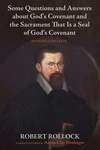
Some Questions and Answers about God’s Covenant and the Sacrament That Is a Seal of God’s Covenant
Theology
“Too often the story of the development of Reformed theology covers a few major figures in the early to mid-sixteenth century before leapfrogging into the seventeenth century. With this excellent translation and these judicious selections, Aaron Denlinger has done us all a great service by drawing our attention to the sinews that account for the development of orthodox Reformed theology in the late sixteenth and early seventeenth centuries.”
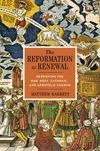
History & Biography
“The Reformation has been caricatured as carrier of three viruses, nominalism, secularism, and individualism, which many blame for the downfall of the West. In this volume Matthew Barrett does a fine job of undermining those pernicious narratives and calling attention to the self-consciousness of Reformation (and post-Reformation) churches as heirs of the best of the patristic and medieval church, i.e., as catholic. This volume is a welcome contribution.”
Books Authored or Contributed to by R. Scott Clark
NOTE: Only includes books currently in our catalog; not necessarily a complete list.
Theology
See something wrong on this page? Report a problem