R. T. France
Biography
R. T. France (1938–2012) taught at London Bible College, served as principal of Wycliffe Hall in Oxford, and was a rector. France was also an Hon. Research Fellow in the Department of Theology and Religious Studies, University of Wales, Bangor. France's books include Matthew (2008), The Gospel of Matthew (2007), and Women in the Church's Ministry (2004).
Bios generated by automated processes. · Report a problem
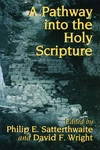
A Pathway into the Holy Scripture
Biblical Studies & Commentaries
“One of the main influences on the impressive development of evangelical scholarship over the last fifty years has been the Tyndale Fellowship of Biblical and Theological Research. These papers from some of its leading members reflect not only on the achievement of the past half-century but also on the land which is still to be possessed. . . . Anyone who imagine that evangelical theology is a fixed system incapable of change will find these papers surprising reading. I know of no better place to look for an overview of what is now an increasingly prominent strand in theological thought, and one that can no longer be dismissed as either boring or naïve.”
Theology
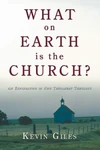
“Kevin Giles has brought together some of the most widely respected expressions of current New Testament scholarship, and has judiciously selected his material in order to give an essentially 'mainstream' overview of the issues for the nonspecialist. New Testament teachers as well as concerned church members will be deeply in his debt.”
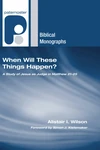
When Will These Things Happen?
Biblical Studies & Commentaries
“In the crowded field of Matthean studies, this book offers something new, a discussion of the theme of judgment in Matthew 21-25, the account of Jesus' confrontation with the Jerusalem authorities. Dr Wilson is well abreast of current scholarship, but not afraid to take an independent line, not least in his robust defense of the view that reference to the 'coming of the Son of Man' refers not to the parousia but to the imminent vindication of the rejected Messiah. This exegesis enables him to link ch. 24 closely with the preceding dialogue and diatribe and to offer a satisfyingly coherent interpretation of the whole 'Jerusalem' section of the gospel which precedes the passion narrative. Over against Marcus Borg's non-eschatological Jesus, Wilson shows convincingly that Matthew's Jesus had a clear eye to the future, looking both to coming events in Palestinian history for his own vindication on the world stage and also to a more ultimate judgment in which he would play the leading role. Whether or not other scholars agree with Wilson's conclusions, this is the sort of careful exegetical scholarship which is needed to carry constructive discussion forward.”
NOTE: Only includes books currently in our catalog; not necessarily a complete list.
Biblical Studies & Commentaries
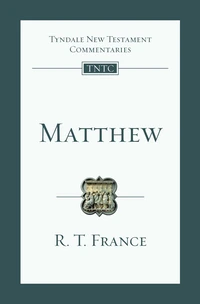
Biblical Studies & Commentaries
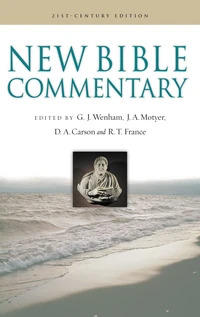
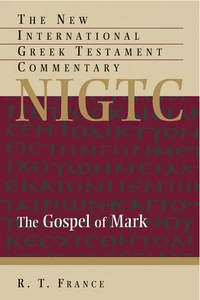
Biblical Studies & Commentaries
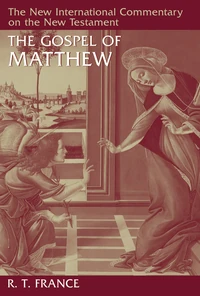
Biblical Studies & Commentaries
See something wrong on this page? Report a problem