Raymond F. Collins
Biography
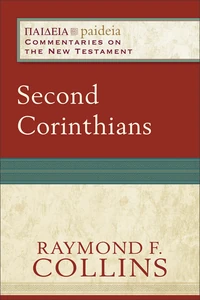
Raymond F. Collins, a Roman Catholic priest of the Diocese of Providence, earned an STD at the Katholieke Universiteit Leuven. Collins has served as the Warren-Blanding Professor of Religious Studies at The Catholic University of America and as a visiting scholar at Brown University. Collins wrote Second Corinthians (2013) and Letters That Paul Did Not Write (2006).
Bios generated by automated processes. · Report a problem
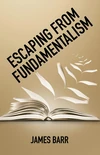
“This is undoubtedly one of the best little books on fundamentalism to appear in print in recent times. . . . It is not a book which will convince the average fundamentalist. His or her choice has been made, ratified, and solidified in such a way as to preclude any openness to a position other than one in conformity with the fundamentalist tradition. The book’s usefulness lies in what it offers to those who are candidates for that ‘scripturally-based’ certitude which holds an eerie attraction for so many men and women of faith today. It should be read not only by those who are candidates for fundamentalism, but also by all pastors and pastoral workers who must deal with the problem of fundamentalism in our midst. As a matter of fact, I think that it ought to be read by all who esteem the scriptures, properly understood, to be of singular importance for the church and its Christian faith.”
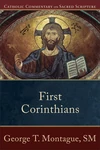
Theology
“George Montague’s First Corinthians is a great addition to the Catholic Commentary on Sacred Scripture. Of all Paul’s letters, First Corinthians is the one that enables us to see the reality of a first-century Christian community and read Paul’s reflections thereon. Drawing from what Paul wrote, Montague shows the continuity between the Church of God at Corinth and the Catholic Church of the twenty-first century. It is as insightful about the one as it is the other.”
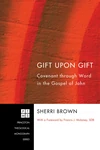
Biblical Studies & Commentaries
“Sherri Brown provides a wonderfully insightful rereading of the Gospel according to John in light of the biblical covenant motif. Her analysis highlights the mother of Jesus, 'the Jews,' and Pilate as three characters who respectively epitomize acceptance of Jesus, rejection of Jesus, and the ambivalence of not knowing what is at stake. With Brown's covenantal reading of the Johannine story, the old gospel becomes a fresh story, acquiring new life and shedding new light.”
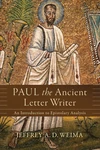
Paul the Ancient Letter Writer
Biblical Studies & Commentaries
“Paul the Ancient Letter Writer is an overdue book that needed to be written. Readers of this comprehensive study will no longer be able to escape the reality of Paul having written real letters. Weima shows how the essential components of ancient letters appear in each of the thirteen texts in the New Testament’s collection of Paul’s letters.”
Resurrection as Anti-Imperial Gospel
Biblical Studies & Commentaries
“From the vantage point of a vista of literary, numismatic, and archeological evidence, Pillar offers us in this study a fresh look at 1 Thessalonians 1:9–10, the first literary attestation of the resurrection of Jesus from the dead. Sharing the lens of Pillar's perspective on what Paul wrote about the resurrection in the earliest of his letters helps us to understand in a new and different way just how much of an impact the announcement of the good news of the resurrection made upon those who first heard Paul's gospel. Resurrection as Anti-Imperial Gospel is a must read.”
The First Epistle to the Corinthians
Biblical Studies & Commentaries
“I have read Anthony Thiselton's commentary with delight. It is an impressive conversation with the best of contemporary interpretation of Paul's first letter to the Corinthians. Its clearly articulated juxtaposition of opposing views makes it a valuable tool for those who want to go further in the study of one of the most important documents of the early church.”
The Question of John the Baptist and Jesus’ Indictment of the Religious Leaders
Biblical Studies & Commentaries
“Disciples of John the Baptist make a sudden appearance in Luke's gospel at 7:18. Their appearance allows the evangelist to reprise the comparison between John and Jesus found in the Infancy Narratives, with greater emphasis on their respective roles in the history of salvation. Using both the historical-critical method and the literary-method of textual analysis, Martinez carefully teases out the meaning of what Jesus had to say about John and himself in a stream of consciousness response to the critical question, 'Are you the one who is to come, or are we to wait for another?'”
NOTE: Only includes books currently in our catalog; not necessarily a complete list.
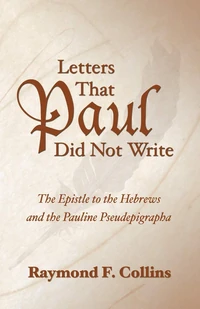
Letters That Paul Did Not Write
Biblical Studies & Commentaries
Biblical Studies & Commentaries
See something wrong on this page? Report a problem