Robert Cording
Biography
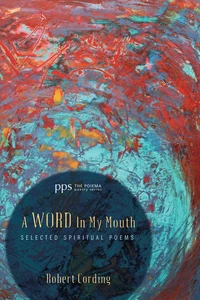
Robert Cording has served as Barrett Professor of Creative Writing at the College of the Holy Cross. Cording wrote A Word in My Mouth, published in 2013.
Bios generated by automated processes. · Report a problem
Arts & Literature
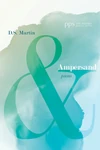
“Don Martin’s new book connects many worlds—Christianity, art (both painting and literature), family, geography. These deeply felt poems trace the very human ‘continual patterns’ of ‘conflict & resolution.’ What underlies Ampersand is Martin’s deeply held belief in waiting and persevering. We must wait and persevere, Martin wisely knows, because we are dim-sighted and ‘slow to wonder.’ . . . In short, Don Martin’s poems illustrate the ‘benefit of . . . persistent belief,’ which helps us find at times the unlikely connection between the suffering soul & the astounded soul.”
Arts & Literature
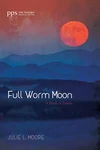
“Full Worm Moon calls to mind both the cycle of monthly full moons that structures this collection, and the change that arrives in the loosening of the earth at the end of winter. . . Moore’s attention to details allows the most ordinary of moments to tip, without the slightest poetic willfulness, into the extraordinary. And, equally tuned to life’s harshness and life’s beneficence, Moore’s Full Worm Moon finds a way to bless ‘this place [we] wander through’ even as life’s sorrows are endured.”
Arts & Literature
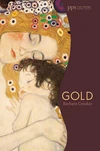
“Gold invoices the losses and worries of the last third of our lives: the deaths of old friends, the illness and deaths of parents, the breakdown of our own trusted bodies. And yet there is the abiding grace here of those moments when the plenitude of the world is incarnate in Crooker's elegant, accessible, and keenly observed poems.”
Arts & Literature
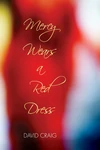
“In poem after poem, Craig helps us see his and our foolishness; still, the self-deprecating voice here is also the voice of wonder: how mysteriously and gracefully we get through our lives even when we are 'still everything we aren't.' Craig can be devilishly funny, heartbreaking, and profoundly searching as he examines all those human failures and frailties that make us all one another.”
Arts & Literature
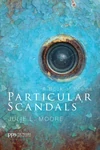
“These are poems that span our daily lives and ask the hard metaphysical and theological questions living brings. . . . They are alert (without sentimentality or false transcendence) to the grace and beauty, both ordinary and commonplace, that open our hearts and mouths in hallelujah. I so admire these poems that quietly refrain from false claims and extravagances, but patiently bring us--in their detailed evocations--closer to [our] paradoxical and mysterious lives.”
Arts & Literature
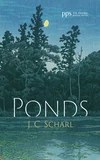
“Jane Clark Scharl’s mature and wonderful first book, Ponds, has mastered the art of saying less as a way of saying more. Scharl’s work combines formal restraint with a full-bodied feel for the sensuous pulse of life. In these deeply intelligent, searching poems, Scharl accepts that ‘some things cannot be known’ but knows, too, that to reveal themselves, ‘they bring to mind / the very things they are not.’ Her poems are such revelations.”
Arts & Literature
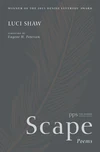
“Luci Shaw notes in one of her new poems that, 'without the impediment / of gravity the dancer / cannot dance.' And it's just that wise understanding of the weights and balances of life that her poems get so right. . . . Such abstractions live in the particulars of an egg's brownness, a snail's glistening trail, a sparrow's 'economical and precise' pecking, and the taut feel of a trout on the line. Luci Shaw's poems incarnate the 'slow pleasure of being.'”
History & Biography
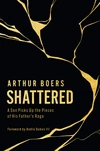
“Arthur Boers’s memoir, Shattered, takes its title from his intimate knowledge of glass—as the son of a father who made greenhouses; as the son of a father who threw a potted geranium through a plate glass window when angered; and, finally, as a minster who ‘stayed pressed against the glass’ (as Simone Weil says in an epigraph to the book), looking for clarity, for the clear light of God. At the book’s center is the question, How do I reconcile all I knew and felt about my father? But this is no memoir of blame. Wonderfully complex, Arthur’s narrative crisscrosses Dutch history, his family’s immigration to Canada, his Calvinist upbringing, and his search for a faith that includes joy, freedom, social justice, and theological rigor. Arthur’s desire: to transform the jagged, shattered glass of immigrant frustration and alcohol-fueled rage into the smooth beauty of beach glass. And as Arthur’s understanding of his father’s and his father’s father’s contradictions grows more complex, he accomplishes just such a transformation—not by simplifying his father or by knowing him any better, but by accepting his father in all his manifestations. This book very carefully fixes the shattered glass of his childhood, replacing what’s broken with new, reglazed glass from which he looks out on the world.”
Arts & Literature
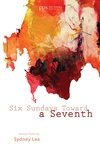
“Sydney Lea's heartbreaking and heartening poems look, with the utmost honesty, at 'what we may or may not be / here on earth.' . . . [These] urgent poems give us back the depth of our existence. With intelligence, passion, and humility, Lea embraces the task he has been given: to record those 'warming recollections' of parents, friends, wife and children, and to acknowledge how this 'splendid universe subsumes . . . his small dumb witness' into a 'hymn of grateful praise.'”
Biblical Studies & Commentaries
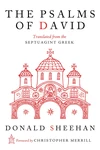
“Both a record of Israel's history and humankind's never-ending movement away from and toward God, the Psalms in this translation by Donald Sheehan from the Septuagint Greek has a rare purity, a lucid and poetic directness that embodies their prayerful intent: to open oneself to the will of God by emptying one's own will. In Sheehan's deeply achieved translation, we experience a beauty that is truth; to use a title from Dietrich Bonhoeffer's book on the Psalms, there has been a lifetime's 'meditating on the word' behind the making of this translation.”
Arts & Literature
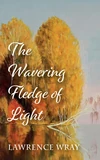
“There is a yearning in this accomplished book to give a voice to life’s most crucial, true, and yet ineffable moments. Lawrence Wray writes about a world ‘that cannot be held close enough,’ which is always on the verge of disappearing or has already vanished, leaving only traces behind. His language gives shape (elegantly and convincingly) to what is always at the verge of what can be said, is always that is, at The Wavering Fledge of Light.”
NOTE: Only includes books currently in our catalog; not necessarily a complete list.
Arts & Literature
See something wrong on this page? Report a problem