Robert John Russell
Biography
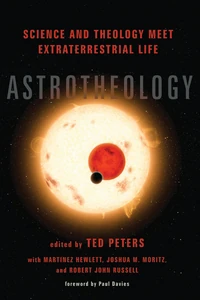
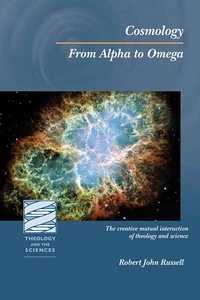
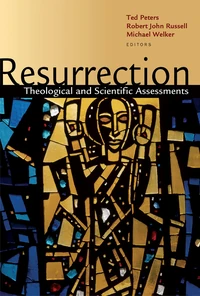
Robert John Russell has served as Ian G. Barbour Professor of Theology and Science in Residence at the Graduate Theological Union in Berkeley, and as founder and director of the Center for Theology and the Natural Sciences (CTNS). Russell previously served as series editor for the Vatican Observatory / CTNS. Russell wrote Cosmology (2008) and edited Resurrection (2002) and Astrotheology (2018).
Bios generated by automated processes. · Report a problem
Science & Faith
“In this exemplary engagement between Christian theology and contemporary science, via specific case studies involving evolutionary biology, cultural anthropology, and physical cosmology, LeRon Shults offers profound new insights into a Christology for our time. In the process he engages some of the leading figures in theology and science. This book is part of Shults's wider project of reforming Christian theology in dialogue with such philosophical areas as epistemology, ethics, and metaphysics. Essential reading for scholars and laypersons alike who are passionate about theology and science.”
Confronting the Predicament of Belief
Apologetics
“Confronting the Predicament of Belief is an engrossing discussion of the key issues raised by Clayton and Knapp in The Predicament of Belief. It includes eight essays by thoughtful and incisive critics of Predicament who assess Clayton and Knapp’s stand on the possibility that religious, and particularly Christian, beliefs are true.”
Science & Faith
“A stellar contribution to the new breed of creative scholarship in theology and science. Herzfeld brings such disparate fields as artificial intelligence and Christian spirituality into creative mutual interaction. Her relational interpretation of the image of God in humans sheds startling light on crucial issues in our technological age.”
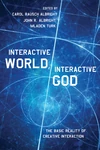
Interactive World, Interactive God
Science & Faith
“This remarkable text explores the fruits of science from fundamental physics through the origins of living things, from the human brain to society, gleaning their importance to religion where we are called to choose to live a life of love for God and for others. It brings the wealth of contemporary scholarly conversations about theology and science by many of its leading authors to a wider readership. I highly recommend it!”
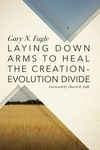
Laying Down Arms to Heal the Creation-Evolution Divide
Science & Faith
“Fugle knows what he's talking about from both sides of the street: religion and science. He writes with an engaging, gentle, yet admonishing style, asking those who urge conflict between evolutionary biology and Christian faith to reassess their confrontational views. Instead, he urges all involved to adopt an attitude of mutual respect--and evangelical Christians, in particular, to welcome evolutionary biology as further witness to their biblical faith. I recommend Laying Down Arms to Heal the Creation-Evolution Divide to everyone, scientist and lay person alike, yearning for a hopeful, new approach to reconciling faith and science.”
Theology
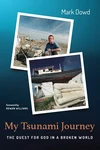
“In his stunning book, Dowd leads us on a frank, moving, and beautiful journey into the hardest challenge to faith: radical evil, especially in its most opaque form, natural evil—epitomized by the Asian tsunami of 2004. . . . His personal journal of faith and despair has now culminated in this most remarkable story. I urge everyone interested in such gut-wrenching events to read Mark’s book—again and again.”
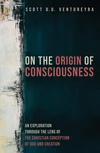
On the Origin of Consciousness
Science & Faith
“Scott Ventureyra’s compelling book applies my interactive method for relating theology and science (CMI) to the problem of consciousness. In doing so, Ventureyra creatively describes contributions theology might make to the scientific understanding of the origin and emergence of consciousness in nature. I am very pleased to recommend this book to both technical and general readers in theology and science.”
Science & Faith
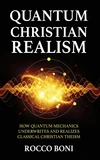
“In this new contribution to the theology and science literature and written for the nonspecialist, Rocco Boni argues that quantum mechanics supports classical Christianity and resolves some long-standing disparities between science and Christianity. Boni bases his argument on the ontological claim that while the ordinary world of experience is physical and material, nature at the level of quantum phenomena is nonphysical and immaterial. He then adds to this dualist view of nature a Platonist view of the quantum wave-function. This allows Boni to claim that God, as disembodied, transcendent mind, can interact directly with nature at the immaterial, quantum level. By adopting a Copenhagen interpretation of quantum physics which supports an indeterministic view of the quantum world, Boni can also claim that God acts in the world without intervening in, and violating, the laws of nature and natural processes. Readers who have followed the recent discussions of quantum mechanics and divine action will find much to consider in Boni’s provocative book.”
Science & Faith
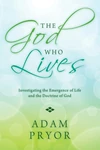
“In The God Who Lives, Adam Pryor offers striking new insights into the traditional metaphor of the 'living God.' From his deep engagement with anthropologist Terrance Deacon's research on the biological emergence of life and his immersion in the philosophical literature on emergence, Adam explores the concept of God as an 'effective absence' in relation to the world. The God Who Lives is crucial reading for scholars and laypeople alike interested in the dynamic interaction between theology and science.”
NOTE: Only includes books currently in our catalog; not necessarily a complete list.
See something wrong on this page? Report a problem