Ruben L.F. Habito
Biography
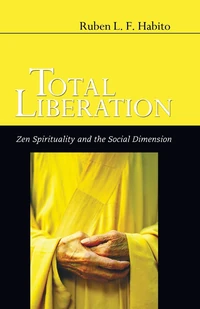
Ruben L.F. Habito wrote Total Liberation and the foreword to The Emptied Christ of Philippians.
Bios generated by automated processes. · Report a problem
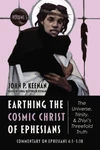
Earthing the Cosmic Christ of Ephesians—The Universe, Trinity, and Zhiyi’s Threefold Truth, Volume 5
Biblical Studies & Commentaries
“Reading Christian scriptures with a Buddhist lens, applying a hermeneutic of emptiness, brings forth new horizons and untold riches in understanding the meaning of Christ, revealing the cosmic dimensions and the triune mystery underlying our bodily life on this Earth.”
Theology
“Following Augustine of Hippo, who famously wrote about how we can encounter the living God in our human memory, the author shares his most intimate recollections of significant events in his life that reveal this loving presence throughout. Faith as remembering is a delightful read, an insightful book for faithful seekers and thinkers as well.”
Theology
“Paul Ingram offers essays from up close and personal, as one awestruck by encounters with the sacred weaving words and seeking to make sense of it all for oneself and for one’s readers. Knowing full well that these efforts are bound to fall short right at the outset, one called to be a theologian nevertheless engages in an endeavor to which it is infinitely worth dedicating an entire lifetime.”
Theology
“Exciting and refreshing . . . This book breaks our stereotypical images of Asian religious traditions as 'world-denying,' 'fatalistic,' 'individualistic,' and presents a lucid account of the liberative message of these traditions, as embodied in the lives and struggles of Asian women and men empowered by their religious vision.”
World Religions
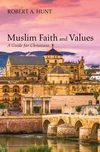
“Many images of Islam that prevail in the Western hemisphere misrepresent this religious tradition with its nearly two billion adherents throughout the world. Robert Hunt offers a balanced and empathetic account designed especially for Christian readers who seek a better understanding of Muslim faith and values.”
World Religions
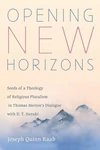
“This thoughtfully written volume explores Thomas Merton’s contemplative path in the light of his dialogue with notable religious figures such as the Dalai Lama, Thich Nhat Hanh, D. T. Suzuki, and others. Laying out the trinitarian features and theological underpinnings of Merton’s contemplative path, the author suggests ways toward ‘opening new horizons’ in Christian theology of religions.”
Arts & Literature
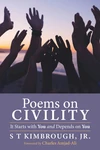
“In our contemporary society marked by almost unbridgeable divisions and polarization among members of our human family, we are in such dire need of finding ways of being able to live together without bashing each other’s heads. These poems on civility (as the foreword suggests) offer us some ‘small sparks of light’ in the midst of the darkness.”
World Religions
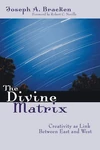
“A masterful work . . . opening pathways for conversation between philosophical and religious traditions of east and west, as well as enriching Christian understanding of ultimate reality as trinitarian.”
The Process of Buddhist-Christian Dialogue
World Religions
“Ingram offers an insightful, well-structured, and panoramic view of the field of Buddhist-Christian studies, mapping out the conceptual, socially-engaged, and interior dimensions of the dialogue that continue to enrich and expand the horizons of both traditions.”
World Religions
“Religion has been and continues to be a factor that breeds conflict leading to violence among human beings. Can religion also provide human beings with a capacity to work creatively together toward a more humane, peaceful, and ecologically sustainable world? This book offers critical and constructive essays by scholars of five major religious traditions that examine the seeds of hostility toward religious Others and seek to highlight those elements that ground attitudes of hospitality and loving kindness toward Others in a way that would lead to harmonious coexistence and cooperation in our world today.”
Science & Faith
“A refreshing book, written with passion, presenting an ecological spirituality that is grounded in a Christian vision while also drinking from the wells of wisdom of other faith traditions.”
NOTE: Only includes books currently in our catalog; not necessarily a complete list.
World Religions
See something wrong on this page? Report a problem