Rudolph Bahro
World Religions
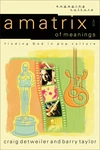
“The Engaging Culture series is designed to help Christians respond with theological discernment to our contemporary culture. Each volume explores particular cultural expressions, seeking to discover God’s presence in the world and to involve readers in sympathetic dialogue and active discipleship. These books encourage neither an uninformed rejection nor an uncritical embrace of culture, but active engagement informed by theological reflection. for ministers, missionaries, and psychologists. We have worked in organizations such as Young Life and with churches such as Sanctuary and New Ground. We have invested significant time living among people in Japan, the Soviet Union, Europe, and urban America. We both treasure conversation, thoroughly enjoying the classes we teach at the Art Center College of Design, the Los Angeles Film Studies Center, and Fuller Theological Seminary. This book arises out of ongoing conversations with our insightful students. We write for that bright, passionate audience of young people whom advertisers covet and the church is in danger of losing. We hope to offer some clues, some handles, some reference points for processing the sensory avalanche that pop culture creates 24/7. We hope to inspire the person of faith struggling with too much information as well as artists and culture watchers who dig God but can’t stomach religion. We’ve always preferred the conversations occurring on the margins, with people heading either toward or away from God with passion and conviction. We acknowledge that the entertainment industry generates plenty of products worth criticizing. Pop culture can transmit many allusions and delusions, leading unsuspecting audiences toward paths of destruction. As parents, we share many of the concerns raised about music, television, and film’s contribution to escalating social violence. We wonder if video games desensitize habitual users. We would never condone bankrupt films such as The Cell or avowedly destructive bands such as Slayer and Cannibal Corpse. We worry about the sexualizing of our culture, about consumerism, about what art exactly is! While recognizing people’s legitimate concerns, we believe that the “sins” of pop culture have received ample coverage in previous books. Our book will concentrate on what’s right with pop culture. We write for those with a love for P.O.D., a passion for The Matrix, and a commitment to Friends. Rather than attack pop culture, we’ve chosen to adopt the directive captured on the provocative poster for American Beauty. We want to “look closer,” to examine where God might be lurking in the songs, shows, and films kids continually return to for solace and meaning. We celebrate the rise of pop culture as among the most profound, provocative, exciting expressions of legitimate spiritual yearning in at least one hundred years. We turn to pop culture in our efforts to understand God and to recognize the twenty-first-century face of Jesus. We embrace pop culture because we believe it offers a refreshing, alternative route to a Jesus who for many has been domesticated, declawed, and kept under wraps. As the Christian church has often adopted the role of moral policeman, pop culture has assumed the role of spiritual revolutionary, subverting and frustrating those religious authorities who desperately cling to black-and-white answers in an increasingly gray world. We write this book in hopes of freeing Jesus from the chains that have bound him. We believe a bold, ancient, radical Christ stands on the sidelines of the culture wars, waiting (in the words of Creed) “With Arms Wide Open,” eager to engage our hearts, our minds, and our culture. We recognize that defending pop culture from a position of faith puts us in a small (but ever growing) group. Many of the conversations in religious circles begin with questions of morality. Our students often start with concerns about what they can watch. How much is too much? Where would Jesus draw the line in his pop cultural diet? We congratulate those who have sought to frame cultural engagement as a test of personal purity. Plenty of books have tackled those concerns with varying degrees of insight.[1] For those hoping to find clear prescriptions for what Christians should or shouldn’t watch and listen to, this is not your book. Instead, we write for students who have decided to live out their faith with feet planted firmly in the world—with all the messy but exhilarating The realm of popular culture is so vast that our approach in this book must be subjective. We tackle issues and aspects of popular culture that we find interesting. They include (in order of impact): advertising, celebrity, music, movies, television, fashion, sports, and art. They are not the only “denominations” worthy of study. We leave the enduring appeal of NASCAR and country music to others.[9] Important volumes on the ten-billion-dollar video game industry will need to be written. But these arenas surely are central, serious, and worthy of careful theological reflection. It is difficult to analyze pop culture because of its interlocking, all-consuming power. TV underwrites sports. Movies and music create celebrities. Celebrities wear the fashions. Advertising tells us where to buy the clothes, using superstar athletes to push products on TV. Yet to criticize advertising as subliminal seduction or to reject capitalism for creating false demands seems too easy, especially given the collapse of communism and the spread of democratic capitalism. We hope to offer a conscientious response to a given, lived reality. Neal Gabler encapsulates the triumph of pop culture in his brilliant book Life the Movie.[10] He makes a compelling case that moving images have not merely reflected or influenced reality. Our very lives have become “movies,” with all of us playacting, stars of our own “lifies.” We put on a costume almost every day, whether we want to appear classy, sporty, casual, defiant, unique, sexy, or religious. We cast ourselves, dressing like celebrities, imitating whatever pose we consider cool. We do not sit outside the culture, planning how to approach it. Pop culture is our culture, the air that we breathe, for better or worse. Gabler cuts through the moral grandstanding, refusing to fall into the familiar and tiresome trap of lamenting the reach of electronic media. Instead, he builds a case by assuming pop culture’s triumph in almost evolutionary terms. He recasts the debate as a struggle between “realists” and “post-realists,” between those who think we “[stand] on a precipice” and those who think we “[stand] in a bright new dawn.”[11] He doesn’t answer the question but considers it central to the emerging epoch. Hopefully, we’ll clearly communicate that we see a renaissance, a new dawn, the stirrings of a profound, spiritual renewal. For the sake of space, we limited ourselves to recent examples of the subjects we discuss. We do not expect or aspire to make our chapters definitive histories. The sheer avalanche of information available guarantees that our readers will bring more expertise to particular areas of pop culture fandom. The chapters are intended as sketches to make you think more critically about your own fields of interest, rather than comprehensive answers. We offer our stories and perspectives not as the reading but as a reading of pop culture. In fact, this book offers two distinct readings of pop culture. We will take turns, analyzing aspects of pop culture that appeal to our particular areas of interest. Barry covers advertising, music, fashion, and art. Craig writes on celebrity, movies, television, and sports. You will notice our distinctive styles, our divergent backgrounds. We write the book as a form of dialogue, a give and take, so important in a culture of pluralism expressed in a matrix of meanings. More than anything, we hope our discussions will inspire your own theological engagement with popular culture—stimulating your curiosity, broadening your mind, deepening your faith. We aspire to much more than a snapshot at the dawn of the twenty-first century. We hope to identify a matrix of meanings that sharpens your own meaning-making activity. Pop culture is so broad that the opportunities for spiritual reflection and inspiration are endless. In light of this fact, we offer more of a first rather than a final word, joining an exciting, expanding, much-needed conversation. We hope you enjoy the ride and discover the divine emerging from the matrix. This book is an ongoing community project. It started at Sanctuary, an experimental faith community where we first tossed around these ideas. We’re indebted to our academic community, Fuller Theological Seminary. We have been challenged by the sharp minds and urgent hearts gathered there. We especially acknowledge the insight and support of Robert K. Johnston and William A. Dyrness, editors of the Engaging Culture series. We’ve been richly influenced by the scholarship and friendship of Richard Mouw, Chap Clark, Wilbert Shenk, John Smith, Richard Peace, Eddie Gibbs, and John and Olive Drane. We also acknowledge Fred and Dottie Davison and Clay Schmit for their commitment to encouraging more reflection on these issues through the Brehm Center for Worship, Theology, and the Arts. Dialogue with fellow students and friends provided invaluable insight and help in honing our work. Bob Gabriel, Michael Evans, and Rick Bonn offered essential suggestions above and beyond the call of friendship. Joe Park, Mike Kemmerer, Amy Jacober, and Garrett Lambert served as key pop cultural scouts. We’re also thrilled to introduce our readers to the artists who enhance and illustrate our text: Don McKinney, who makes us laugh while delivering devastating insights, and Barry’s students at Art Center College of Design in Pasadena, California. Thanks also to the Baker Academic community for believing in this theological conversation enough to give us the opportunity to write this book. Finally, we acknowledge those closest to us, our friends and family, who lived far too much of this book with us. We are especially indebted to our partners, Caroline and Donna, for their encouragement and input. We proudly dedicate this book to our kids, the new “children of the When the forms of an old culture are dying, the new culture is created by a few people who are not afraid to be insecure.”
No books by this person in our catalog yet.
See something wrong on this page? Report a problem