S. Joshua Swamidass
Biography
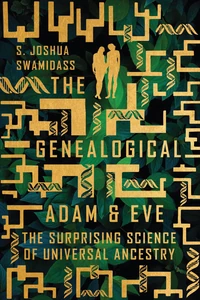
S. Joshua Swamidass earned an MD and a PhD at UC–Irvine. Swamidass has served as an associate professor of laboratory and genomic medicine at Washington University in Saint Louis and spoke at Veritas Forums. Swamidass wrote The Genealogical Adam and Eve (2021).
Bios generated by automated processes. · Report a problem
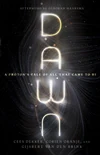
Science & Faith
“Dawn is a unique and engaging book arising from a conversation between scientists, philosophers, and theologians . . . they found a grand story to tell. Starting from the Big Bang, a few protons are our guides, proverbial flies on a wall. Both a work of fiction and nonfiction, this story is a fresh invitation to the great and grand story of who we are and who is God.”
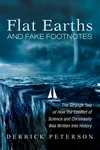
Flat Earths and Fake Footnotes
Science & Faith
“Is the Christian faith locked in inevitable conflict with modern science? Historians of science repeat their answer with a resounding ‘No!’ There was, however, a grand mythology of conflict woven, from Da Vinci to Darwin, through Galileo, Columbus, and the Scopes Trial. A false history was fabricated, a grand myth of conflict. Historians are frustrated. Why won’t this stubborn pseudohistory die? To the rescue comes Peterson, a historian extraordinaire with many stories to tell. Exuding a palpable glee, he quests to debunk the grand pseudohistorical myths of conflict. His book about books leads the reader in an adventure across centuries. Hacking through the webs of false references and out-right fabrications, the payoff is a glimpse of what really happened. The truth is far more hopeful than the fiction. Rather than inevitable conflict, the true arc of science and religion might be dialogue, maybe even friendship. May this book get the wide readership it deserves. Maybe then, finally, historians of science might no longer need to debunk, yet again, the stubborn myths of the warfare thesis.”
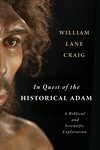
In Quest of the Historical Adam
Science & Faith
“This book truly is a ‘quest,’ an intellectual journey, beginning with Scripture and ending in a meaningful exchange with science. Craig’s quest brings him into an ancient and growing conversation about human origins, a storied exchange between many theologians, philosophers, and scientists. In this conversation, many fear that it is only by compromising our core commitments that space is made for evolutionary science. This book demonstrates, to the contrary, an account of human origins that makes space for evolution without capitulating to a science-only view of the world. Craig shows not only us that constructive dialogue between theology and science is possible, but also that theological questions can sharpen our understanding of science. The scientific content in this book will be surprising to many, but it is sound, even as it gives a much-needed pushback on overreach by evolutionary creationists. We find that many scientists misunderstood, and even overstated, the scientific evidence against Adam and Eve, ancestors of us all. Craig’s explanation of how genetic evidence does, and does not, delimit human origins is true to our current scientific understanding. In so clearly making this scientific corrective, this book promises to be a landmark, a gift to the church, with reverberating significance to the conversation. His telling of the science makes space for many ways of understanding everything together, so the conversation should not end here. May we together be drawn deeper into the mystery, enticed to explore with one another what science is discovering about when and how ‘humanness’ arises in our past. Could sacred and natural history entwine, telling us something important about who we are and what it means to be human?”
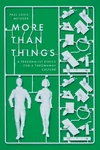
Ethics, Culture & Social Issues
“We are persons, not things. The present volume expands this simple message into a deeply informed meditation, conversant with a wide range of thought, engaged with difficult questions of ethics. Academic but also soulful, this book is framed, perhaps even provoked, by the author's poignant experience of an ongoing and life-altering tragedy. In this dehumanizing world, Paul Louis Metzger invites us to recover who we really are: persons.”
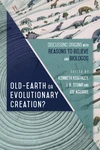
Old-Earth or Evolutionary Creation?
Science & Faith
“This book has cultural significance that extends far beyond the origins debate. Here, Christians with deep disagreements chose to worship together, laboring for several years to understand and love each other. In a society marked by angry divisions, the hard work of reconciliation chronicled in this book is rare, beautiful, and an example for us all to follow.”
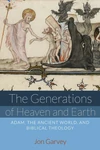
The Generations of Heaven and Earth
Science & Faith
“Summarizing a decade of contemplation, Garvey makes a provocative, must-read contribution to a new conversation about Adam and Eve. After 150 years of mistaken conflict, we now know that traditional readings of Genesis can be entirely compatible with evolutionary science, as long as there are people outside the garden. Garvey presses one step further, arguing that allowing for people outside the garden is helpful to theology, recovering the original understanding of Genesis. Evolutionary science, in this way, encourages a coherent and grounded synthesis of traditional theology and mainstream science.”
NOTE: Only includes books currently in our catalog; not necessarily a complete list.
Science & Faith
See something wrong on this page? Report a problem