Steven Schroeder
Biography
Steven Schroeder wrote On Not Founding Rome and Four Truths, and co-wrote News from the Kingdom of God with David Breeden.
Bios generated by automated processes. · Report a problem
Books Endorsed by Steven Schroeder
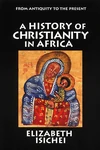
A History of Christianity in Africa
History & Biography
“The word encyclopedic seems somehow inadequate for a book whose subject spans 2,000 years on a continent as large and diverse as Africa, a continent where--by some estimates--Christianity is expanding at a rate roughly double that at which it is declining in the Western world. But it is probably the best word available to convey the scope and style of Isichei's book, which is informative and readable and will surely become an important reference for historians and others interested in Africa, in Christianity, or in both. But as important as what it contains is what it does. Much of Christianity's history in Africa and elsewhere is inscribed in the tragic consequences of its confusion and entanglement with European culture and colonialism. By chronicling diverse African struggles to disentangle and encounter it anew, and by teasing out a thread of descent that predates colonialism, Isichei lays a foundation for a more conscious and critical encounter with Christianity's enculturation outside Africa as well as in. That is a welcome contribution to the understanding of Africa and Christianity, a corrective to a history of interpretation that has too often confused them with their "inventions" by the West.”
Ethics, Culture & Social Issues
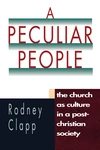
“Clapp writes beautifully and incisively about both culture and Christianity; readers interested in either subject (or both) can expect to find much of value here. He criticizes the Constantinian captivity of the church on both left and right, repeatedly crossing sharply drawn battle lines in a manner that is refreshingly disarming--and routinely provocative. Clapp draws on a wide variety of sources, from anthropology to literary criticism to theology, and includes clear documentation to facilitate further exploration. This is a wonderful addition to a growing body of literature that seeks to reclaim the radically subversive character of Christian community.”
Ethics, Culture & Social Issues
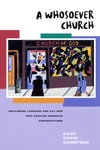
“The interviews with African American religious leaders that make up this book amount to a conversation of interest to those concerned with the church as a welcoming community as well as those interested in current discussion of various denominations' stances regarding gay and lesbian members. Comstock is clear and persuasive as the central voice in the book, yet his primary role is that of listener, and he plays it brilliantly. Thus we clearly hear a who's who of African American leaders from a variety of denominations addressing how to welcome lesbians and gay men into African American congregations. We also witness a dialogue in which communities of individuals often excluded by portions of Christianity that fancy themselves to be "mainstream" draw on experience to teach each other about being welcoming communities. These conversations have much to teach all the churches. Open-hearted readers stand to be touched and possibly changed.”
Biblical Studies & Commentaries
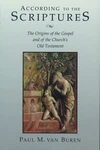
“Van Buren argues that early Christians received a gospel "according to the scriptures" --the scriptures of the Jewish tradition, that is. Their reading of the story of the binding of Isaac (Genesis 22) helped them "discover" the good news, which means that Christianity is located not in the "New" Testament but in what, once the discovery was made, could be called the "Old" Testament. Thus van Buren restores the normative status enjoyed by the Old Testament in the community that discovered the gospel by reading old stories in the light of new problems--a practice deeply rooted in the tradition out of which both Christianity and contemporary Judaism grew. Reclaiming that tradition, van Buren argues, would not only enrich Christianity but also enable more constructive dialogue in a world of more than one religion, in which God's love is not restricted to a single people.”
“Taking the Presbyterian Church (U.S.A.) as representative, Rogers recounts an interesting history of Presbyterianism in the U.S. as he pleads with the mainline of Protestantism to stake out a "centrist" position on social and political controversies. The history is more successful than the plea, which is based on a hierarchical conception of religion, worldview, ideology, and experience. Rogers contends that these are clearly distinguishable layers of identity and that religion is most fundamental. He is convinced that confusion of layers transforms worldview conflicts into religious conflicts that splinter churches and push them from the mainline to the fringe. The model is intriguing, but it is asserted here rather than supported. Nevertheless, the book is likely to appeal to readers who identify themselves with the center and their national church hierarchies with the fringe. If recent survey data in the sociology of religion are accurate, that will assure it a sizable potential audience, though hardly a revolutionary impact.”
Heroism and the Christian Life
Philosophy
“Anger, not excellence, is Homer's first word in The Iliad; and the complex interplay of virtue and violence in the classical tradition is one reason twentieth-century thinkers, such as Bonhoeffer and Camus, held epic heroes at arm's length. Nevertheless, Hook and Reno's reclamation project will appeal to readers who hunger for heroes or see a discrepancy between their understanding of excellence and the heroes of commercial culture. The close readings of classical texts with which the book begins are demanding, but they serve its purpose and will reward those who stick with them. Classical literature, Hook and Reno say, "tunes our ear" and helps us read the New Testament well. Whether reading the New Testament with a classically tuned ear is reading it well is disputable, yet such reading can be productive of insight. Readers who share the book's concern with excellence may appreciate it the most, regardless whether they think excellence needs reclaiming; and having carefully read Homer, Plato, Virgil, Spenser, Milton, Camus, and Bonhoeffer will deepen public discussion of excellence, whether Christian or not.”
Theology
“Ottati describes the spirit of reforming Protestantism as a theocentric piety characterized by a transforming orientation or bias toward faithful participation in God's commonwealth. This piety is at odds with therapeutic, moralistic, and communitarian movements that have emerged in response to modern crises as ways to disengage the church from the world. Ottati argues that the challenge for reforming Protestantism (which includes not only the reformed tradition narrowly defined, but also the mainstream of the churches that emerged out of the Reformation) is to remain engaged in the world--hence the transforming bias. This leads, appropriately, to an insightful discussion of vocation and the sanctification of the ordinary. The book is thoroughly informed by the reformed tradition, but it speaks beyond that tradition and will be of interest to readers genuinely concerned about the church as a faithful community and a social institution "in, with, for, and against the world."”
Ethics, Culture & Social Issues
“This collection of 22 essays is a product of a three-year project entitled "Welfare Responsibility," undertaken by the Center for Public Justice in Washington, D.C. Though the essays cover a wide range of perspectives and represent a variety of disciplines, they share a generally conservative Christian commitment to biblically based public policy. The authors assume there is a consensus that welfare as we know it is a failure, but they seek to develop a third way of addressing that failure rather than choosing between traditional conservative and liberal responses. Editor and project director Carlson-Thies provides road maps in the beginning and the end that are most helpful in synthesizing the argument. If nothing else, the collection forcefully demonstrates a diversity of conservative perspectives on welfare reform and should complicate the too-simple characterization of the welfare debate as a choice between opposite and mutually exclusive options. That will not make the debate easier, but it might make it more responsible.”
Books Authored or Contributed to by Steven Schroeder
NOTE: Only includes books currently in our catalog; not necessarily a complete list.

World Religions
Philosophy
See something wrong on this page? Report a problem