Terrence W. Tilley
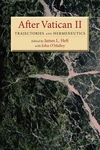
Theology
“These essays recognize that the historical and cultural context of the Second Vatican Council should shape the interpretation of the resultant texts. After Vatican II shows that the hackneyed focus on the vexed issue of the 'spirit' vs. the 'letter' of the text is a blunder: the 'letter' cannot be interpreted apart from the acts issuing those 'letters,' and the 'spirit' cannot be discerned without understanding the trajectories leading into and resulting from the inspired conciliar actions. After Vatican II makes a sterling contribution to the ongoing reception of the act and acts of Vatican II.”
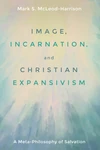
Image, Incarnation, and Christian Expansivism
Philosophy
“McLeod-Harrison carefully crafts a sophisticated, pastoral philosophical path that avoids the radically relativist 'anti-realism' anathema to evangelical Christians (and many of us) while also showing the profound flaws of the 'naive realism' characteristic of many believers. He calls this path 'theistic irrealism.' He shows how to avoid the pernicious 'one way, my way only' view of salvation without denying the necessity and sufficiency of salvation in and through Jesus Christ. He calls this approach 'expansivism.' His focus on humans literally being images of the God who creates is revelatory. Even those of us who are not evangelicals have much to learn from this challenging and enlightening work.”
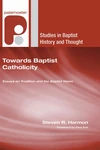
Theology
“"Harmon's essays provide a welcome antidote to the poison of anti-traditionalism imbibed in Christians influenced by the individualistic, anti-religious currents characteristic of modernity. Harmon not only shows how unacknowledged traditions covertly shape a Baptist tradition of anti-traditionalism, but also how critical and constructive retrievals of ancient catholic theological, liturgical and exegetical traditions can illumine important elements of the Baptist vision now rather obscured. A must read in serious ecumenical theology for Christians concerned with living in and living out their faith traditions -- whether Baptist, Catholic, or evangelical -- in our era.”
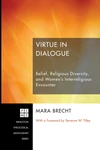
World Religions
Foreword
“In this important argument for a new way of doing religious epistemology, Mara Brecht ranges widely and deeply to make her case. . . . Contemporary theories have moved to a 'best practice' approach, a 'naturalized' epistemology that looks at what people do when they know. But when the naturalized epistemologists turn to religious belief, they fail to analyze religious practice, but apply norms from science and common sense--and religious faith is neither of these. . . . Rather than leaving her theory in the abstract realm, Brecht argues for four cardinal virtues and some necessary 'meta-level' dispositions that are required for a virtue epistemology of religious belief in the context of diversity--as exemplified by the group she studied for years.”
Philosophy
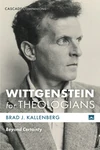
“Winsomely written and easily accessible, Wittgenstein for Theologians explores ‘language-games,’ ‘forms of life,’ ‘theology as grammar,’ ‘primitive reactions,’ and ‘aspect-seeing’ to show how knowing how to live in and live out the faith is fundamental—and knowing what the faith teaches is derivative. Kallenberg helps us Christians to understand the depth of the new in Christ.”
NOTE: Only includes books currently in our catalog; not necessarily a complete list.
Theology
See something wrong on this page? Report a problem