Thomas Albert Howard
Biography
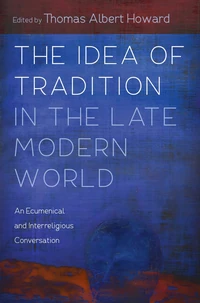
Thomas Albert Howard edited The Idea of Tradition in the Late Modern World.
Bios generated by automated processes. · Report a problem
History & Biography
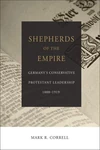
“The protagonists of Mark R. Correll’s insightful book deserve to be better known in the English-speaking world. Adolf Stoecker, Martin Kähler, Adolf Schlatter, and Christoph Blumhardt made up a loose, but significant, coalition of ‘Bible theologians’ who walked a tightrope between secularizing forces in the German academy and the pastoral demands of their Lutheran parishes. Correll is convincing both for why these pastors, theologians, and public intellectuals deserve to be valued more highly and for why the First World War did so much damage to their efforts. In a word, it is a fine book on an important subject." —Mark A. Noll University of Notre Dame "The leaders of conservative Protestantism in Germany under the Kaiser tried to carve out a theology of the word of God suitable for believing Christians, but failed to transmit it to ordinary clergy. Mark R. Correll provides for the first time a clear and full account of this phase of conservative Christian history in the heartland of theological liberalism." —David W. Bebbington University of Stirling "Mark Correll’s Shepherds of the Empire is a well-researched and engaging historical inquiry, bringing to light facets of the German imperial past that have not received sufficient attention. Both historians and theologians, and anyone interested in the complex, fascinating relationship between religion and politics, will benefit from this important study.”
The Making of Modern English Theology
History & Biography
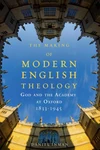
“In this elegant and detailed history of the Oxford theology faculty, which combines extensive archival work with penetrating analysis, Daniel Inman charts the mutation of the university from a religious foundation founded on theology (which imposed Anglicanism and theology on all its students, many of whom were destined for Holy Orders), into a secular institution in which theology survived as a modern subject in dialogue with the other critical disciplines. Even though nineteenth-century Oxford had gained a reputation as a bastion of conservatism exemplified by such figures as Dr. Pusey, Inman shows that after his death its theology faculty soon became forward thinking and often in the vanguard of change. Where German theology remained ecumenically divided, Oxford theology became nondenominational, scientific, and pluralist." —Mark D. Chapman Ripon College, Cuddesdon and University of Oxford "How would theology survive, adapt, and develop in the modern university? This is the question at the heart of Daniel Inman’s fascinating study. By focusing on Oxford University and its attempts to shape a ‘school’ of theology over the long nineteenth century, Inman explores the big issues of the day: theology’s engagement with modern scholarship, the challenge of science, and the emerging ecumenical movement. The result is both a well-researched, in-depth study of the particular case of Oxford and an illuminating book about the place of theology as an academic discipline in the modern university." —Jane Shaw Stanford University "Daniel Inman has written an important and engaging book. Anyone interested in understanding the historical forces that have shaped modern English theology and its institutional environment will find much of value in this fine study.”
World Religions
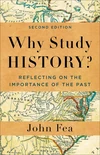
“John Fea has written a splendid, engaging book at once erudite and accessible. Anyone interested in the craft of the historian or the relationship between historical inquiry and the life of faith stands to benefit from having this volume within reach.”
NOTE: Only includes books currently in our catalog; not necessarily a complete list.
See something wrong on this page? Report a problem