W. Norris Clarke
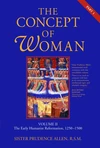
The Concept of Woman, Vol. 2 Part 1
Philosophy
“This carefully researched new volume is even more interesting and substantial than the first. It is of special importance because it lays out in rich detail the crucial turning point in the West from the dominance of the Aristotelian 'gender-polarity' concept of woman (the inferiority of woman to man both biologically and psychologically) to the emergence of the new 'gender-complementarity with equality' concept that developed in the newly arisen humanist schools of the Renaissance. . . The leading philosophers of the high Middle Ages, such as Thomas Aquinas and Duns Scotus, are treated here with admirable insight and fairness. This volume will now become the essential reference work for understanding this important chapter in our Western culture.”
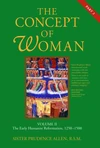
The Concept of Woman, Vol. 2 Part 2
Philosophy
“This carefully researched new volume is even more interesting and substantial than the first. It is of special importance because it lays out in rich detail the crucial turning point in the West from the dominance of the Aristotelian 'gender-polarity' concept of woman (the inferiority of woman to man both biologically and psychologically) to the emergence of the new 'gender-complementarity with equality' concept that developed in the newly arisen humanist schools of the Renaissance. . . The leading philosophers of the high Middle Ages, such as Thomas Aquinas and Duns Scotus, are treated here with admirable insight and fairness. This volume will now become the essential reference work for understanding this important chapter in our Western culture.”
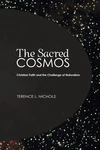
Science & Faith
“This is a uniquely valuable work for our time. The Sacred Cosmos takes on the ambitious task of a synthesis of the contributions of contemporary science, basic Thomistic philosophy of being and the human person, and basic themes of Christian theology on God, creation, and the relations between God and the world. The author, a theologian, brings to his task an amazing background and range of competence both in contemporary science and . . . Christian theology. . . . The most valuable part of the book is the author's powerful and cogent critique of the widely influencial 'scientific naturalism' of our day, which claims the only reliable way of knowing is that of modern science, and all that exists can be explained by the evolving interaction of material elements, leaving no place for anything of the spiritual order, like the human soul, moral values, or God.”
No books by this person in our catalog yet.
See something wrong on this page? Report a problem