William T. Cavanaugh
Books Endorsed by William T. Cavanaugh
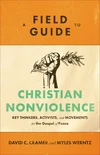
A Field Guide to Christian Nonviolence
Theology
“Cramer and Werntz brilliantly move the conversation on Christian nonviolence beyond Yoder to show the full diversity of approaches, which often diverge from and challenge one another. Not a typology with winners and losers, this book is rather an invitation to further discernment and debate, and an aid to the practical wisdom needed to follow Christ in a violent world. This book is much needed and splendidly done.”
Ethics, Culture & Social Issues
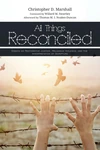
“In this engaging book, Chris Marshall not only extends his groundbreaking work on restorative justice, but reflects on what his involvement in the movement for restorative justice has taught him about Christian engagement in secular civil society, and reflects on what restorative justice implies for the way we look at God . . . Throughout these chapters, Marshall shows himself to be both a skilled interpreter of the Bible and a wise guide to some of the most pressing social problems of today.”
Ethics, Culture & Social Issues
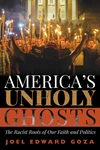
“In this book, Joel Goza explores the role that ideas can play in justifying and normalizing racialized injustice. In undertaking this type of intellectual archeology, Goza makes the case that racism is not an aberration but is buried deep in the DNA of our political and economic system. Goza's own active commitment to racial justice shines through in his prose. He makes a contribution here to a long-overdue conversation on the intellectual roots of racism, and inspires us not only to think but also to act.”
Ethics, Culture & Social Issues
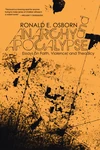
“This book is a bracing read for anyone trying to make sense of Christian witness in a violent world. Osborn ranges both widely and deeply, connecting insights from theology, history, literature, and political science in startling and inventive ways. He shows how violence creates its own momentum, and offers a wide range of resources for countering that momentum. Anyone interested in living creatively in a destructive world will benefit from this book. It is the kind of book that has the power to transform lives.”
Ethics, Culture & Social Issues
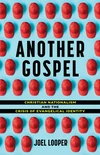
“Politicized evangelicals believe themselves to be fighting secularization, but Joel Looper argues that his fellow evangelicals are in fact making it worse: the church is secularizing itself by replacing the Gospel of Jesus Christ with cultural conservatism, and the church with the nation. No wonder people are walking away from the church! Looper calls those who have accepted Donald Trump as their personal lord and savior to return to the Jesus of the Bible.”
Ethics, Culture & Social Issues
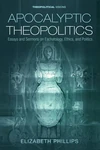
“Elizabeth Phillips is one of the English-speaking world’s wisest guides through the thickets of political theology. Employing both essays and sermons, expertly ranging across Augustine and Anabaptism, Christian Zionism and Flannery O’Connor, this volume illustrates how eschatology, properly understood and practiced, is not a fringe concern but is at the heart of Christian political witness. Clear, insightful, interdisciplinary, and always attentive to lived Christian practice, this book is a joy to read.”
Theology
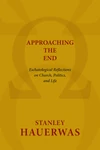
“This book represents the mature thought of one of the most creative and insightful thinkers of our time. Here we see Hauerwas grappling with the difficulties caused by the positions his obedience to Jesus Christ has compelled him to take. Those who think they already know what Hauerwas has to say should read this book and rediscover the restless Hauerwas, whose thought is always straining forward to what lies ahead.”
Ethics, Culture & Social Issues
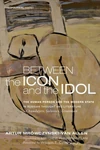
“In this timely book, Hank Spaulding argues that the simultaneous rise of fundamentalist readings of Scripture and Christian nationalism in America is not a coincidence: both subordinate God to a particular cultural vision of control over social space. As a remedy, Spaulding presents a faithful way to read Scripture as God’s art, fostering a creative and beautiful life in response. Spaulding’s analysis is intellectually rigorous, literary, and driven by a Christian vision for a better world.”
Theology
“With wars and rumors of war abounding in the world, Christian churches can no longer remain confined to their particular traditions when taking up the question of the relationship between the unity of the church and its stance on war and peacemaking. In his comparative study of Dorothy Day, William Stringfellow, Robert McAfee Brown, and John Howard Yoder, Myles Werntz challenges congregations and parishes to move beyond their denominational boundaries to consider whether the practice of nonviolence as a witness against war is one of the ways the Spirit is healing a divided church. Bodies of Peace would be an ideal textbook for college and university classes on the topic of war and peacemaking." —Barry Harvey Baylor University "Werntz shows that the way Christians think and practice war and resistance to war has everything to do with how Christians think and practice the church. Nonviolent resistance is not just a matter of individual spirituality or theological principles but a corporate practice. Werntz thus fills a large gap in the literature on Christian nonviolence, and he does so brilliantly. His readings of Augustine, Yoder, Dorothy Day, and others show a keen theological mind at work. This is the best book on Christian nonviolence I have read in quite some time.”
Ethics, Culture & Social Issues
“At last I have found a textbook for my undergraduate course on Christianity and Politics! Pecknold's book is brief and crystal clear, ideally suited to supplement primary source readings in an introductory class. This book helps the student grasp the sweep of Christianity's political history in a relatively few deft strokes. The broad-brush approach does not mean the book is simplistic, however. To the contrary, Pecknold's analysis is insightful, engaging, and at times contentious. Pecknold shows how theological concepts like 'mystical body' have wandered in and out of different political arrangements. In so doing, he shows students how church history and political history are not two separate subjects but one, and a fascinating one at that.”
Ethics, Culture & Social Issues
“This is how political theology ought to be done. Marshall takes the fundamentally local problem of how communities restore relationships broken by criminal behavior and applies the insights of Jesus' best-known parables. Marshall shuttles back and forth between the biblical narratives and the best of social science to enhance both . . . I felt like I was reading Jesus' parables for the first time, and I also learned to think in new ways about criminal justice.”
Christian Living
“In a world where even some Christians are embarrassed by talk of life after death, Nichols makes a compelling case that the afterlife is integral to understanding how life really is. This book provides the enormously valuable service of digesting a wide variety of scholarship--from theology to neuroscience--and presenting all sides fairly and accurately. The reader encounters not only biblical views of death and afterlife but also startling debates about near death experiences. Nichols provides sound arguments for why traditional Christian views of the afterlife are viable today and gives us ways not only of dying well but also of living well.”
History & Biography
“An excellent writer with a flair for the dramatic, Peter Leithart is also one of the most incisive current thinkers on questions of theology and politics. In this book, Leithart helpfully complicates Christian history, and thereby helps theologians recover the riches of more than a millennium of Christian life too easily dismissed as 'Constantinian.' If the Holy Spirit did not simply go on holiday during that period, we must find ways to appreciate Christendom. Any worthwhile political theology today cannot fail to take Leithart's argument seriously.”
Christian Living
“Josh Buck’s book is for ordinary Christians who suspect that the spiritual and the social are inseparable but who hardly know where to start. This accessible and scripturally based guide from a wise pastor helps overcome the despair of those who think there’s nothing they can do and the exhaustion of those who think they must do everything. Buck gently leads the reader toward grace-filled ways of embodying gospel healing in a broken world.”
Ethics, Culture & Social Issues
“This is an audacious and fascinating book by a philosopher who sets out to solve some of the Bible’s most vexing interpretive puzzles. Murphy is simultaneously clear, nuanced, learned, and creative. As a concise primer on biblical ethics, this book is unsurpassed. I know of no better book to put in the hands of someone who wants to know if and how the Bible can be a useful source for thinking our way through ethical dilemmas today.”

Ethics, Culture & Social Issues
“This book meets two needs. The first is for a biblically based analysis of the ethical issues of our day aimed at an educated lay audience. The second is for a book by an evangelical Christian that challenges evangelicals to take Jesus seriously in living out their citizenship. In forthright language and with the aid of real-life examples, Crump calls Christians to reject the idolatrous political and economic allegiances that divide the church.”
Theology
“Jamie Smith shows us that the gospel does not primarily happen between our ears but in all the movements of the body by which we are formed and in turn form the world. I know of no more thorough and sophisticated account of how secular liturgies form and deform us and how Christian liturgies can help. Though sophisticated, Smith's book is also a delight. Its pages are filled with great poetry and insights from films, novels, and everyday life.”
Theology
“This major new book is the culmination of a gifted and creative scholar’s work. Seamlessly interweaving systematic theology and ethics, Brian Brock explores what it means to feel at home in the world. Brock explores creation through fascinating studies of ecology, economics, work, sex, war, and more. The entire text is permeated by a sense that God is alive and active and that responding to God is not a burden but a pleasure.”
Books Authored or Contributed to by William T. Cavanaugh
NOTE: Only includes books currently in our catalog; not necessarily a complete list.
Work, Money & Leadership

Ethics, Culture & Social Issues
Ethics, Culture & Social Issues
See something wrong on this page? Report a problem