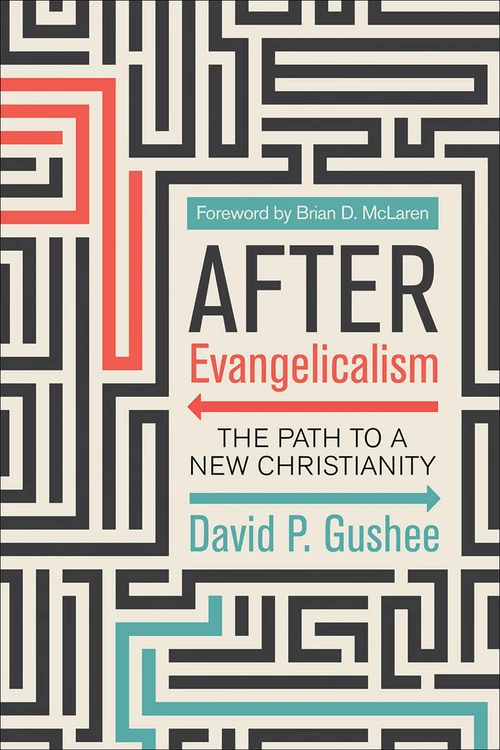
After Evangelicalism
The Path to a New Christianity
- Ethics, Culture & Social Issues
- Theology
- Publisher: Westminster John Knox
- Published: 2020
FritzSearch.com earns a commission on purchases made through Bookshop.org links.
Publisher's Description
Named one of the Top 10 Books of the Year in 2020 by the Academy of Parish Clergy “Drawing on his own spiritual journey, David Gushee provides an incisive critique of American evangelicalism [and] offers a succinct yet deeply informed guide for post-evangelicals seeking to pursue Christ-honoring lives.” —Kristin Kobes Du Mez, Calvin University Millions are getting lost in the evangelical maze: inerrancy, indifference to the environment, deterministic Calvinism, purity culture, racism, LGBTQ discrimination, male dominance, and Christian nationalism. They are now conscientious objectors, deconstructionists, perhaps even “none and done.” As one of America’s leading academics speaking to the issues of religion today, David Gushee offers a clear assessment and a new way forward for disillusioned post-evangelicals. Gushee starts by analyzing what went wrong with U.S. white evangelicalism in areas such as evangelical history and identity, biblicism, uncredible theologies, and the fundamentalist understandings of race, politics, and sexuality. Along the way, he proposes new ways of Christian believing and of listening to God and Jesus today. He helps post-evangelicals know how to belong and behave, going from where they are to a living relationship with Christ and an intellectually cogent and morally robust post-evangelical faith. He shows that they can have a principled way of understanding Scripture, a community of Christ’s people, a healthy politics, and can repent and learn to listen to people on the margins. With a foreword from Brian McLaren, who says, “David Gushee is right: there is indeed life after evangelicalism,” this book offers an essential handbook for those looking for answers and affirmation of their journey into a future that is post-evangelical but still centered on Jesus. If you, too, are struggling, After Evangelicalism shows that it is possible to cut loose from evangelical Christianity and, more than that, it is necessary. Are you considering using After Evangelicalism for group study? A free, downloadable study guide has been created and is available from David Gushee’s website. Also perfect for book clubs! Download the Reading Group Guide.
Endorsements (4)
“I generally like [Gushee’s] books, but this is my new favorite.”
“If you’re part of the growing number of post-evangelicals whose conscience resulted in living out your faith in exile, this is the book for you—especially if your spirit longs to move beyond the painful place we’ve come from and reengage your spiritual imagination to explore beyond the evangelical horizon.”
“Since the evangelical revolution of the 1970s and 1980s, evangelicalism has given the impression that it is immune to the decline plaguing mainline Protestantism. That is, until now. As David Gushee’s insightful analysis of the current post-evangelical moment suggests, US evangelicalism squandered its opportunity, and now people—especially young people—are leaving evangelical Christianity. As Gushee demonstrates, evangelicalism’s wounds are mostly self-inflicted, originating in the move by straight white men to perpetuate structures that reinforce their power and dominance over the life of the church. Gushee is driven by a profound need to address the pastoral concerns of this growing post-evangelical movement and herein offers a combination manifesto, love letter, and game plan for fellow #exvangelicals. The rest of the church would do well to heed his words too. Gushee’s spiritual inventory of this movement and his articulation of a post-evangelical theological framework serve as a road map for renewal for a fragmented and moribund first-world Christianity.”
“This is the kind of book that church people need to read together: in Sunday School classes, Zoom book clubs, and discipleship groups. It is personal, powerful, and pointed in all the right directions.”
See something wrong on this page? Report a problem