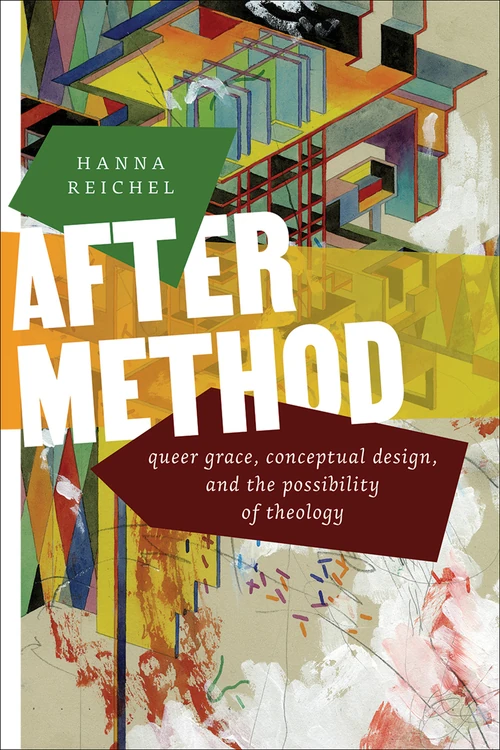
After Method
Queer Grace, Conceptual Design, and the Possibility of Theology
- Theology
- Publisher: Westminster John Knox
- Published: 2023
FritzSearch.com earns a commission on purchases made through Bookshop.org links.
Publisher's Description
After Method assumes the impossibility of doing theology right–and moves beyond it. Organized as a conversation in two voices—with systematic-theological commitments represented by Karl Barth and constructive-theological commitments represented by Marcella Althaus-Reid—this book calls the redemptive potential of any methodological program into question. Indeed, the search for a full and complete theological account of reality has only further fragmented theological discourse. Thus, Hanna Reichel argues that method cannot “save” us—but that does not mean that we cannot do better. After Method harnesses the best insights systematic and constructive theologies have to offer in their mutual critique and gestures toward a “better” theology. Utilizing architectural metaphor, Reichel pulls from systematic and constructive approaches to develop an understanding of theological work as conceptual design, responsibly ordering and structuring given materials for a purpose. This necessitates a more realistic adaptation to reality for theology, expanding its standards to encompass the experiences and perceptions of people and speaking the truth available to it. The honesty, humility, and solidarity generated through the failure of method liberates theology to a more playful and tentative cruising of different approaches and redirects its attention to “misfits” and outsiders. Equally demanding and self-relativizing, the resultant ethos is better able to do justice to the reality of the world and the reality of God than doctrinal orthodoxy or methodological orthopraxy.
Endorsements (6)
“Reichel’s book will be of keen interest to anyone concerned with theology as a discipline, but moreover, it would benefit anyone looking for a thoughtful and interesting use of Karl Barth and Marcella Atlas-Reid, among many others from both systematic and constructive theology.”
“After Method is many things at once: an impassioned rejection of the tired binary of ‘systematic’ and ‘constructive’ theology; an extended love letter to a deliciously odd theological couple; a guide for traversing the landscape of Christian thought without becoming lost in methodological cul-de-sacs. Even more, After Method is an erudite, humane, and imaginative example to us all. Reichel showcases a mode of reflection wherein responsiveness to context, attention to the grace of revelation, and the imperative of liberation are no longer treated as competing goods but entangled obligations—or, better, opportunities—whose negotiation can foster the emergence of ‘better theology.'”
“What if critical reflection on theological method, on the possibility of theological knowledge, offered something more than a cleared throat, a sharpened knife, or a soul in despair? What if, indirectly, almost accidentally, it yielded real theological substance—hints of sin and grace, shadowy images of Christ and salvation, a stammering witness to the eschatological itinerance of a Christian life? What if these methodological reflections unmasked the sinful folly of every theology that tries to redeem itself, epistemologically speaking, by whatever method? And what would a theology look like that resisted the temptation to save itself, that broke free of the standard options—systematic or constructive, dogmatic or liberationist, truth-tracking or justice-seeking—by making each contend with each? Funded by a resolute theological realism and an antipositivist account of truth and value, could this nonconforming theology bear witness to God’s queer grace? Reichel poses these questions and many more in this brilliant, important, provocative book.”
“Weaving between and together systematic and constructive theologies, Karl Barth and Marcella Althaus-Reid, the dogmatic and the liberationist, Reichel casts an exciting vision for what is possible when theologians are freed from their enthrallment to method. Where methodological dogmatism has reinforced divisions within theology and estranged theologians from the God they want to describe, Reichel’s ‘desoteriologized’ understanding of method draws on design theory to help theologians find a way back to describing our messy reality and the God who exceeds all attempts at naming. After Method is energizing and challenging in the best way.”
“Reichel’s work brims with creativity and provocation, asking readers to consider again the design, use, and affordances of Christian doctrine. By insisting that theologians attend carefully to the ethos of the development and deployment of doctrine, this study invites us all to do better by both our subject matter—the God of the gospel—and all those who matter to our God.”
“This book is pathbreaking. Reichel is indeed after method—in many ways. Convinced that method cannot save, as many mistakenly believe, there remains the hope that it can still deliver valuable affordances. The book’s argument is therefore designed—intentionally, skillfully, artfully, playfully, care-fully, craftily, logically, insightfully, authoritatively—as a conceptual guide on such a way to do better theology. It shows ways to do theology that will be less violent, less complicit in falsehood, and less arrogant and self-assured than much of what we know and do. It offers an intriguing invitation to come along on this way of doing theology—to journey together with others, often strange and unexpected faces, including outsiders; to experience the surprise of recognizing much that seem so familiar yet now suddenly new and exhilarating once more, like law turned into life, swords into plowshares; to become sensitive to false promises of trails in the forest leading nowhere or worse, to destruction; to richly receive that alien grace that awakens hope for what may become possible and provides reorientation in the dense forest. For those of us doing theology—whether in church, academy, or public life—this guide on how to get along—and how not to get along!—will offer much discernment and delight on our shared journey. Many readers may feel strangely reassured, comforted, and at home—yet also somehow subverted, even shocked, and strangely surprised with every twist and every turn: the route was clearly designed with that in mind and for that purpose. This book is simply trailblazing—in so many ways.”
See something wrong on this page? Report a problem