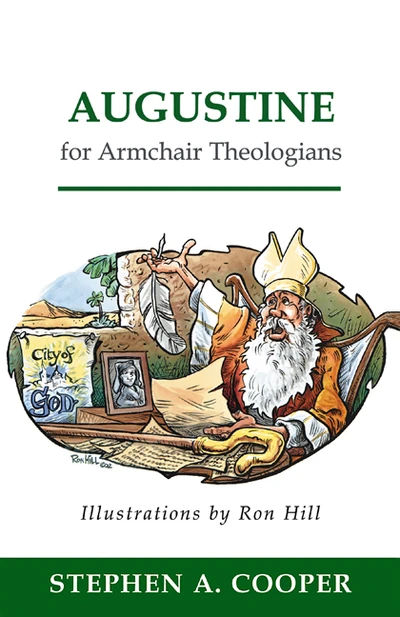
Augustine for Armchair Theologians
- History & Biography
- Publisher: Westminster John Knox
- Published: 2002
FritzSearch.com earns a commission on purchases made through Bookshop.org links.
Publisher's Description
In this book, Stephen Cooper provides an overview of the greatest theologian of the early church: Augustine of Hippo. Augustine has had a towering influence in the history of Christianity and his Confessions has long been regarded as one of Christianity’s classic texts. Cooper introduces the life and thought of Augustine through discussing the Confessions and shows how many of Augustine’s human struggles are still with us today. He also examines the theological views of Augustine that emerged through the important controversies of his times. Written by experts but designed for the novice, the Armchair series provides accurate, concise, and witty overviews of some of the most profound moments and theologians in Christian history. These books are essential supplements for first-time encounters with primary texts, lucid refreshers for scholars and clergy, and enjoyable reads for the theologically curious.
Endorsements (1)
“If this sounds like a popularization, well, it is. But except for its overly chipper cartoon illustrations, there is nothing condescending about it. Cooper follows the first nine books of the Confessiones closely, producing not so much an explication of Augustine's theology as a biography of the great Catholic convert, bishop, and doctor of the church. His citations from Augustine appear in his own translations, which contain more contemporary patter than the main text; as a result, Cooper's Augustine sounds more contemporarily vernacular than Cooper. Cooper incidentally shows how acute a psychologist Augustine was, not least of early childhood, as Garry Wills argued in Saint Augustine's Childhood (2001). The saint's long struggle with eros, flirtation with Manichaeism, mounting frustration with a worldly career, sudden enlightenment (an archetypal decision for Christ), and homecoming to Carthage, saddened by the successive deaths of mother, best friend, and son, become in Cooper's retelling a vivid illustration of Augustine's famous observation that God makes us for Himself, and our hearts are uneasy until we find rest in Him.”
See something wrong on this page? Report a problem