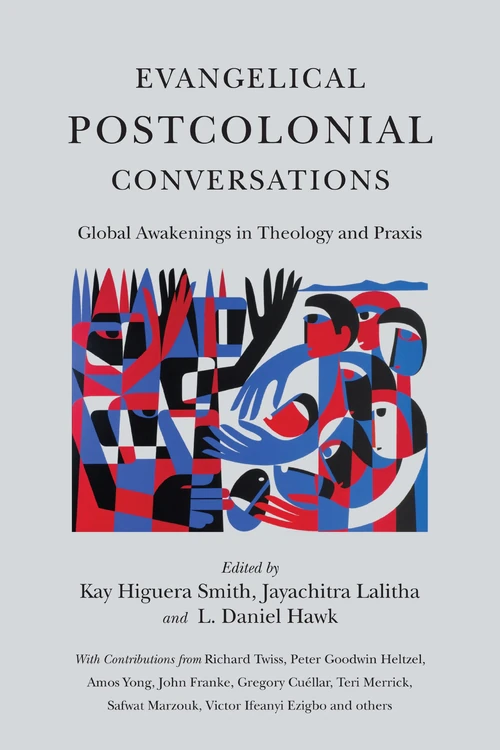
Evangelical Postcolonial Conversations
Global Awakenings in Theology and Praxis
- Theology
- Publisher: IVP Academic (InterVarsity Press)
- Published: 2014
FritzSearch.com earns a commission on purchases made through Bookshop.org links.
Publisher's Description
Colonialism involves more than just territorial domination. It also creates cultural space that silences and disenfranchises those who do not hold power. This process of subjugation continues today in various forms of neocolonialism, such as globalization. Postcolonialism arose in the latter half of the twentieth century to challenge the problem of coloniality at the level of our language and our actions (praxis). Postcolonialism seeks to disrupt forms of domination and empower the marginalized to be agents of transformation. In 2010, the Postcolonial Roundtable gathered at Gordon College to initiate a new conversation regarding the significance of postcolonial discourse for evangelicalism. The present volume is the fruit of that discussion. Addressing themes like nationalism, mission, Christology, catholicity and shalom, these groundbreaking essays explore new possibilities for evangelical thought, identity and practice. The contributors demonstrate the resources for postcolonial criticism within the evangelical tradition, as well as the need to subject evangelical thought to an ever-new critique to prevent the formation of new centers of domination. Evangelical Postcolonial Conversations models the kind of open dialogue that the church needs in order to respond appropriately to the pressing concerns of the world today.
Endorsements (7)
“Christianity today is facing tremendous challenges and opportunities tied to often-overlooked flows of power in our postcolonial world. What role does faith play as suffering persists and lives are lost? The contributors to this volume join a broader theological debate, making major contributions as they reclaim the robust witness of the evangelical heritage for the common good with creativity and courage.”
“This pioneering book charts a new direction in evangelical theology. It employs postcolonial theory to examine the evangelical legacy and offers rich insights in the reconstruction of mission and theology. Forward-looking and provocative, the book will no doubt stimulate debates in the evangelical church and beyond.”
“The contributors to Evangelical Postcolonial Conversations remind us that there is no view from nowhere. More importantly, they help western evangelicals realize how often we have confused our finite and fallible human responses to God's self-disclosure with the Word of God itself—how often we have confined God's Word to our words. What I enjoyed most about this book is the way it invited me, the reader, into an ongoing conversation that itself models how self-identifying evangelicals can better listen to the voices of those in the Majority World and on the margins in a manner that engenders humility, repentance and even our ongoing conversion to something that more closely resembles God's reign on earth as it is in heaven.”
“The various 'isms' usually start outside evangelicalism. They arrive in nonevangelical packaging and may provoke questioning and anxiety, but then they may get thought through within an evangelical framework and become fruitful within evangelicalthinking and commitments in a way that can be instructive for the whole church. It can take time to navigate the sequence, even though evangelicalism is related to Protestantism, and postcolonialism (as one of the contributors notes) is a protest movement. This collection is the marvelous fruit of the work of those who have reflected deeply on postcolonialism. It's neat that so many of the chapters are cowritten. And whereas terms like empire can sound as if they apply chiefly to the empire against which the American colonies rebelled, it's encouraging for a Brit to be able to note how much attention is paid to the colonial nature of thinking and action within the Americas.”
“This collection is a solid, sharp contribution to the juncture of Christian studies and postcolonial studies. I have noted with delight how in recent years evangelical theology has addressed the major crises and issues of our times. This has certainly been the case with regard to migration and economics. This venture into the discourse of imperial-colonial formations and relations is thus much needed and much welcomed. I look forward to dialogue and recommend the volume highly. A job well done!”
“I feel like Rip Van Winkle, who went to sleep and woke up in a changed world. The ways of doing missions have undergone a paradigm shift, and these writers helped me understand it.”
“This volume presents a groundbreaking endeavor toward evangelical postcolonial theology, articulating the intersection between evangelical and postcolonial discourse. It challenges the theological roundtable under the dominion of the Western metanarrative of Enlightenment that keeps the colonial project and its civilizing mission intact, undertaking a constructive task for evangelical-postcolonial relevance and praxis in the face of the empire driven by globalization. This is an important contribution toward postcolonial imagination, which deepens and reinterprets evangelical theological discourse and praxis.”
See something wrong on this page? Report a problem