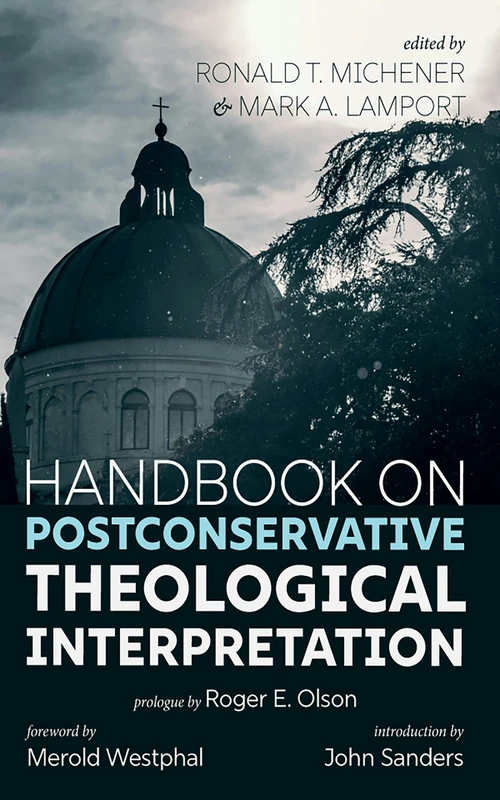
Handbook on Postconservative Theological Interpretation
- Theology
- Publisher: Cascade Books (Wipf and Stock)
- Published: 2024
FritzSearch.com earns a commission on purchases made through Bookshop.org links.
Publisher's Description
Postconservative theology may be said to parallel with "postliberal theology" at its best. Orthodox, biblical, but open to new insights about how to interpret Scripture. But the new insights must be faithful as well as fresh. Postconservative theology is not the same as "progressive theology," which tends to lean toward indeterminant faith expressions, whereas "postconservative" allows for particular faith commitments and expressions but understands that the constructive task of theology is never finished. Authors emphasize various interpretive theological lenses used for doing theology among various postconservative theologians, rather than emphasizing the philosophical background to hermeneutical theory present in other works, such as past influential thinkers (including Gadamer, Grondin, Ricoeur, Heidegger, etc.). This resource could also function as a companion to Evangelical Theological Method: Five Views (2018). This emphasis of the chapters will not be on the nuts and bolts of "how to" interpret, but rather on the theological impulses that govern various lenses (Bible, cultural context, etc.) for doing theology and the way Scripture functions with respect to the practice of interpretation.
Endorsements (4)
“This is an impressive work, a true achievement in providing far-ranging perspectives on contemporary theological hermeneutics in a fashion that takes seriously both context and tradition.”
“As a ‘descriptive handbook,’ this volume represents a tremendous resource that will benefit scholars and students alike. Not only do the contributors demonstrate the contemporary fruitfulness and promise of ‘postconservative theological interpretation,’ but together the collected essays helpfully point toward some of the challenges that remain ahead. A recommended study tool!”
“Theology moves on, and our terminology with it. In every age, we’ve tried to capture in short hand the new and diverse perspectives and movements. ‘Post-liberal,’ ‘progressive,’ and ‘post-conservative’ are recent examples. We can no longer speak as informed believers about a world that’s a few thousand years old or of a Bible with no human foibles. For the post-convervatives, of which I am one, we believe that the results of serious inquiry comport well with a robust belief in the tenets of traditional Christian orthodoxy. Within the pages of this volume the reader will discover what I and others have in mind.”
See something wrong on this page? Report a problem