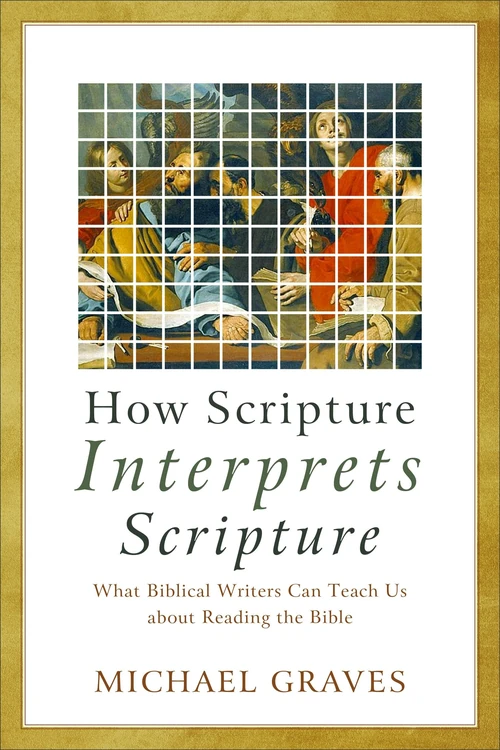
How Scripture Interprets Scripture
- Biblical Studies & Commentaries
- Publisher: Baker Academic (Baker Publishing Group)
- Published: 2021
FritzSearch.com earns a commission on purchases made through Bookshop.org links.
Publisher's Description
This book addresses a topic of vital concern to the church: How does the ancient biblical text speak to us today? Michael Graves, an expert in ancient exegesis, describes how Old Testament texts interpret earlier Old Testament traditions, explores New Testament reception, and explains how insights from this process translate into present-day biblical interpretation. Graves clearly explains and illustrates this approach with fulsome discussions of five themes that are addressed in various ways in the Bible: personal responsibility; sacrificial offerings; insiders and outsiders; marriage, polygamy, and divorce; and the afterlife. By attending to the way these topics are addressed throughout the entire biblical witness, we become better interpreters and teachers who are more adept at discerning the Bible's teaching on these topics and others for our modern world.
Endorsements (5)
“Graves’s excellent work gives us a fresh appreciation of inner-biblical exegesis, showing how we can—and should!—continue to interpret Scripture for our times. He sets out clearly the principles and methods he uses, and he illustrates these through a study of well-selected themes. This is a careful and insightful contribution to biblical interpretation.”
“The Reformation principle ‘Scripture interprets Scripture’ receives a fresh treatment by Graves. While affirming the coherence of Scripture in Christ, the book carefully engages with the unique contribution of individual authors in their ancient cultural contexts, and in so doing provides thoughtful insights on the web of connections that link Old and New Testaments. By examining inner-biblical interpretation, both how one Old Testament text interprets another and how the New Testament authors interpret the Old Testament, Graves unveils principles of interpretation at work within Scripture, which modern interpreters can use to interpret and apply Scripture’s teachings today. Interpretation is shown to be a process—one whose goal is the clear communication of the Word of God to the modern hearer.”
“In this book, ‘emphasis is placed on how the interpreting text applies or qualifies its inherited biblical tradition.’ In other words, Scripture interpreting Scripture is part of what shapes scriptural meaning long before we start to talk of the history of interpretation. This inspires and guides us in our own interpretation today. The book wears its learning lightly, yet the occasional turn to the biblical languages reveals the scholarly substructure. For example, corporate responsibility is clearly a key notion that has become unfashionable but is here well articulated. The Bible’s concern for boundaries as real and necessary but also as starting points for relationship is also appreciated. An informed and rewarding operation in biblical theology is within these pages. It is wide ranging across the canon, judicious, and wise, a book from which the whole church (lay and expert) can learn much.”
“Through five interesting themes, Graves splendidly reveals how inner-biblical interpretation takes shape in the Old and New Testaments and its importance for Christian interpretation and application. He is a wise and discerning biblical exegete and evaluator of both ancient Near Eastern and early Christian sources. Readers can learn so much from this book about the spectrum of wisdom that the Bible offers for Christians today.”
“New Testament professors might remind us that if Paul were to take our seminary exegesis classes, he’d fail because he doesn’t use the historical-critical method, which shows that there’s something not quite right about what we teach. Graves joins a new wave of scholarship that challenges the adequacy of the historical-critical method, takes comprehensive theological exegesis seriously, and finds in the Scriptures themselves nothing less than Scripture interpreting Scripture in an unfolding drama that leads us into the wisdom of God. Knowing what an author meant in context may be the place to begin, but once we hear the text, we realize the Word of God is alive and at times takes us to unanticipated and wholly glorious places.”
See something wrong on this page? Report a problem