Mark W. Elliott
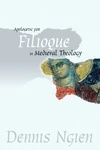
Apologetic for Filioque in Medieval Theology
Theology
“A book that repays careful study as it brings figures out of the shadows and into fruitful dialogue with the modern theologians.”
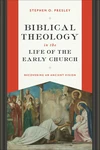
Biblical Theology in the Life of the Early Church
Theology
“Biblical theology was something done well, even best, by early-century bishops when teaching and catechizing their churches, something that is rare today but might possibly be recaptured. Without claiming that it is the panacea for all the church’s problems or that the Enlightenment has nothing to contribute, this book offers a vision that presupposes a revelation-based social imaginary together with glimpses of God as triune. It is replete with the idea—in true Irenaean tradition!—that biblical salvation history informs and forms Christian lives, beginning with those of the interpreters who read Scripture in the context of worship and community. This is what inspires Stephen Presley, and the inspiration communicated through these pages is catching!”
Bible Studies & Devotionals
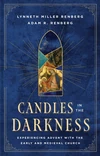
“It's always heartening when serious academics use their deep and wide learning to resource Christian lives. Advent and Christmastide are times of looking for light in darkness and for orientation. The testimonies and wisdom gathered here outdate and outlive the vicissitudes and crises of our generation and should help to anchor the soul at this special time of year.”
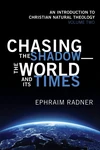
Chasing the Shadow—the World and Its Times
Theology
“Radner’s style in the introduction where he wrestles with the nature of natural theology as that which ‘beats us on the head’ is one of vast but lightly worn learning in service of spiritual discipline, the life of somehow joyful penitence. . . . It is as though the wandering children of Israel camp on the northern prairies to dream dreams of wild nature which has possessed the familiar (cats, raccoons and small children!) One might call this post-Darwinian theology.”
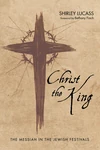
Biblical Studies & Commentaries
“This is a winsome, engaging, and refreshing introduction to a different way of looking at the Bible.”
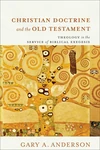
Christian Doctrine and the Old Testament
Theology
“Part of Anderson's genius, along with a commanding prose style, is his generous capacity to mediate the best of a number of voices from different traditions. But there is more--a calm, reasoned, yet strong voice that pursues an insistent theme: theology in the service of exegesis is the handmaiden to the apostolic foundations of the church's faith and, behind that, Israel's. After reading these essays, one feels better informed, better encouraged, simply better.”
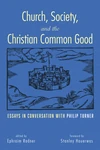
Church, Society, and the Christian Common Good
Theology
“This book contains theology inspired by life, not simply the life of a particular modern saint, but the lives of saints, of the communities that saint indwelled. It is a life rooted in the Bible, spiritual disciplines, the learning and transmitting of wisdom from and into the world. The book explores the issue of the sufficiency of the gospel of love, played out in the issues of public debate. Themes include: the Old Testament as speaking realistically of the impoverished church, the reflection on experience in a biblical key, e.g. that repentance includes knowledge as it seeks objectivity, to know what, and how, and why wrong was done. The gracious reply by the honorand itself embodies the virtue of communal and ecclesial theology.”
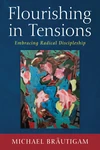
Christian Living
“This book combines the best of German (Bonhoeffer, Schlatter, and Luther in particular) and English-speaking (not least Australian) Evangelical theology and psychology. It wears classical Christian education lightly, all the better to probe, evaluate, and often find wanting the trends of unhelpful, narcissistic thinking in world and church today.”
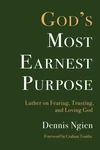
Theology
“Dennis Ngien brings his detailed knowledge of Luther's theology to bear on the issue, rather neglected in English-speaking study, of the content of Luther's catechetical instruction from the late 1520s. This reading is informed by understanding the Reformer's soteriological emphases as being ultimately Trinitarian, personalist, and relational, such that soteriology is no "mere doctrine" but an invitation to a life of trust and communion with the Lord of life, who is Father, Son, and Spirit. This includes the work of the Holy Spirit in believers' sanctification: "the Third Article is most important" (Luther). This is a carefully and deeply researched book that seeks to communicate something of the realities that Luther, the famous professor of biblical theology, sought to convey.”
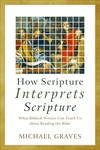
How Scripture Interprets Scripture
Biblical Studies & Commentaries
“In this book, ‘emphasis is placed on how the interpreting text applies or qualifies its inherited biblical tradition.’ In other words, Scripture interpreting Scripture is part of what shapes scriptural meaning long before we start to talk of the history of interpretation. This inspires and guides us in our own interpretation today. The book wears its learning lightly, yet the occasional turn to the biblical languages reveals the scholarly substructure. For example, corporate responsibility is clearly a key notion that has become unfashionable but is here well articulated. The Bible’s concern for boundaries as real and necessary but also as starting points for relationship is also appreciated. An informed and rewarding operation in biblical theology is within these pages. It is wide ranging across the canon, judicious, and wise, a book from which the whole church (lay and expert) can learn much.”
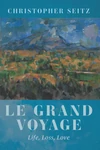
History & Biography
“Chris Seitz tells a moving, profound, and cultured story of adventure, loss, and love. It is presented not in an obvious linear fashion but in a manner of re-presentation, often looping back as the priceless past interrupts the storytelling, painting vignettes in such a way that fact and meaning are mixed together. The prose is often raw, but never rough. It breathes words of life drawn from scripture and precious experience.”
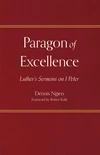
Theology
“For the great Reformer, 1 Peter was up there with Paul's main letters and John's Gospel (so, his NT prefaces). Thoroughly versed in the best scholarship, and with a thematic approach that moves through the epistle's concerns from pure doctrine to "political theology" (which is what Luther himself was trying to do--i.e., present Christian teaching in an ordered way), this book both helps and invites us to read Luther for himself--on an unfashionable but central biblical book. Ngien begins and ends with the Lutheran insistence that gospel words give life: this seems quite a claim until one remembers that the cross is a passive "work." This book too is that kind of work that is self-effacing, as it allows Luther and the preaching of the cross to speak loud and clear.”
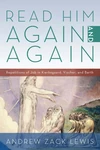
Biblical Studies & Commentaries
“This is a sophisticated and masterly account with exegetical insight for studying the Book of Job and for doing theology.”
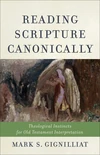
Biblical Studies & Commentaries
“Drawing beautifully on Childs and Sheppard, Gignilliat concludes that for the canon, fixity is a pole not a stage. Along the way, the author discusses what links Gunkel to von Rad and what was at stake between Lagarde and Kahle. Hence this work does dual service as a textbook and as a serious spur to scholarly thinking.”
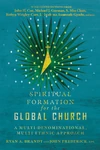
Spiritual Formation for the Global Church
Prayer & Spiritual Formation
“Spiritual formation exists in its own right as an end in itself. But for the teacher in a theology department or seminary, it can offer an otherwise missing or hard-to-find connection between Bible and doctrine and church life and ethics. This volume attempts that in programmatic form, and the contributors get on to the topic of the spiritual life right away. For doctrine and biblical study exist to serve the latter, not vice versa. There is an urgency present even in the introduction, calling the readers to prayer as they read. The ethos is Christ centered, Spirit filled, and mission focused, where mission means hearing God in and through the praying church and cultures of the wide world. In all these contributions there is a striking openness to life transformation in Christ as informed by the biblical witness, offering their own version of a narrative theology with an emphasis on divine power and human emotion as sanctified with the correspondingly correct words and thoughts serving that spiritual life. Take and read!”
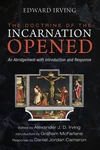
The Doctrine of the Incarnation Opened
Theology
“Edward Irving’s idea of redemption as centered on the training of the human will of Christ by the Spirit in the incarnation has usually offended his critics. So perhaps understandably and helpfully, the sermons—which read like theological treatises with a blessed rage for pulpit clarity—are sandwiched by the largely ‘pro’ accounts by the doyen of Irving studies, Graham Macfarlane (he highlights Irving as a Trinitarian, inspired by Hooker and Owen) and by Daniel Cameron. . . . Even if one is not completely convinced, the combination of the great man’s pulpit eloquence and these explanatory apologies, which has seen the light of a new day through a pleasing team effort, deserves to be savored and appreciated.”
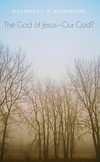
Theology
“Sandy Wedderburn's gospel might be less full than some more orthodox among us would want to allow, yet in this essay a number of things receive the healthy emphasis that such 'partiality' affords. . . . Sandy Wedderburn, as ever, asks the right questions, challenges some over-hasty conclusions, and invites us to take seriously the life and teaching of that great, mysterious figure, Jesus of Nazareth.”
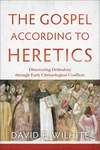
The Gospel according to Heretics
Theology
“This book takes readers from the shallow end of the pool of early Christian theology into deep waters and enables them to float. It gives heresies their due while always keeping at least one eye on the positive message of Christian truth--that is, it is not transfixed by 'the dark side.' It is written with clarity both conceptually and in terms of expression, while being impressively learned. I appreciate in particular the attempt to discuss Reformed Protestantism in a retelling of the iconoclastic controversy and to broach the delicate and intricate subject of early Christian theology in relation to nascent Islam. It is quite a breathtaking achievement.”
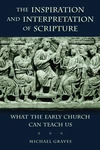
The Inspiration and Interpretation of Scripture
Theology
“Michael Graves's research is painstaking — his endnotes here show a depth of endeavor and learning — yet he has a sharp, even provocative thesis: the church fathers saw scriptural inspiration to be about God speaking through the Bible to each reader 'at sundry times and in divers manners.'. . . A gripping scholarly work that combines learning with praxis, historical theology with self-reflection.”
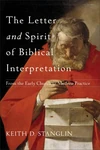
The Letter and Spirit of Biblical Interpretation
Biblical Studies & Commentaries
“This book provides a compelling overview of how the tradition has been aware of the necessity of a more than (but not less than) literal reading of the Bible. It offers insight into what was at stake in the decades just prior to the rise of the critical methods applied to the Bible, and it speaks up for the unfashionable vocation of the exegete-theologian. Heartily recommended.”
NOTE: Only includes books currently in our catalog; not necessarily a complete list.
Preaching & Worship
Biblical Studies & Commentaries
Theology
See something wrong on this page? Report a problem