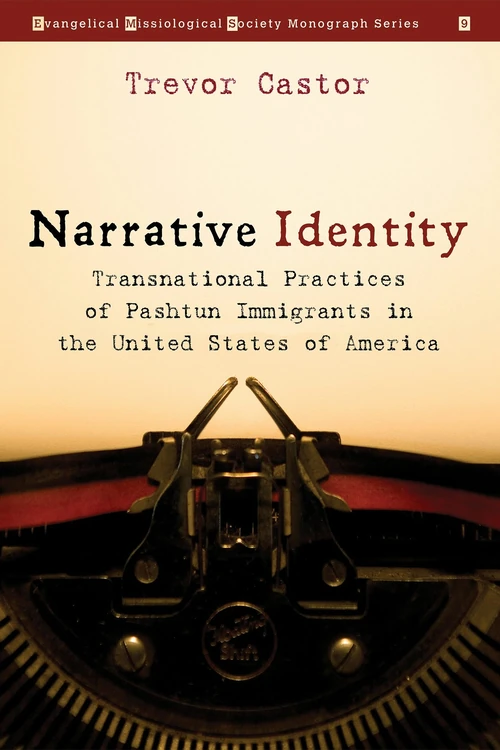
Narrative Identity
Transnational Practices of Pashtun Immigrants in the United States of America
- World Religions
- Publisher: Pickwick Publications (Wipf and Stock)
- Published: 2021
FritzSearch.com earns a commission on purchases made through Bookshop.org links.
Publisher's Description
Narrative Identity is the product of seven years of research among Muslim immigrants living in America. This book will help you to understand the role that stories have in shaping how we see the world, ourselves, and others by exploring the process of identity formation for one of the most feared and least understood Muslim peoples in the world--the Pashtun. The Pashtun are most often associated with the Taliban and for harboring Osama bin Laden after the attacks on 9/11. For centuries, these people have been accustomed to war, and ethnic, tribal, and religious violence in the regions of Afghanistan and Pakistan. As a result, the Pashtun are also one of the largest ethnic groups migrating throughout the West. More recently, their identity has been reduced to the violent actions of Islamic terrorism committed by a few Pashtun immigrants living in Western nations. This study explores the various factors that impact identity formation for Pashtun immigrants including transnationalism, social media, and the ongoing negative media attention concerning Islam and Muslims. This book helps readers understand the nuances of identity formation which are critical to consider in order to avoid the crude categorizations so often associated with identity politics.
Endorsements (6)
“I very much enjoyed reading Trevor Castor’s excellent work. I believe it makes a new, creative, excellent contribution to missiology. I myself have written, edited, and published in this area . . . and found myself drawn in by Castor’s research and analysis. That is, he had something new to say; it was not hard to literally read every page. I would not say that about everything I read along these lines.”
“This book brings a fresh perspective on how people self-identify, a dynamic process that is both individual and collective. As such, it questions the popular paradigm of people group thinking in missions and deems it cultural determinism and static. Fascinating narratives of Pashtuns in the USA illustrate how immigrants navigate the ‘system.’ They must fit into the American way of life and simultaneously keep in touch with family back home. It is well worth the read.”
“Castor takes on some key immigration and anthropological issues—identity, acculturation, life histories—regarding the Pashtun, and presents the analysis of these as they relate to the Pashtun with a critical eye and significant nuance.”
“The dissertation makes a substantial contribution to the field of study. It attempts to show how understandings of identity are moving away from the ‘essentialist’ and ‘constructivist’ impasse to a more relational view of how identity is to be understood. The methodology is clearly set out and there is a good review of literature. Castor has discussed well the different factors involved in the emergence of transnational identity.”
“This book explores identity formation across countries and through social media at the intersection of personal, sociocultural, and global narratives. Historical and theoretical background is skillfully juxtaposed with real-life analysis to question stereotypes and popular missiological concepts. Through its contents and model, the book constitutes an invaluable resource in understanding people and communities within our current world of widespread transmigration.”
“Castor’s new book is groundbreaking on several levels. His application of a narrative identity framework informs the active debates in the fast-changing field of identity studies. Furthermore, Castor’s focus on Pashtun immigrants in the USA offers compelling new insights into digital-age communication contributions to identity formation. Moreover, his consideration of people group identity represents a challenge to one of the theoretical icons of mission studies. This is a must-read book.”
See something wrong on this page? Report a problem