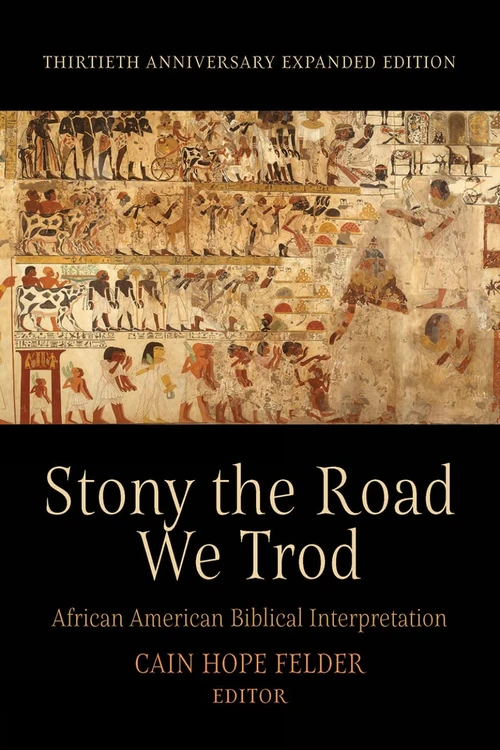
Stony the Road We Trod
African American Biblical Interpretation. Thirtieth Anniversary Expanded Edition
- Biblical Studies & Commentaries
- Publisher: Fortress Press (Augsburg Fortress)
- Published: 2021
FritzSearch.com earns a commission on purchases made through Bookshop.org links.
Publisher's Description
The publication of Stony the Road We Trod thirty years ago marked the emergence of a critical mass of Black biblical scholars--as well as a distinct set of hermeneutical concerns. Combining sophisticated exegesis with special sensitivity to issues of race, class, and gender, the authors of this scholarly collection examine the nettling questions of biblical authority, Black and African people in biblical narratives, and the liberating aspects of Scripture. The original volume reshaped and redefined the questions, concerns, and scholarship that determine how the Bible is appropriated by the church, the academy, and the larger society today. To the original eleven essays this expanded edition adds a new introduction by Brian K. Blount and three new chapters by Kimberly D. Russaw, Shively T. J. Smith, and Jennifer T. Kaalund. Not only does Blount's new introduction access the impact of the first edition, but the new contributions extend the implications of Cain Hope Felder's vision for the book.
Endorsements (3)
“The book represents a major shift--a paradigm shift--wherein the eurocentrism of the scholarship in the dominant culture has been taken off its scholastic pedestal. This has been replaced by an Afrocentrism which accents the experiences of African Americans and relocates the context in which biblical interpretations are done.”
“A landmark volume... of rigorous scholarship, laying out the issues in African American biblical hermeneutics clearly, cogently, and prophetically.”
“Stony the Road We Trod works out of the powerful interfacing of the heritage of African American Christianity and the presence of African American scholars in theological academies of the US. I want to read it as both challenge to and expression of theologies of prophetic pragmatism.”
See something wrong on this page? Report a problem