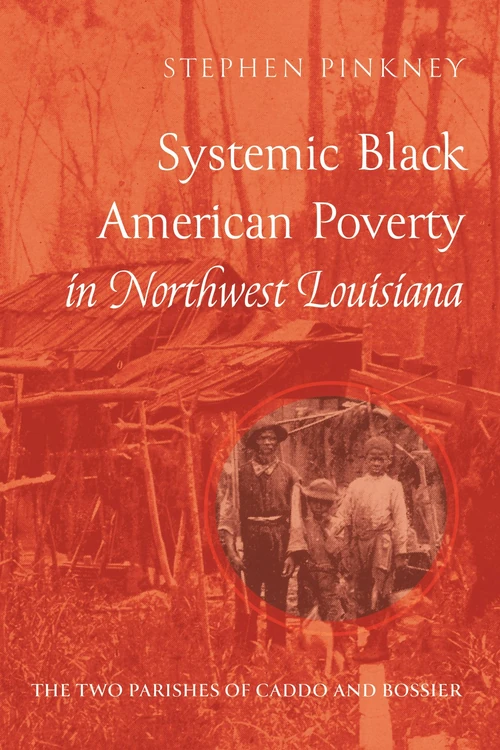
Systemic Black American Poverty in Northwest Louisiana
The Two Parishes of Caddo and Bossier
- Ethics, Culture & Social Issues
- Publisher: Wipf and Stock
- Published: 2026
FritzSearch.com earns a commission on purchases made through Bookshop.org links.
Publisher's Description
Caddo Parish, Louisiana, is a region marked by high poverty rates among Black residents. In this parish, the Black American population surpasses the White population, and poverty among African Americans is more than double that of White residents. The poverty rate for Black Americans in Caddo Parish also exceeds both the state average for Louisiana and the national average. A similar trend is observed in neighboring Bossier Parish. These two parishes are interconnected through their most prominent cities, forming the Shreveport-Bossier City Metropolitan Area. Within this metropolitan region, poverty levels among Black residents are currently higher than the national average. This book examines how systemic racism has become embedded in urban development, suburban sprawl, political systems, and other structural factors. It explores how these elements have perpetuated poverty within the Black community and hindered progress from the colonial era of Louisiana through the Civil War and into the present day in Caddo Parish.
Endorsements (1)
“Systemic Black American Poverty in Northwest Louisiana is an insightful and must-read book. Stephen Pinkney provides the reader with a historical, critical, and analytical analysis of systemic poverty of African Americans in Caddo Parish and Bossier Parish, Louisiana. He examines how systemic poverty for African Americans in these two parishes has resulted in the lack of homeownership, transportation inequity issues, high crime rates, bank and food deserts, pay-day loan companies, non-walkable communities, inadequate health care services/programs, and most all lack of employment opportunities. Lastly, he offers several policy recommendations that include innovative strategies to reduce systemic poverty in Northwest Louisiana.”
See something wrong on this page? Report a problem