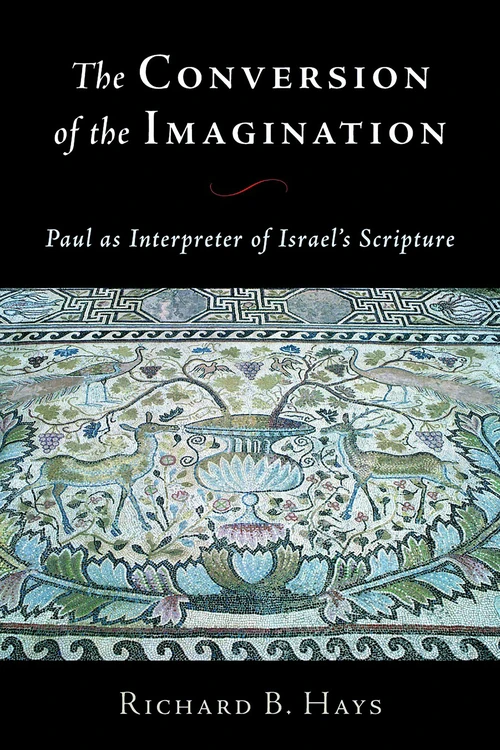
The Conversion of the Imagination
Paul as Interpreter of Israel's Scripture
- Biblical Studies & Commentaries
- Publisher: Eerdmans
- Published: 2005
FritzSearch.com earns a commission on purchases made through Bookshop.org links.
Publisher's Description
The Conversion of the Imagination contains some of the best work on Paul by first-rate New Testament scholar Richard B. Hays. These essays probe Paul's approach to scriptural interpretation, showing how Paul's reading of the Hebrew Scriptures reshaped the theological vision of his churches. Hays's analysis of intertextual echoes in Paul's letters has touched off exciting debate among Pauline scholars and made more recognizable the contours of Paul's thought. These studies contain some of the early work leading up to Hays's seminal Echoes of Scripture in the Letters of Paul and also show how Hays has responded to critics and further developed his thought in the years since. Among the many subjects covered here are Paul's christological application of Psalms, Paul's revisionary interpretation of the Law, and the influence of the Old Testament on Paul's ethical teachings and ecclesiology.
Endorsements (2)
“In Echoes of Scripture in the Letters of Paul, Richard Hays distinguished himself as an interpreter of rare literary skill. He brings the same ear for scriptural nuance to this welcome collection of essays: The Conversion of the Imagination extends and strengthens the argument of Echoes, showing how little one can appreciate Paul without also appreciating the apostle's profound and subtle engagement with Israel's Scripture.”
“Richard Hays not only invites us to consider the formative role that Israel's Scripture played in Paul's thought. He also challenges us to learn from the apostle what it means to read Scripture faithfully, attentive to its 'gracious word of promise.' These are important essays, devoted to a critical topic, from a noted New Testament interpreter.”
See something wrong on this page? Report a problem