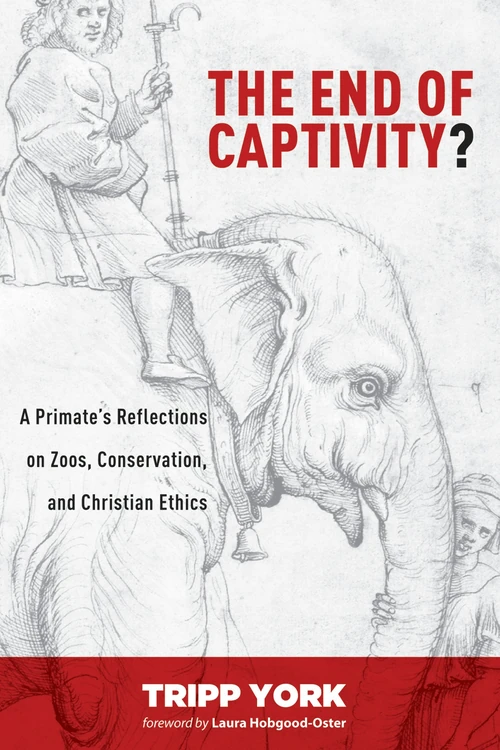
The End of Captivity?
A Primate’s Reflections on Zoos, Conservation, and Christian Ethics
- Ethics, Culture & Social Issues
- Publisher: Cascade Books (Wipf and Stock)
- Published: 2015
FritzSearch.com earns a commission on purchases made through Bookshop.org links.
Publisher's Description
In The End of Captivity?, Tripp York addresses how we talk about the good of other animals in light of a stark impossibility: their freedom from us. While all of us in the animal (and plant) kingdom are interdependent upon one another, humans are unique in that we are the only animals who keep other animals captive. We keep animals in zoos, sanctuaries, circuses, conservatories, aquariums, research facilities, slaughterhouses, and on our farms and in our homes. York asks what such forms of captivity say about us, and how animal captivity shapes what we imagine to be the purpose of other animals. What does the fact that elephants, tigers, and horses perform in circuses say about how we see the world? What does the reality of zoological parks say about the people who create, support, decry, protest, and patronize them? How important is wildlife conservation for the good of the earth? What does "who" we put on our plate say about how we understand the theological role of other animals? These are just a few questions York tackles as he weaves through the convoluted politics surrounding the captive animals in our midst.
Endorsements (3)
“A warm-hearted and sensible look at the reasons for and against keeping animals captive in zoos, parks or sanctuaries, and the reasons against keeping them in factory farms in which those who speak out against zoos and the like are challenged to consider their own involvement in far worse forms of captivity. York is an intelligent and compassionate friend of the animals involved, and of their human keepers.”
“As we face what is being called the Sixth Mass Extinction, the topic of captivity is becoming ever more pressing. In this thoughtful--and what will undoubtedly be considered controversial--book, York explores the complexities of holding others captive. In a world where 'it is no longer clear where any of us belong,' this exploration is paramount.”
See something wrong on this page? Report a problem