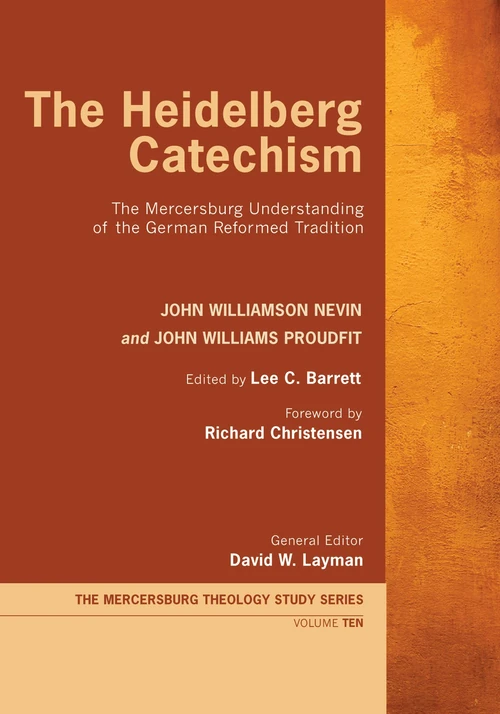
The Heidelberg Catechism
The Mercersburg Understanding of the German Reformed Tradition
- Theology
- Publisher: Wipf and Stock
- Published: 2021
FritzSearch.com earns a commission on purchases made through Bookshop.org links.
Publisher's Description
This volume is a collection of essays on the Heidelberg Catechism by John Nevin, a principal representative of the Mercersburg Theology that was birthed in nineteenth-century Pennsylvania. It also contains a critical response by John Proudfit, a more traditionally scholastic Calvinist. In these essays Nevin argued that the Heidelberg Catechism is an essential irenic confessional document that encapsulates the Reformed tradition and also builds bridges to Lutheranism and Roman Catholicism. According to Nevin the use of the Catechism is vital for shaping the identity of Christians and overcoming the dangers of individualism and subjectivism. Nevin's enthusiasm for the Catechism was a function of his understanding of the Christian life as progressive growth in Christlikeness, the church as the nurturing body of Christ, and the sacraments as conduits of Christ's vivifying personhood. These convictions stood in sharp contrast to the non-catechetical sensibilities of most nineteenth-century American Protestants who emphasized the sufficiency of Scripture alone, the church as a gathered community of like-minded individuals, dramatic conversion experiences, and the direct presence of Christ to the individual soul.
Endorsements (5)
“In these writings, John Williamson Nevin interprets the Heidelberg Catechism as being the best expression of the life of the German Reformed Church, as it combines reformed teaching with a deep catholic spirit, and a rational presentation of the faith with a profound mystical element. The introductions by Lee Barrett helpfully place these writings in their nineteenth-century context, and are also quite informative with regard to the composition and history of the Heidelberg Catechism.”
“Nevin’s writings on the Heidelberg Catechism, including his controversy with Proudfit, are a superb case study of the catechism’s reception in nineteenth-century American theology. Strikingly, Nevin finds in the catechism the heart of Mercersburg’s irenic ‘Catholic and Reformed’ incarnational, mystical, ecclesial, and sacramental vision, in profound contrast to ‘Puritan,’ Princeton scholastic, Reformed Dutch, revivalist, and even Lutheran views. Skillful editing and substantive historical notes bring alive the catechism and Nevin’s insights for contemporary confessional theology.”
“Nevin’s essays, along with the excellent introductions by Lee Barrett, are a window into the great debates in the nineteenth century over what is the key for Protestants in general and the Reformed tradition in particular. For Nevin it’s all about incarnation and new life in Christ, finding expression in church, sacraments, creed, and catechism. Nevin forces us to choose: shall priority be given to the individual and culture or what is received in Scripture, creed, and catechism?”
“The Heidelberg Catechism is one of the most important documents in the Reformed confessional heritage. The essays of John Nevin in this collection discuss the document’s history and theology, address its reception and influence on spiritual and political life, and offer insights to how the catechism influenced topics that were the focus of Mercersburg theology. This exceptional book will be of benefit to anyone with an informed interest in this catechism.”
See something wrong on this page? Report a problem