David J. Gouwens
Biography
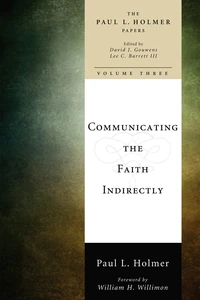
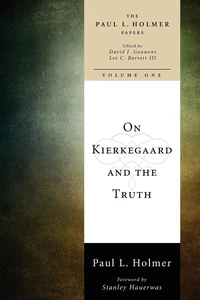
David J. Gouwens has served as Professor of Theology at Brite Divinity School. Gouwens edited Communicating the Faith Indirectly (2012), Thinking the Faith with Passion (2012), and On Kierkegaard and the Truth (2012).
Bios generated by automated processes. · Report a problem
Biblical Studies & Commentaries
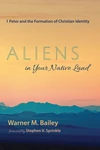
“What does it mean to live as an alien in your own country? In fresh, creative ways, Bailey wields up-to-date critical intertextual biblical exegesis, sophisticated theological analysis in conversation with Bonhoeffer and recent contemporary voices, and concrete pastoral care insights to allow First Peter’s voice to ring forth anew, encouraging the church, empowered by Christ’s cross, resurrection, and promised return, to embrace its call to face ‘fiery trials’ with hope and joy. A splendid achievement!”

Fiction
“With Elli and her friends we enter a convincingly imagined 'other world' of unforgettable creatures, piercing beauty, and exciting dangers. And in joining their heroic quest through this strange world, we discover, too, bracing portrayals of universal themes: choice and courage, freedom and destiny, good and evil. Stories of other worlds, it is said, may both delight and instruct; as with all good fantasies, Blackfire sends us back to our own world, refreshed and renewed.”

Blackfire: The Girl with the Diamond Key
Fiction
“In this splendid third volume Elli and her friends reach the culminating moment of their quest to save from forces of Nothingness the beautiful and mysterious world of Bairnmoor. Against seemingly insurmountable odds and their own self-doubt, we see their hard-won bravery and love of the Good forged in fires of adversity. And with them we learn too the redeeming power of imagination and hope. A wonderful conclusion to a stirring epic!”

Blackfire: The Rise of the Creeping Moors
Fiction
“As the forces of darkness loom ominously in Volume II, Elli and her friends’ adventures through Bairnmoor prove even more exciting. Accompanying their journeys through this richly imagined world, we see these characters individually discovering the courage and trust each needs for the coming struggle. This is a thrilling book; in the best traditions of fantasy, it engages our imaginations and challenges our hearts and minds.”
Theology
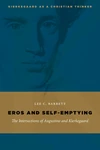
“What has Hippo to do with Copenhagen? In this superb study Lee Barrett displays how, for all of their differences, Augustine and Kierkegaard unexpectedly share a vision of the Christian life as a journey circling around two central themes: the heart's restless desire-filled journey to God and God's self-emptying journey to the individual. . . . Barrett's command of each thinker's writings, historical context, and reception is complete. . . . Best of all, he shows how reading both Augustine and Kierkegaard as rhetorical and dialectical thinkers challenges us to rethink traditional Catholic and Protestant binary oppositions. The result is an important contribution not only to studies of Augustine and Kierkegaard but also to constructive Christian theological reflection.”
Theology
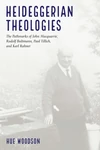
“With in-depth historical analysis of Martin Heidegger's influence on four eminent modern theologians, Hue Woodson reveals with fascinating biographical detail the diverse ways they employed Heidegger's philosophy for their own theological purposes, pursuing different ‘pathmarks’ from Heidegger to one of the four dimensions of the Wesleyan Quadrilateral. Woodson's well-researched, clearly written book is an indispensable guide for anyone interested in comparative investigations of various Heideggerian trajectories for contemporary constructive theology.”
Philosophy
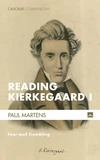
“Fear and Trembling is often the first of Kierkegaard's famous books a non-specialist reader encounters, but it is also famously daunting. Paul Martens proves himself a wise guide to Fear and Trembling, for he accomplishes what may seem impossible: removing intellectual obstacles to understanding the 'internal logic' of Kierkegaard's reflection on Abraham's near-sacrifice of Isaac, but at the same time never minimizing the book's daunting challenge to the gift and task that is faith.”
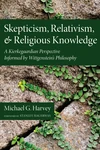
Skepticism, Relativism, and Religious Knowledge
Philosophy
“For Harvey, Kierkegaard is no irrationalist, and Wittgenstein is no champion of self-contained fideism. Both provide rather crucial resources for addressing objectivism, skepticism, relativism, and the rationality of religious knowledge. Drawing too upon Dilthey and Paul L. Holmer, Harvey expertly explores a hermeneutics and grammar of religious knowledge, one that by highlighting the place of passion, will, and suffering in faith prompts fascinating engagement with recent Reformed epistemology.”
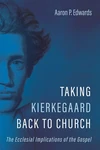
Taking Kierkegaard Back to Church
Theology
“As Edwards beautifully reveals, the Kierkegaard who is often dismissed as a ‘subjectivist’ and ‘individualist’ is actually a deeply ecclesial thinker, one whose ‘kerygmatic’ sense of the gospel challenges even today the faith and preaching of our own ‘post-Christendom’ church. Through spirited dialogue with classical and contemporary theologians and recent Kierkegaard scholars, Edwards splendidly situates Kierkegaard as a radical ecclesial interrogator of our own understanding of the gospel’s role in the church. ‘Take and read!’”
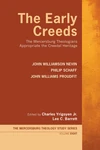
Theology
“Nevin’s and Schaff’s articles championing the early creeds provide a fascinating window into the entire range of their ‘catholic and Reformed’ theology. Best of all, their spirited debates with then-dominant American ‘Puritan’ ‘anti-creed’ Protestant views anticipate, as the editors rightly note, continuing issues in contemporary American constructive theology. Brilliantly edited, with immensely helpful historical footnotes, this volume is a gift for anyone concerned with recovering the centrality of the early creeds for Christian confession.”
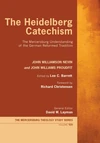
Theology
“Nevin’s writings on the Heidelberg Catechism, including his controversy with Proudfit, are a superb case study of the catechism’s reception in nineteenth-century American theology. Strikingly, Nevin finds in the catechism the heart of Mercersburg’s irenic ‘Catholic and Reformed’ incarnational, mystical, ecclesial, and sacramental vision, in profound contrast to ‘Puritan,’ Princeton scholastic, Reformed Dutch, revivalist, and even Lutheran views. Skillful editing and substantive historical notes bring alive the catechism and Nevin’s insights for contemporary confessional theology.”
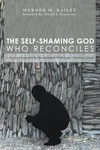
The Self-Shaming God Who Reconciles
Theology
Foreword
“'Bailey fruitfully combines biblical exegesis, constructive theological reflection, and pastoral application, navigating all three disciplines with competence and ease. As a theologian, I am especially struck by his fresh insights into how shame is central to understanding the 'theodrama' of God's identification with the shamed in the crucifixion and resurrection. . . . But Bailey's focus on shame, grounded in his careful exploration of the biblical materials, gives his theological account of the crucifixion and resurrection its own distinctiveness and force, the 'theodrama' of 'the shamed God who lives beyond shame.''”
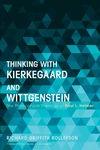
Thinking with Kierkegaard and Wittgenstein
Philosophy
Foreword
“We are indebted to Richard Rollefson, for his book is a reliable and stimulating guide to the thought of Paul L. Holmer, a book that does justice to the depth and complexity of one of the most provocative and interesting philosophical theologians of his generation.”
NOTE: Only includes books currently in our catalog; not necessarily a complete list.
See something wrong on this page? Report a problem