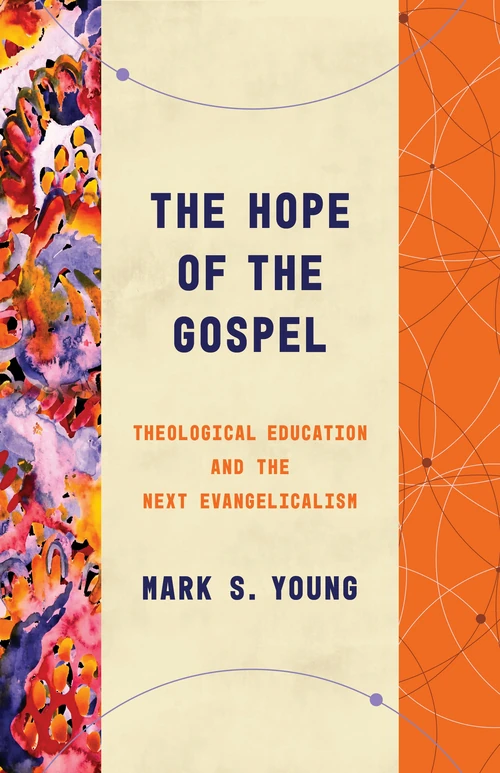
The Hope of the Gospel
Theological Education and the Next Evangelicalism
- Discipleship & Christian Education
- Publisher: Eerdmans
- Published: 2022
FritzSearch.com earns a commission on purchases made through Bookshop.org links.
Publisher's Description
Returning evangelicalism to its core commitments Evangelicalism in the United States is fracturing along social, political, and ethical fault lines, to the extent that the very meaning of “evangelicalism” is in dispute. Having surrendered its theological character and missional heritage to partisan political activism and cultural conservatism, the movement has lost its unifying identity and undermined its own testimony in an increasingly diverse society. Mark Young believes a revitalization of the evangelical movement must happen in our seminaries, where the shepherds of the next evangelicalism are being formed. Young argues that if these leaders of tomorrow are instilled with true gospel values, they will go on to form churches and missional organizations that offer a credible and compelling Christlike witness for the sake of the world. The Hope of the Gospel takes readers through the history of evangelicalism and back to the present to make the case for how this can happen through a renewed vision of theological education.
Endorsements (5)
“Mark Young, in The Hope of the Gospel, prophetically calls us into that liminal space which honors both the firm, historical theological roots which historically defines evangelicalism and the new contextual realities of a growing, global evangelical movement. Young courageously beckons us to look beyond the boundaries of the North American and European experiences which have shaped our movement to a more robust and biblical vision which promises to reenergize that faith ‘once for all delivered to the saints.’”
“I needed this book. It not only challenged my nostalgia for an evangelicalism that never really was exactly like what I have remembered it to be, but it also gave me new hope for evangelical theological education. Mark Young is enthusiastic about a new generation of theological educators who are willing to face the future with an openness to challenges that can only met by a deep commitment to the Gospel. And he points the way ahead with cultural and cross-cultural savvy—and most of all, with profound theological wisdom.”
“Against those who would give up on the identifier ‘evangelical,’ Mark Young pushes back with a vision of evangelical theological education in which the gospel is at the center. For the five young leaders the book addresses, as well as to all with ears to hear, Young makes good in showing why a return to the gospel opens wide a doorway of hope.”
“The Hope of the Gospel by Mark S. Young invites our next generation of theological educators to carve out a process of transformation within our institutions, a movement of intellectual spiritual renewal he characterizes as ‘orthodoxy on fire.’ Young encourages us to create hope-infused spaces for institutional growth and change beyond the status quo of American evangelicalism and highlights the urgent need to articulate a meaningful public theology. By calling for a renewed vision of theological education, Young challenges us to examine our prevailing values and assumptions to embrace more fully God’s redemptive mission for the church and society. Asking us to recalibrate our historical narratives and inherited frameworks, Young’s book is a highly relevant, insightful, and timely read for current and future generations of theological educators.”
“Mark Young writes as thoughtfully as an evangelical and as insightfully as the president of a leading American seminary. Evangelical theological educators should read this book because it will remind them of the gifts that have distinguished this evangelical movement and point them to the generative work that needs to be undertaken to extend those gifts into the future. Others should read this book because it gives needed clarity to the identity confusion evangelicalism is experiencing and provides valuable insight into the work of evangelical theological schools.”
See something wrong on this page? Report a problem