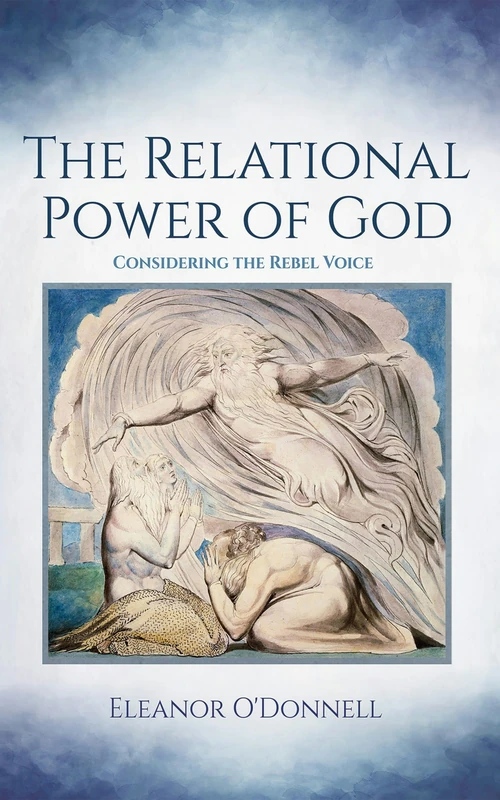
The Relational Power of God
Considering the Rebel Voice
- Theology
- Publisher: Pickwick Publications (Wipf and Stock)
- Published: 2023
FritzSearch.com earns a commission on purchases made through Bookshop.org links.
Publisher's Description
When we find the courage to allow our rebel voice to speak, many of us question traditional Christian beliefs about God's power and how it is exercised in the world and in the church. We ask: What if God is not in omnipotent control of everything? What if God's exercise of power is relational and noncoercive instead? What if it is the quality rather than the quantity of God's power that really matters? This book focuses on the theology of power that emerges when we ask such questions. It draws on the social Trinitarian theology of Jurgen Moltmann and the process thought of Charles Hartshorne to image God as a Social Trinity in process. This vision of God understands the Holy Trinity to be fully relational and thoroughly with us and all creation. To think of God and God's power this way ensures freedom for creature and creation and enables a viable response to the problem of evil and suffering. It also leads to the conclusion that human relationships in the world and in the church are best modeled on the power-sharing solidarity of the Triune God.
Endorsements (3)
“O’Donnell clearly outlines how the doctrine of the Trinity highlights the relational nature of God. The relationship of love and mutual respect that exists between the persons/members of the Trinity becomes the model for how humans should relate to one another and to creation—with deep love and profound respect—seeking the well-being of the other that seeks only for the other to flourish.”
“Omnipotence as ‘God in control of everything’ issues in an intractable theodicy problem and an implicit sanction for power in the mode of domination and control. O’Donnell offers a coherent and compelling alternative shaped by panentheism, process relational thought, and Moltmann’s social Trinitarian theology. This book is more than a merely theoretical exploration. It has grounding in lived experience of human trauma and tragedy, which press the question: If God is in control, what kind of God is this?”
“Is it the quality or the quantity of power that matters? O’Donnell offers an intelligent and compassionate view of God for a scientific age that questions God’s power as omnipotent. Rather, she gives us a view of divine power as it arises from God’s goodness and love—noncoercive, relational, and alluring. I highly recommend this book for its contribution to theology and to healthier human relations.”
See something wrong on this page? Report a problem