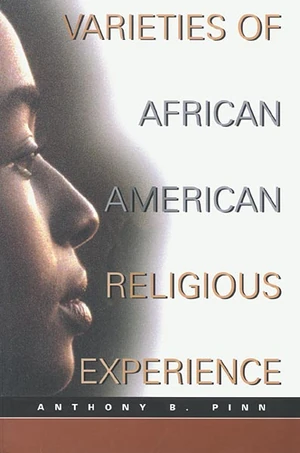
Varieties of African American Religious Experience
- World Religions
- Publisher: Fortress Press (Augsburg Fortress)
- Published: 1998
FritzSearch.com earns a commission on purchases made through Bookshop.org links.
Publisher's Description
Anthony Pinn's engrossing survey highlights the rich diversity of black religious life in America, revealing manifestations of an ever-changing black religious quest in four non-Christian indigenous movements. Based on extensive interviews, travel, and research -- embellished with ample photos, bibliographies, and case studies -- Pinn provides an insider look especially at Voodoo, Orisha devotion, Santeria, the Nation of Islam, and Black Humanism in the U.S. Focusing less on institutional and doctrinal history and more on the varied popular religious practices and sites, his volume highlights, for example, the influence of Caribbean religions in the U.S., practices of divination and healing, the surge of black Muslim religion, the emergence of black humanism, religious influences on the ethical practices of black women, and the import of previously overlooked religious settings (e.g., church women's clubs, local politics, Pentecostal religion, private religious practices). The emergent picture, more subtle, varied, and vibrant than traditional black Christian denominational history, marks a new era in African American religious studies.
Endorsements (1)
“Varieties of African American Religious Experience is a prophetic reflection on the moral, existential, and theological paradoxes inherent in radical comparison, by which I mean comparison from no particular religious system or community. Paradoxes abound in such an intellectual act. Here, after all, we have the clear voice of an atheist theologian, of a humanist who cares deeply about religion and religious people, of a black intellectual who insists that the discourse around race and religion must not be restricted to black voices. Such intellectual paradox is a most effective way to confront and answer existential absurdity—here the absurdity of moral evil, unjust suffering, and the immeasurable (and continued) suffering of black bodies at the auction blocks, nooses, and now gun barrels and righteous ideologies of white religious people. The rock of Sisyphus has clearly rolled down the hill again. We are at a moment of immense gravity and apparent despair. We have ‘hit bottom.’ But it is not time to complain or hesitate. It is time to push the rock back up the hill again. Such is Anthony B. Pinn’s message to all of us on the twentieth anniversary of this now classic work.”
See something wrong on this page? Report a problem