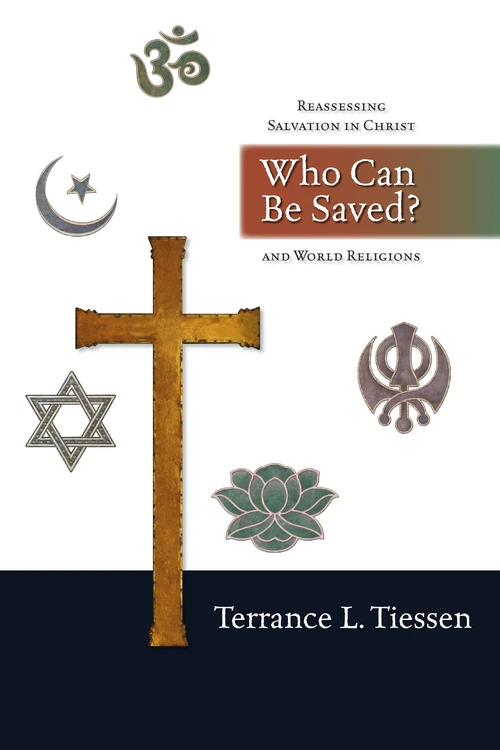
Who Can Be Saved?
Reassessing Salvation in Christ and World Religions
- Theology
- World Religions
- Publisher: IVP Academic (InterVarsity Press)
- Published: 2004
FritzSearch.com earns a commission on purchases made through Bookshop.org links.
Publisher's Description
Throughout history millions have lived and died without hearing the gospel of Jesus Christ. Despite vigorous missionary efforts, large populations of the world today have never been evangelized. And now religious pluralism has set up shop on MainStreet. The question "Who can be saved?" forces itself on the minds of Christians like never before. Is there a wideness in God's mercy? Does God reveal himself in a way that invites all people to respond positively in saving faith? Does one have to be an Arminian to believe so? Or is there a way for Calvinists to see how God might reveal and save apart from the explicit "gospel" and yet exclusively through Jesus Christ? And if so, what does this say about the role of religions within the sovereign providence of God? These are big questions requiring thoughtful care. In this intriguing study, Terrance L. Tiessen reassesses the questions of salvation and the role of religions and offersa proposal that is biblically rooted, theologically articulated and missiologically sensitive. This is a book that will set new terms for the discussion of these important issues.
Endorsements (7)
“Professor Tiessen has producd a major work on a cluster of issues that are as complex as they are controversial. One need not agree with all of his conclusions to benefit from this carefully crafted theological and missiological study.”
“Who Can Be Saved? Reassessing Salvation in Christ and World Religions is a bold and significant contribution to evangelical theological and missiological thinking on a very controversial issue. Its theological depth and its missiological grounding set it apart from many other books.”
“This book does two things impressively well: It skilfully clarifies many issues that too often are blurred in the discussion of world religions, and it argues the author's own views with gracefulness, maturity, and cogency. Professor Tiessen thus takes his proper place in the forefront of evangelical theology of religions with a book that will become a reference point for all further work in the field.”
“This is a sensitive, patient, sophisticated evangelical response to evangelical questions concerning the religions. Tiessen takes the biblical witness with utter seriousness--a seriousness lacking in most books on this and related subjects. Those from the Reformed tradition will be especially pleased with the nuanced attention given to problems of salvation and revelation in the religions.”
“The product of many years of reading, thinking and discussion, this is one of the most satisfactory comprehensive treatments of salvation ever attempted by an evangelical in the Reformed tradition. Even those--like me--who do not share in that tradition will discover in Tiessen an immensely well-informed, trustworthy and fair-minded guide through the labyrinthine maze of questions issuing from Christian understanding of and response to the Bible's teaching on salvation. Unless I am greatly mistaken, this book will serve as the benchmark reference on the subject for evangelical teachers, pastors, missionaries and students for years to come.”
“Terrance Tiessen reshapes the paradigm for Christian thinking about religions, taking us beyond the inadequate language of exclusivism, inclusivism and pluralism, and offering fresh analyses and stimulating insights. He offers what many of us have longed for--a fully worked-out, carefully biblical and Reformed case for the conviction that the sovereignty of God's saving grace in all human history, while it is exclusively grounded in the person and work of Jesus Christ, is not exclusively limited to the church's evangelistic obedience (or lack of), presented in a way that does not thereby diminish the evangelistic mandate or motive. Tiessen disputes an 'ecclesiocentrism' that reduces the elect to a subcategory of the evangelized and argues rather that those whom God saves through evangelism will be a proportion of the wider elect. Tiessen argues with constant clarity and enviable command of historical, systematic and biblical theology, and is transparent in his own presuppositional stance. He steadily refuses to affirm or infer anything dogmatically beyond what the Bible either affirms or clearly implies, but courageously offers some fascinating original proposals for critical evaluation in areas where the Bible is silent. Few books I have read have been so doctrinally thorough, closely and cautiously argued, and thought-provoking on the twin subjects of the destiny of the unevangelized and the status and role of religions in the purposes of God.”
“"The strength of this theology is that it is both exclusive and inclusive. It is exclusive because it upholds Jesus Christ as the only way to salvation. It is inclusive because it sees God's grace at work in all religions and among all peoples.”
See something wrong on this page? Report a problem