Alan J. Torrance
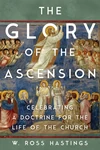
Theology
“This is a lively and informed exposition and interpretation of the doctrine of the ascension. Although a key doctrine at the heart of the gospel, the ascension is too little discussed. Ross Hastings's thought-provoking and insightful exploration addresses the significance of the ascension for the priesthood of Christ and the atonement in ways that challenge and correct conventional perspectives. This book invites readers into a bold and distinctive viewpoint. Whether or not you agree with all Hastings's conclusions, this book will stimulate serious reflection on a theologically foundational affirmation.”
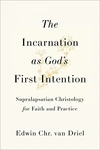
The Incarnation as God's First Intention
Theology
“In this courageous, exegetically driven, and historically informed analysis Van Driel considers what it means to rethink Christian doctrine by placing Jesus Christ at the center of the theological task. The result is a trinitarian interpretation of God and creation that not only elevates God’s covenantal and koinonial purposes but provides profound insight into the account of the atonement and the vision of participation at the heart of the New Testament. A brilliant and timely study!”
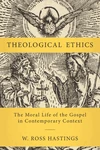
Ethics, Culture & Social Issues
“One of the most damaging legacies of modernity is the extent to which Christian theologians have lost their evangelical nerve when it comes to “Christian” ethics. Fear of questioning universal universal epistemic access to the moral law, confused accounts of the conditions for repentance, and a concern to ratify accounts of the state and its laws independently of the gospel have distracted theologians from the recognition at the heart of the faith, namely, that Jesus Christ is the key to understanding the totality of God’s purposes for human beings and thereby every facet of their relationship to God and to each other. In this remarkable book, Ross Hastings has the courage to think through the totality of Christian ethics from its centre in the triune God and his radical and liberating engagement with the contingent order in Jesus Christ. Rather than defining ethics with reference to generic assumptions about human purposiveness, it focuses on the one who alone mediates God’s creative purposes to humanity and who alone is the true image of God the Father. Consequently, rather than turning to some perceived natural order for guidance, Hastings interprets our obligations in the light of our participation in the new creation and in the life of the new humanity to which the resurrection bears witness. The result is an approach to ethics that is grace-oriented, liberating, and inspirational rather than legalistic—that refuses to reduce Christian ethics to secular humanism in religious guise. This is a courageous, cogent, and convincing account of the radical and distinctive nature of Christian ethics. Not only will it challenge, but it will inspire and excite students, pastors, and theologians alike. What it reminds us is that theological ethics is never more relevant than when it actively witnesses to the gospel of Jesus Christ and interprets its grounds accordingly.”
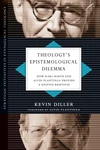
Theology's Epistemological Dilemma
Theology
“In this groundbreaking study, Kevin Diller addresses a fundamental challenge for the Christian faith, namely, how one can affirm the knowability, universality and warrant of its theological claims while simultaneously recognizing the frailty and fallibility of those who hold them. Drawing on the complementary insights of Karl Barth and Alvin Plantinga, whose approaches are so often mistakenly assumed to be in tension, Diller provides an original, rigorously argued and deeply convincing response to the epistemological grounding problem. This field-changing volume exemplifies analytic theology at its finest. More significantly it defines the way forward for any theology that seeks to be true to the trinitarian and incarnational core of the Christian gospel. This is not only inspirational but obligatory reading for academics, students and intellectually engaged Christians alike.”
NOTE: Only includes books currently in our catalog; not necessarily a complete list.
See something wrong on this page? Report a problem