Ashley Null
Christian Living
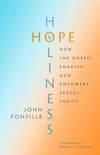
“Confronting the proverbial elephant in the evangelical room, John Fonville takes a fresh look at 1 Corinthians 6:9–20 to help Christians who struggle with sexual sin. In so doing, he eschews tired traditional exhortations to simply try harder at self-shaming and self-denial as the way to biblical purity. Instead, Fonville shows how the apostle Paul applied the law-gospel distinction to the rampant sexual immorality among the saints of God in Corinth. For while the law tells us how to live, only the gospel empowers us to do so. Consequently, Paul reminded his readers whom God had already made them to be in Christ. As a deeply experienced pastor, Fonville wisely does the same. He urges his readers to constantly remind themselves of that foundational gospel truth, which is the root of all Christian holiness: only God's love for sinners will inspire sinners to love God more than sin.”
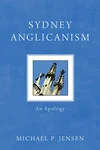
“For many observers, Sydney Anglicanism is an incomprehensible oxymoron--a diocese decidedly committed to the authority of Scripture and the primacy of its proclamation, yet institutionally yoked to the far more doctrinally progressive and liturgically centered Anglican Church of Australia, not to mention the wider Anglican Communion. What makes such an anomaly tick? Equally important, where should its undisputed vigor and clout head? A reflective son of the diocese, Michael P. Jensen is to be commended for providing a concise, articulate, and thoughtful book that seeks to answer both of these important questions. Henceforth, neither friend nor foe of Sydney Anglicanism will be taken seriously without first engaging Michael Jensen's timely apology and critique.”
Biblical Studies & Commentaries
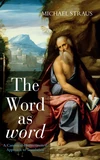
“What is the relationship between the Word of God living, Jesus Christ the Incarnate Son of God, and the Word of God written, the message which authoritatively proclaims him to a lost world? In what combination do the Holy Scriptures have both divine and human attributes as the living Word of God to which they uniquely witness, including the supernatural power to inspire its readers? Should the living Word’s use of the written word in shaping the ongoing life of the Church effect the Church’s subsequent understanding of it? In short, as a book of the Church, both as its product and as its source, should the Bible be read with the eyes of faith, as that faith has developed through the centuries? Or should the Bible be read “like other books . . . without reference to the adaptations of the Fathers or Divines; and without regard to a priori notions about its nature and origin,” as Benjamin Jowett urged in Essays and Reviews (1860)? Such questions have dominated biblical hermeneutics ever since Jowett’s time. Rarely, however, have such penetrating queries be made of the related task of biblical translation. Should the translator simply seek to recapture the initial exchange between the text in its original language and its first readers, like any other ancient text? Or should the translator recognize the impact of a sacred text on the unfolding linguistic contexts in which the text has been read and which the text has also shaped over th centuries? Moreover, should a translator weigh the importance of how prior translation have shaped the experiences of readers and, therefore, also their expectations for new versions? In The Word as word, Michael Straus grasps the nettle of these thorny issues firmly in favor of the latter. Himself a gifted translator of the New Testament, Straus assesses with much academic learning and a practitioner’s insight both the strengths and weaknesses of the three main current approaches before offering his own canonical hermeneutical theory of translation. Future editions of the Bible and their readers will no doubt owe a great debt to Straus’ contribution to this important field.”
NOTE: Only includes books currently in our catalog; not necessarily a complete list.
See something wrong on this page? Report a problem