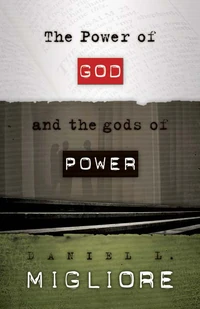
Daniel L. Migliore
Between Cross and Resurrection
Theology
“In this major study Alan Lewis offers a profound meditation on 'Holy Saturday,' the day between Good Friday and Easter when Christ lay dead and buried in the tomb and his followers experienced the absence and silence of God. Lewis challenges all triumphalist distortions of the biblical message and summons the church to hear anew, ponder well, and live out the story of the Son of God's passage to victory through suffering, abyss, death, and burial. This exploration of the 'Holy Saturday' theme in its theological, ethical, liturgical, and personal dimensions has few if any peers.”
Bible Studies & Devotionals
“Adding to his engaging series of devotional readings of major theologians, Don McKim offers fresh and accessible reflections and meditations on eighty-four bite-size quotations from the writings of Karl Barth. McKim’s reflections are substantial enough to invite moments of serious contemplation and brief enough to whet the appetite for more. Whether read consecutively or selected according to the reader’s interests at the moment, Barth’s abiding insights into the depth and breadth of Christian faith and life are clearly presented.”
Ethics, Culture & Social Issues
“Far more than a summary of Barth's ethics, David Haddorff's book is a first-class effort to think in company with Barth about the source of our knowledge of the good and about the meaning of human freedom and ethical responsibility as faithful correspondence to God's free grace in Jesus Christ. Employing witness as the interpretive key of his work, Haddorff shows that Barth's ethics is radically Christocentric, and just for that reason is highly dialectical, free to recognize its limitations and avoid absolute claims, and free to engage in conversation with and learn from other ethical perspectives without becoming captive to them. In particular, Haddorff underscores the difference between Barth's ethics of witness on the one hand and the ethics of both reductionist secularism and theological isolation on the other. In the final section of the book, the author offers a highly creative deployment of Barth's ethics as it bears on the political, economic, and ecological crises of our time.”
Theology
“Brian Gerrish’s long-awaited Christian Faith: Dogmatics in Outline is a gem of ripe historical scholarship and striking theological construction. Organized in two major parts, the first, ‘Creation,’ analyzes the ‘elemental faith’ presupposed by Christian faith, and the second, `Redemption,’ itself divided in two (‘Christ and Christian Existence’ and ‘The Spirit and the Church’), examines the beliefs and dogmas in which ‘the distinctively Christian way of having faith’ is expressed. All twenty-one chapters, introduced by finely crafted theses, begin with helpful studies of the diverse biblical sources of a doctrine, followed by explorations of significant moments in the doctrine’s development (with special attention to the work of Gerrish’s two ‘main guides,’ Calvin and Schleiermacher), before finally advancing the author’s own critical and constructive statement. The author’s primary criteria of dogmatic theology-fidelity to the apostolic witness to Jesus Christ and pertin nence to contemporary thought and experience-are deployed throughout the work. Rigorous and readable, fresh and thought-provoking, Gerrish’s volume is an outstanding resource for teachers and students of Christian dogmatics.”
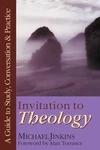
Theology
“Michael Jinkins's invitation to theology is lively, fresh and reader friendly. Centered on the trinitarian love of God as source of new life in communion with God and others, Jinkins's book ties together Christian doctrine, worship and service, and helpfully exposes the destructiveness of modern individualism in both church and society. An excellent choice for a first course in theology!”
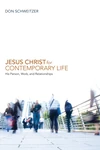
Jesus Christ for Contemporary Life
Theology
“Fresh, wide-ranging, and highly readable, Schweitzer's exploration of the singular personhood, saving work, and essential relationships of Jesus with others is an impressive accomplishment. A recurring motif of the book is that Jesus is the decisive embodiment in space and time of the beauty, goodness, and love of the triune God. The volume will serve well as a text for college and seminary courses in Christology.”
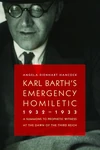
Karl Barth's Emergency Homiletic, 1932-1933
Theology
“On the basis of her careful and detailed research, Angela Hancock sets Barth's 'emergency homiletic' in the ominous political context of Germany in the early 1930s. The result is a moving account of Barth's efforts in his homiletics classes to liberate preaching from religious platitude and political propaganda and to present it instead as service of the living Word of God rooted in the biblical text and marked by expectancy, humility, and courage.”
Theology
“Drawing extensively from Ren? Girard's analysis of the scapegoat mechanism, Mark Heim has written a not-to-be-missed work on the unmasking of sacrificial violence by the biblical witness. He offers stunning interpretations of Old and New Testament texts as he marshals his argument that the event of the cross narrated in the Gospels is universally significant not because it repeats the deadly cycle of sacrifice present in all societies and in all religious ritual and myth but because it reverses this cycle and rescues us from the practice of scapegoating sacrifice and the violence it both hides and perpetuates. This is a theology of the cross in a bold new key.”
Theology
“For Greenway, the reality of evil poses not a logical problem to be resolved but instead a spiritual challenge to be engaged: Can we honestly and reasonably say a resounding ‘yes’ to life, to the existence of others and of ourselves, with eyes wide open to the enormity and scope of the evils that surround us and are at work within us, without resorting to strategies of denial or the blunting of our moral sensibilities? Greenway’s affirmative response to this question draws especially on the writings of the Jewish philosopher Emmanuel Levinas and the Russian novelist Fyodor Dostoevsky. The Challenge of Evil is both a daring and provocative ‘philosophical spirituality’ combating the hopelessness and nihilism that are strong temptations in a postmodern world coping with the overwhelming reality of evil in its countless forms.”
The Church in the Power of the Spirit
“Moltmann is perhaps unsurpassed among his contemporaries in keenness of insight and rhetorical power.”
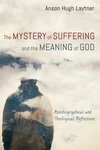
The Mystery of Suffering and the Meaning of God
Theology
“In the shadows of the Holocaust and multiple personal family losses, Laytner plumbs the dual mysteries of suffering and God with the book of Job as his guide. His spiritual journey moves from the rejection of theodicies old and new, through a phase of unrelieved argument with God, to the experience of the ineffable presence of God beyond ‘God.’ Marked by practical wisdom, generosity of spirit, disarming humor, and a joyful affirmation of the goodness of life and love undefeated by suffering and death, Laytner’s book is a stimulating invitation to theological and spiritual exploration.”
Theology
“Admirably combining attention to detail and interpretive skill, John Drury follows Barth's 'Trinitarian grammar' of the Scriptural witness to the resurrection of Christ to its 'Trinitarian ground.' No less than the event of the cross, Drury argues, the Easter event for Barth has its basis in and corresponds to the triune life of God as Father, Son, and Holy Spirit. Drury’s work is an impressive addition to recent studies of Barth's theology.”
Theology
“Henco van der Westhuizen’s collection of essays offers a feast of exploration by diverse authors on the person and work of the Holy Spirit. Many of the burning issues of our day call for fresh thinking about where the Spirit of God is present and to what end, and van der Westhuizen’s book is a significant addition to the growing literature seeking to meet this need.”
NOTE: Only includes books currently in our catalog; not necessarily a complete list.
Biblical Studies & Commentaries
See something wrong on this page? Report a problem