James V. Schall
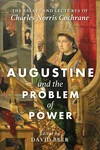
Augustine and the Problem of Power
History & Biography
“To have available these essays of Charles Norris Cochrane is a belated treasure. Few people understood the relation of culture to politics, religion, and economics better than he. He understood the abiding realities of historical origins as well as the unique place of Augustine in the more general question of the meaning of history.”

Ethics, Culture & Social Issues
“Bonds of Imperfection is an incisive, yes, magisterial work that represents the history and understanding of political philosophy as if Christianity really existed. It is likewise a sharp critique of modern liberal attempts, including Catholic versions, to account for political things. It is fully aware of the potentially destructive nature of 'human rights,' and it gives a concise history of how we arrived at them. In short, this book is nothing less than a reintroduction of the great Pauline and Augustinian theses about the real nature of political life, of 'political judgment,' as the O'Donovans call it. It is a book that understands that political things cannot be understood without theological things, and, perhaps, vice versa.”
Apologetics
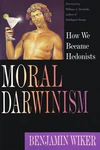
“It was once taken as a matter of course that ideas once argued and reargued in Greek philosophy kept recurring in different ways in subsequent philosophical systems and eras. Classical materialism was not as unrelated to modern materialism as one might suspect. Marx studied Epicurus. Benjamin Wiker here traces this history of scientific and moral materialism. What is unique about his book is that he sees this materialism in scientists who often did not see what their own terms implied. As Chesterton said, 'We must either not argue with a man at all, or argue with him on his terms.' This is what Wiker does with the not totally surprising result that science more and more tends itself to suggest that its own materialism is not as well founded as at first sight seemed to be the case. Even Christians are surprised by this turn of events or better facts. Intrinsic designs and a cosmos appearing suddenly from evidently nothing keep the materialist philosophers wondering. Wiker's subtitle, How We All Became Hedonists, hints at something Aristotle already knew? that hedonism explains neither itself nor the evolution of the world and what it means to understand it.”

Christian Living
“Green’s The Gospel and the Mind gets to the heart of the fact that Christianity is in truth addressed to the human mind, both in its right ordering and in its critique of a disorder of mind. While keeping clear the distinction of faith and reason, Christianity has long sought their proper relationship. There is no belief against mind and no mind against belief. Green spells this tradition out in a welcome reflection on the coherence of Christianity.”

Ethics, Culture & Social Issues
“Oliver O'Donovan presents us here with a thorough and reflective book on the essence of politics and its institutions. This is not merely another political science book, however, but an intellectual history of the very theological and philosophical ideas out of which our modern political rhetoric grew, including that system that sought to understand itself without revelation. Chesterton once remarked that the very purpose of the mind is ultimately “to judge; in many ways, O'Donovan rightly says, politics is a continual act of judgment, an effort to distinguish what is right from what is wrong. O'Donovan carefully shows us what this means in the realm of politics and what are its transcendent implications.”

Work, Money & Leadership
“McNerney . . . is not afraid to suggest that theological and metaphysical issues are needed to put the right limits on economics. And he shows how this might be done without undermining the integrity of the discipline itself--indeed, how such issues flow out of the discipline and its activities among real [persons] acting together . . . What McNerney is really getting at is a placing of economics in its true place, with the realization that the acting person also has a transcendent destiny that is really why he is doing anything at all in the first place, as Augustine said.”
No books by this person in our catalog yet.
See something wrong on this page? Report a problem