John M. Frame
Books Endorsed by John M. Frame
The Speaking Trinity and His Worded World
Theology
“The last century has witnessed a major preoccupation with language among philosophers. Theologians, too, have tried often to understand the language of God—his word. . . . Hibbs stresses the centrality of language to reality and to human life, and he persuasively expounds his view that language is communion behavior. This thesis has huge importance, and therefore I hope that the book finds many readers.”
The Trinity and the Vindication of Christian Paradox
Apologetics
“I am delighted that Brant Bosserman has continued the discussion over Cornelius Van Til and his view of theological paradox. Bosserman's analysis of these issues is well worthy of publication and many readers will find it helpful. As Bosserman clearly indicates, these issues are closely related to the Bible's teaching about God's Trinitarian existence, and his proposal about that will contribute significantly to the ongoing discussion.”
Christian Living
“Theological Method seeks to help new theologians get started on a sound basis. Graham Cole sets forth a theological method that is meant to be good theology—a method that, first and foremost, is itself true to the Bible and, second, shows how theologians throughout history have best used the Bible to edify the church. I am impressed with the conciseness of Theological Method. Cole has done an excellent job summarizing the basics in this short volume.”
Theology
“This is the most delightful book I have read in a long time. One of its delights is its clear, gracefully written prose, which easily engages the reader. The book presents a cogent case for a highly significant point: the whole created world images the divine Trinity. Leithart argues this thesis comprehensively, demonstrating that the divine perichoresis--the mutual indwelling of the three persons of the Trinity--is reflected in every area of human life, including perception, thought, language, sex, time, space, music, and imagination. Leithart's argument has the potential, therefore, to bring major change to our study of all these areas of reality, and thus to all the ways we live in the world.”
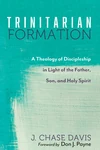
Discipleship & Christian Education
“In Trinitarian Formation, Chase Davis has made a substantial contribution to the church’s work in ‘spiritual formation,’ which helps believers to grow toward Christian maturity, sanctification in Christ. I’m delighted that he has made use of my ‘tri-perspectivalism’ and that he has gone so deeply into it, comparing it to the work of others I deeply respect, like James K. A. Smith. This leads him into some fairly difficult conceptual areas. But he has analyzed these well and has formulated them with clear, appropriate, and fetching illustrations. So this volume speaks both to professional scholars and to church workers. I hope this book gets a very wide distribution, and I pray that God will use it to the edification of his people.”
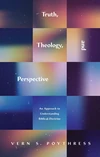
Truth, Theology, and Perspective
Theology
“I am greatly honored that Vern has put my name on the dedication page of this good book. It helps us to understand God’s word not as a collection of individual truths, but as an organism in which each element of the gospel can be seen as a ‘perspective’ on others. The gospel is the same familiar message that it has always been, but in Vern’s exposition it gives us even more amazement, astonishment, and fruitful applications for our living.”
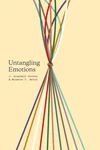
Christian Living
“Theologians and philosophers have often given highly oversimplified advice to people about emotions: Subordinate them to the intellect! Welcome good emotions (joy, peace) and suppress bad (fear, anger)! Such oversimplifications are not true to Scripture, and they hurt those who are struggling with difficult situations. Here Groves and Smith help us enormously as they untangle things, relieve confusion, and help us think through these issues in a serious way. We’re enabled to see that in Scripture every emotion (whether we think of it as good or bad) has right uses and wrong ones. There is good anger and bad anger, good fear and bad fear. We’re shown how to engage our emotions and how to act (or not act) on them. The authors have a deep understanding both of Scripture and of human experience, and they have put their insights into a strikingly well-written book, dealing with difficult questions through vivid metaphors, illustrations, and stories. Most importantly, this book is God-centered. It even contains an appendix showing us the senses in which God does and does not have feelings. I recommend this book to people who are struggling to understand their own feelings and to help others deal with theirs.”
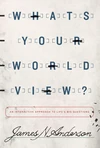
Christian Living
“James Anderson’s What’s Your Worldview is a delightfully innovative apologetic. I know of nothing like it. It gets the reader to interact by asking crucial worldview questions. Depending on the reader’s answers, he is led to further questions, or to a conclusion. Animating the journey is a cogent Christian apologetic, showing that only the Christian worldview yields cogent answers to the questions. Anderson’s approach is both winsome and biblical, as well as being the most creative apologetic book in many years. I pray that it gets a wide readership.”
Christian Living
“I loved it! I really like the structure here—taking the reader through many media and diverse applications of the same biblical teaching. Love the poems, the literary references, and the Bible exposition. It seems to me to be ideal for family devotions, especially for groups in which there are a variety of ages.”

Why Do We Say Good Night? When You Are Afraid of the Dark
Marriage, Family & Relationships
“A wonderful, Christian good-night book we can read to our children before bed. The pictures are ingenious, rich, and beautiful. The commentary is God centered and biblical. I wish I still had a small child so I could read this book to him or her. Many thanks to Champ Thornton for giving such help to parents of fearful kids.”
Discipleship & Christian Education
“My wife and I homeschooled our two boys, and we would make the same decision again. Our reasons were basically the same ones that Adam Calvert enumerates in Why We Homeschool. It’s good to have these reasons set forth cogently in a short book, and I recommend it to everyone who is thinking about this issue. Calvert sets forth powerfully the view that education is discipleship and therefore must be consistent with the Bible’s worldview and with its Gospel.”
Christian Living
“With One Voice reaches deep into the history and theology of Scripture to show what it was like to sing from the heart to God and how that experience can be ours today.”
Books Authored or Contributed to by John M. Frame
NOTE: Only includes books currently in our catalog; not necessarily a complete list.
Christian Living
Christian Living
Christian Living
Perspectives on the Word of God
Theology
History & Biography
Theology
See something wrong on this page? Report a problem