Kenneth Ngwa
Biography
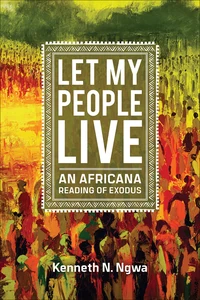
Kenneth Ngwa has served as Donald J. Casper Professor of Hebrew Bible and African Biblical Hermeneutics at Garrett-Evangelical Theological Seminary in Evanston, Illinois, and has directed the Religion and Global Health Forum. Ngwa wrote Let My People Live (2022).
Bios generated by automated processes. · Report a problem
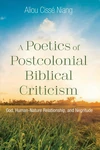
A Poetics of Postcolonial Biblical Criticism
Biblical Studies & Commentaries
“In a brilliant deployment of scholarly insights from multiple fields and subfields in biblical studies—from history of religions to comparative religions to exegesis and reception history—Aliou Niang’s A Poetics of Postcolonial Biblical Criticism is as compelling in its theoretical and methodological framing and appropriations of Senghorian Negritude as it is in its engagement with the multipositionality and multilocality of the postcolonial hermeneut. Forceful, yet unapologetic, Niang’s A Poetics is a refreshing read of the Bible, of African (Diola) culture, and of biblical interpretation itself. It is a veritable gift of Africana hermeneutics to the field of biblical scholarship.”
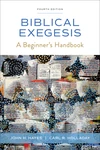
Biblical Exegesis, Fourth Edition
Biblical Studies & Commentaries
“This fourth edition of Biblical Exegesis by Hayes and Holladay is an amazing gift of scholarly expertise set to the task of defining biblical exegesis; describing its methods, its histories, its values; and ultimately showing why it matters for biblical and nonbiblical scholars. Hayes and Holladay marshal an impressive array of exegetical approaches to theorize and demonstrate that ‘exegesis does not allow us to master the text so much as it enables us to enter it.’ Drawing from the fields and subfields of archaeology, cognitive linguistics, cultural and literary studies, postmodernism, postcoloniality, and others, Hayes and Holladay beautifully and lucidly bring together exegetical concerns about biblical sources, traditions, and canons, as well as interpretive communities, cultures, histories, geographies, and technologies, all toward the goal of exegesis as informed understandings of the biblical text without assuming arrival at the meaning of the text. Biblical Exegesis is a wonderful companion for the exegetical beginner and researcher; it is at home with a student in the classroom or a researcher in the library or a prophet on the streets or a preacher in a house of worship.”
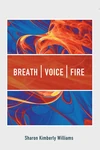
Ethics, Culture & Social Issues
“Sharon Kimberly Williams’s Breath, Voice, Fire is an amazing symphony of deep spiritual and poetic vocals, intellectual and epistemological pathfinding, and political daring that make Black life in America and around the world dreamable. Very much like one of her heroines, Nina Simone, Williams has insightfully and creatively read and reflected the material times of Black life in twentieth- and twenty-first-century America but also what Christina Sharpe calls the residence time of Black life—the longue durée of Black life. In Breath, Voice, Fire, Williams gives the reader the multidimensionality of Black life and its capacity to live and thrive against the odds and beyond any moment.”
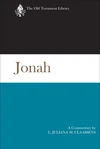
Biblical Studies & Commentaries
“A superb reading that brings together the fantastical and mundane elements of Jonah as literary and theological engagements with multiple traumas. Claassens shifts the interpretive focus from attempts to resolve the ‘troubles’ of the prophet—or his community—to theological reflections about meaning-making in the face of ongoing and anticipated imperialism. Through several interpretive methodologies, Claassens demonstrates how Jonah simultaneously signifies how serial imperialism threatens to trap its subjects—human, nonhuman, and divine—in a time warp of trouble, and how readings from marginalized places offer opportunities to create and experience grace, forgiveness, mercy, and justice. Claassens’s engagement with Jonah is a welcome and invaluable resource for researchers, clergy, scholars, and activists alike.”
Biblical Studies & Commentaries
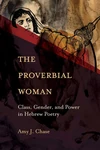
“Close readings of texts can produce expansive rather than restrictive meanings, and deconstructive as well as generative savvy in theorizing and interpretation. That is what Amy Chase accomplishes in The Proverbial Woman: Class, Gender, and Power in Hebrew Poetry. Deploying insights from the field of narratology to examine questions of genre, gender, economics, cultural context, ethics, and spirituality in the prose-poetry of Proverbs 31, Chase demonstrates how texts and textual interpretations can be damaging to marginalized subjects and, thus, are in need of new and fresh readings. By centering and decentralizing the eshet chayil and placing her alongside other characters, Chase successfully and brilliantly offers an interpretive gift of the values of polyvalence, polyphony, disputation, and ambiguity in the search for the Proverbial Woman. She does this in regard to the text about her as well as interpretive traditions that provoke both admiration and unpleasantness, especially when pressed up against the discrepancies and precarity of personal, communal, historical, and cultural life in the face of power imbalances, empire, and the possibilities of transgressing boundaries that marginalize. Chase's detailed analyses move beyond literary and exegetical minutiae, bringing together epistemological clarity and ambiguity, contextual specificity and nuance, identity formation and ethical/ideological struggle for the interpretation of Proverbs 31. The result is a powerful reading in the field of Proverbs studies that pushes against dominant and binary modes of material, ideological, and male-gendered interpretations of the text--which Chase describes as distortion--to reveal readings in favor of marginalized characters in the text and the ethical work that such marginalization does in the productions of the Proverbial Woman.”
World Christianity as Public Religion
Theology
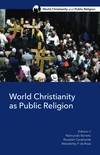
“World Christianity as Public Religion is a remarkable volume that draws upon epistemological and interpretive insights from the fields of theology, mission, migration, ecumenism, culture, gender, and sociology to theorize and illuminate the character of Christianity as a contested and generative public project. Attuned to global political and economic forces that shape discourse on Christian theory and praxis beyond singular locations and temporalities, this volume textually and conceptually embodies the creative, interpretive spaces that emerge with a paradigmatic shift from dominant uni-directional to a multi-directional view of global Christianity. The book is an invaluable resource for scholars, clergy, and students interested in understanding contemporary global religious landscapes.”
NOTE: Only includes books currently in our catalog; not necessarily a complete list.
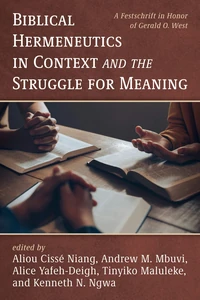
Biblical Hermeneutics in Context and the Struggle for Meaning
Editor
Biblical Studies & Commentaries
Biblical Studies & Commentaries
See something wrong on this page? Report a problem