Kevin J. Vanhoozer
Christian Living
“The best antidote yet to the poison of anti-intellectualism that has sapped contemporary evangelicalism of much of its theological mettle. Clark deftly works his way through the traditional issues pertaining to theological method, yet he does so with an eye to our postmodern, multicultural, and spiritually starved situation. He makes a compelling case that cultivating and embodying the wisdom of God for daily living really is the most compelling case that pursuing excellence in theology is the best way to embark on the project.”
To Understand Things as Well as Words
Discipleship & Christian Education
“John Van Wyk here examines both what “America’s greatest theologian” thought about theological education and how he educated aspirants to the ministry as well as everyday disciples, including women and native Americans. In light of our present crisis in higher theological education, this fascinating study of a past figure proves eminently timely: Jonathan Edwards’ offers a model of biblical and dialogical pedagogy that strives to foster the knowledge of God to the glory of God.”
Theology
“Greg Lee here makes a significant integrative contribution to discussions about the theological interpretation of Scripture by comparing and contrasting three Christian readings of the Old Testament: Augustine, Calvin, and the Epistle to the Hebrews. The result is an important proposal about biblical authority and interpretation that carries considerable ecumenical and interdisciplinary promise. Lee’s suggestion regarding the literal sense allows Protestants to lie down with Roman Catholics, and systematic theologians with biblical exegetes.”
Theology
“This is a well-researched, one-of-a-kind work that will appeal especially to those who have gone out the front door to engage in the dangerous business of walking the Way of Christ, pursuing their own adventures as inhabitants of the twenty-first-century, demystified Middle-West.”
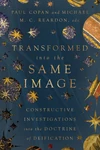
Transformed into the Same Image
Theology
“What do you get if you cross PBS's Antiques Roadshow, the Protestant Reformation, and one of the trending topics in evangelical theology? The doctrine of deification! This fascinating collection of essays sets out to retrieve the patristic notion of theosis by showing its biblical and Protestant bona fides as well as its potential for ecumenical dialogue about the nature of salvation—and more. I particularly appreciated the suggestion that believers are deified by being transformed into the image of Christ, the God-man: not simply deified but Christified.”
Theology
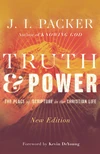
“Here is a robust evangelical account of what the Bible is and how to read it, faithfully and fruitfully, by one who, in his own words, was both an observer and a participant in the twentieth century 'battle for the Bible.' Twenty-first century Christians would do well to attend this veteran's testimony. J. I. Packer is a reliable guide to historic Christian truth and to the perennial need to read the Bible on its own terms, enlightened by the Spirit and in the communion of the saints. Doing so leads to understanding... and prevents us from being captive to our own thoughts, times, and traditions.”
Theology
“What does it mean for the church to be ‘in’ the world but not ‘of’ it, and how do these two prepositions relate to Augustine’s two cities and Luther’s two kingdoms? Crouse’s book provides both important orientation and strategic tips for the church’s involvement in the contemporary, post-Christian “game of thrones” – the ongoing conflict between secular and sacred for the body of Christ and the souls of his disciples.”
Philosophy
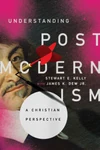
“Postmodernism is no longer a youthful upstart but has now reached middle age. If we take 1968 as its date of birth, the revolution is now fifty years old, which explains the philosophical paunch and aching cultural joints. Understanding Postmodernism, similarly, is a mature evangelical response, more interested in showing charity and asking what we can learn from the postmodern protest to modernity than in knee-jerk reactions. The authors stay calm and carry on reasoning. In particular, they examine ten major themes, including language, rationality, and truth (they're analytic thinkers, after all), bringing both clarity and charity to bear on a movement that has affected the academy, society, and church like no other in recentmemory.”
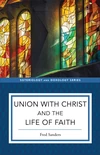
Union with Christ and the Life of Faith
Theology
“Fred Sanders makes as compelling a biblical, historical, and theological case for viewing union with Christ as the beating heart of salvation and the Christian life as I have come across. What does it mean to have a personal relationship with Jesus? It means being in Christ. Here is theology that informs and inspires, taking us into the deep things of the gospel, showing us how wondrous is the room in the christological ‘in.”
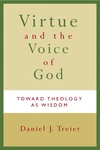
Theology
“Virtue and the Voice of God invites exegetes, pastors, theologians, and educators to come and reason together about how to read the Bible in ways that foster wisdom and godliness. Treier practices the virtues he preaches: he listens attentively to diverse voices that weigh in on the nature of theology, theological education, and the interpretation of Scripture, then patiently weaves their valid insights together, repairing the fabric of theology in the process. The result is a template for a theological coat of many disciplinary colors, an important and much-needed pattern for sound doctrine.”
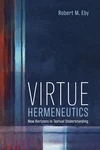
Biblical Studies & Commentaries
“When it comes to biblical hermeneutics, transferable skills and even methods matter much less than transformed character. Robert Eby’s Virtue Hermeneutics heads to the top of the class of books that recognize the importance of forming interpreters into the sort of persons best suited to understand texts rightly: right-minded and right-hearted persons of hermeneutical virtue. I particularly appreciated his list of ten interpretive virtues and his recognition of the Spirit’s role in forming them.”
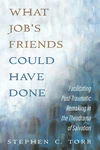
What Job’s Friends Could Have Done
Counseling, Grief & Mental Health
“How ought the church care for the traumatized who, like Job, have suffered a catastrophic experience that disrupts their ability to ‘play their part?’ Torr weaves psychoanalytic insights into the mother/child relationship onto my theodramatic vision of the Christian life. If, as Calvin says, the Church is both ‘Mother’ to those to whom God is Father and ‘theater’ of the gospel, then it, like Job’s friends, can best heal the traumatized by becoming a theater-cum-nursery of redemption.”
Preaching & Worship
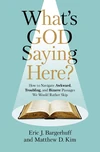
“PRAISE FOR WHAT’S GOD SAYING HERE? I commend Eric Bargerhuff and Matthew Kim for reminding preachers, and the rest of us, not to skip over the Bible’s hard passages. Literary critic George Steiner once suggested that perplexities in literature may reflect perplexities in life. Understanding what God is saying often requires effort. A preference for ease and simplicity subverts the need for serious work in biblical interpretation. I came away from Bargerhuff’s and Kim’s struggles with these hard texts with a better understanding of how to do this serious work.”
Why Evangelical Theology Needs the Global Church
Theology
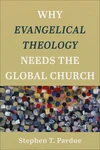
“At the very moment when evangelical theologians are struggling with cultural issues on the Western home front, Stephen Pardue calls them to look east and south, to learn from the global church how to engage one’s local context while maintaining biblical authority and respecting the Christian tradition. This is a signal contribution to evangelical theology from one who identifies with and understands both it and the global church. Pardue here integrates canon, culture, and catholicity in five theses that have the potential to revitalize evangelical theology in the West and worldwide.”
Biblical Studies & Commentaries
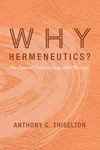
“Anthony Thiselton’s Why Hermeneutics continues to expand our horizons of understanding about what is involved in reading texts. . . . Thiselton here presents the most compelling case I have yet come across for viewing hermeneutics as a relevant if not essential component of university education—in the humanities and divinity alike.”
Theology
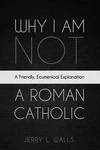
“The subtitle is spot on: Jerry Walls here extends the right hand of fellowship to Roman Catholics at the dinner table while he explains why he is more truly catholic than they are at the Lord’s table. Anyone thinking about converting to Rome needs to grapple seriously with Walls’s critiques of papal infallibility, Marian dogma, and the authority structure of the Roman church—and to do so for the sake of the greater catholic church.”
Theology
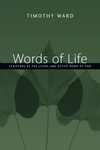
“I have been on the lookout for a compelling and contemporary treatment of the nature and authority of Scripture for years. I ask of every promising new title, 'Are you the one who is to come, or shall I look for another?' Ward's book may be the one. Words of Life rightly roots its thinking about Scripture in the doctrine of God, and that means trinitarian theology. His central insight: God's word is something that God does. The Bible is not simply an object to be studied but the principal means by which the Lord engages his people and administers his covenant. Ward is a British pastor-theologian in the best sense of the term. The deft treatment of inerrancy by one from the other side of the pond is an added bonus. Highly recommended!”
Biblical Studies & Commentaries
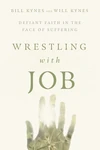
“True Christian faith has nothing to do with wish fulfillment but everything to do with facing reality, which is why every believer, sooner or later, has to wrestle with Job—and with what Job had to wrestle with: the reality of inequitable suffering. Bill and Will Kynes, pastor-father and scholar-son, have coauthored a precious gift: a wise and edifying twofer that provides not mere 'answers' but guidance for reading Job with understanding, deepening our trust in God, and persevering in our faith, come what may.”
Biblical Studies & Commentaries
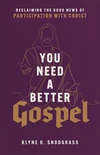
“Delaying gratification works well when you’re on a diet or saving for retirement but not so well when it comes to defining the content of the gospel, which concerns not only an afterlife but eternal life now. To have eternal life is to participate in the family of God—in the Son, through the Spirit—with other adoptees. Snodgrass rightly asks evangelicals—‘gospel people’—to recover the New Testament understanding of faith, which is considerably more rich, dramatic, and self-involving than merely signing on the doctrinal dotted line.”
NOTE: Only includes books currently in our catalog; not necessarily a complete list.
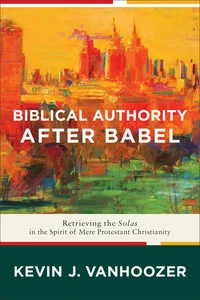
Biblical Authority after Babel
Theology
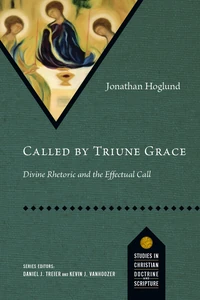
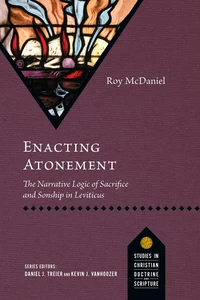
Theology
Theology
Theology
Theology
Is There a Meaning in This Text?
Theology
Biblical Studies & Commentaries
Pictures at a Theological Exhibition
Theology
Theology
See something wrong on this page? Report a problem